
New Roman Floor in Son Sard: A Piece of Mallorca Revealed
New Roman Floor in Son Sard: A Piece of Mallorca Revealed
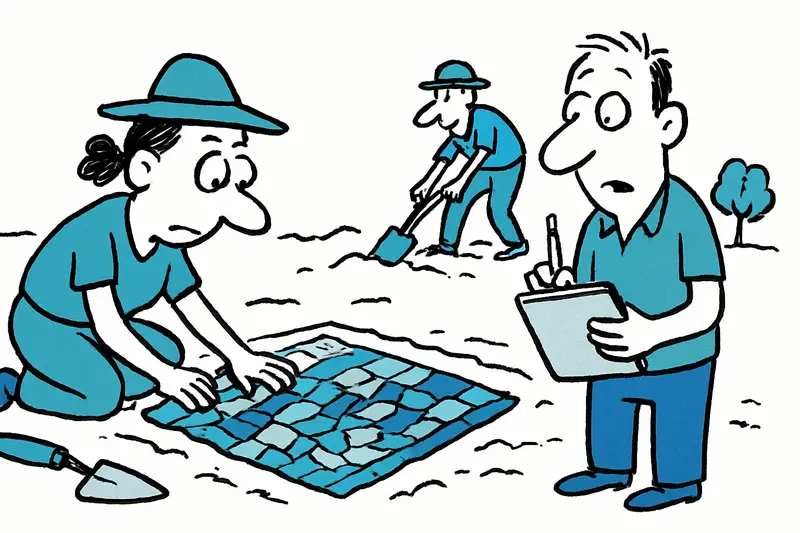
During this year's excavations in Son Sard (Son Servera), archaeologists uncovered an opus signinum floor — the first evidence of a Roman building at this location since the thermal baths findings in 2012.
New Roman Floor in Son Sard: A Piece of Mallorca Revealed
Find in Son Servera Provides New Clues to Settlement History
The heat shimmers over Son Servera, cicadas chirp, and between olive groves and almond trees archaeologists are working again this summer at the Son Sard excavation site. What has come to light now is inconspicuous yet revealing: a fragmentary floor made of opus signinum, that mixture of lime mortar and pottery shards commonly used by Roman builders.
The find is notable because it represents the first clear indication of a Roman building in Son Sard since discoveries a few years ago, when bath-like structures were revealed during works on the road to Port Vell. A floor may sound unspectacular, but it tells of construction methods, functional spaces, and the contacts between Mallorca and the Mediterranean in antiquity.
The team, partly internationally trained and with participation from the municipality, divided the work into several areas: the actual excavations, the investigation of a necropolis dated to the al-Andalus period, studies on landscape development in the municipal area, and surveys of additional caves and find spots in the surroundings. This division helps to consider the site's different epochs and uses side by side — as layers in the ground and in memory.
Up to eight graves were documented in the necropolis. Particularly striking is an adult grave cut into the rock, located near an already known children's grave; that children's grave had previously been radiocarbon-dated to the 11th to 12th centuries. The skeletal remains recovered in the current campaign show better preservation than those from the children's grave, enabling further osteological studies and providing clues about burial customs.
For local everyday life, such finds mean more than a few stones: on Son Servera's market square, when the church bells ring at noon, old farmers talk about "the treasures beneath our feet." Primary school children sometimes drop by, parents bring cold bottles, and the nearby tractor pauses until the archaeologists have cleared the next test trench. That makes archaeology tangible here — not a dusty museum exhibit, but part of the community.
Why is this good for Mallorca? Such discoveries fill gaps in the island's panorama: they show how densely settlement, agriculture, and trade contacts in different periods lay side by side. This helps researchers refine the chronology of settlement and gives school classes, clubs, and visitors new material to connect with the island's history.
Practically speaking, a clearly datable Roman find also opens opportunities for scientific cooperation: students can learn fieldwork here, local archaeology can build its profile, and analysis results (stratigraphy, material studies, datings) can be linked with comparable finds in the Balearics. It is important to balance scientific work, site protection, and community involvement.
What remains to be decided on site is how to handle the find: conserve it, investigate further, perhaps make information accessible to visitors? Ideas are already circulating in discussions with municipal councils and the team on site — from guided visits in a limited framework to educational projects for schools. Concrete decisions will take time; the data now obtained provide the basis for them.
The excavation at Son Sard is a reminder that Mallorca has layers and stories that have not all been read yet. Between the scent of thyme on the hills and the distant clatter of a motor, there lies a floor that can tell more about everyday life, craft, and changing times than many legends.
For upcoming campaigns this means: document precisely, conserve carefully, and publish the results — so that people here, from the old woman in the village café to the children on the schoolyard, can have a say when it comes to what lies beneath their shoe soles.
A small conclusion: a piece of opus signinum is not a monument, but a key. Turn it, and you open a door to Mallorca's past — and that pleases us here in the east of the island, because it shows: the island remains full of surprising stories.
Frequently asked questions
When is Mallorca’s best time to visit for good weather and beaches?
Do you need to plan for swimming in Mallorca in spring?
What should I pack for a Mallorca trip?
Are there family-friendly beaches in Mallorca?
What activities besides swimming should I consider in Mallorca?
How does Mallorca's weather vary across different areas?
Is year-round swimming possible on Mallorca’s beaches?
What’s the best way to get around Mallorca to see multiple towns?
Similar News

Orange Alert for All of Mallorca: How Prepared Are We Really?
Aemet has raised the warning to orange: thunderstorms and heavy rain may hit the island. A critical appraisal — what's m...
Alarm at Ballermann: Why the Promenade is Becoming Overgrown
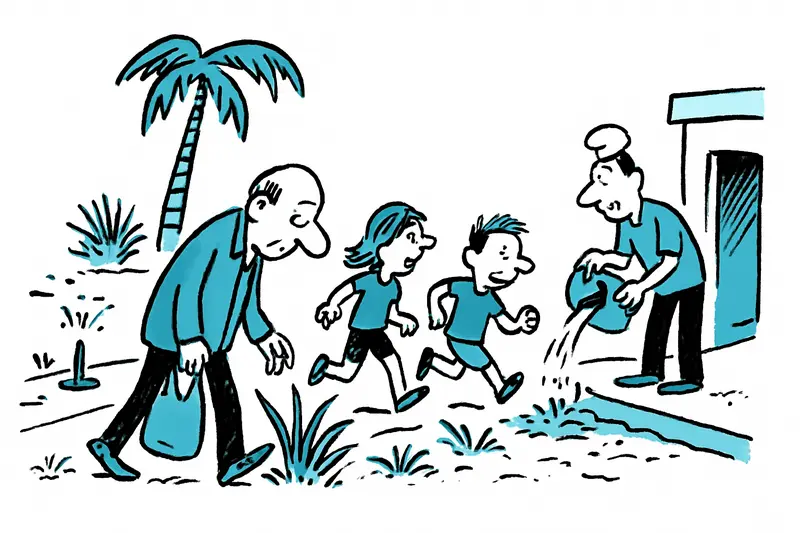
Residents at Playa de Palma see decayed green strips, dried Washingtonia palms and waist-high weeds. The announced milli...
Early autumn flirt in Mallorca: Iris Katzenberger begins a quiet love chapter with a partner 22 years younger
Iris Katzenberger (59) has a new man by her side after several relationships: 37 years old, private, they met at a priva...
"We do what we like" — Stones, social media and the disappearance of respect at Es Colomer
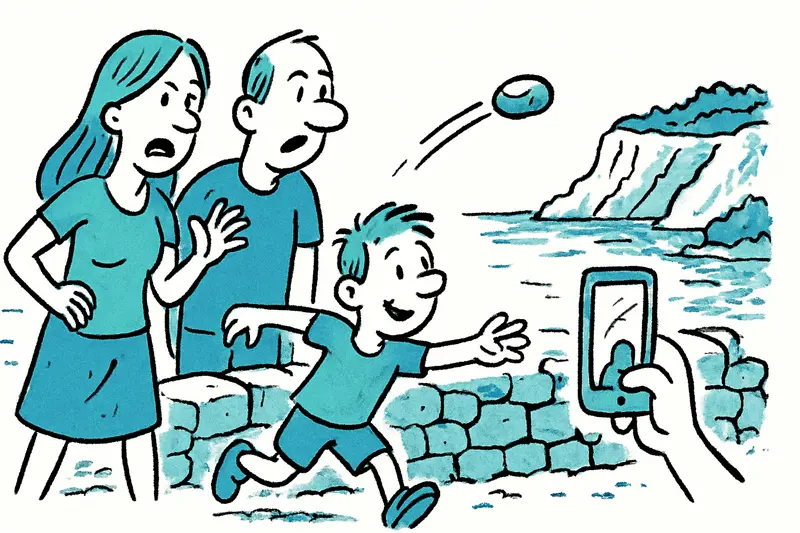
At the Es Colomer viewpoint, tourists tore stones from a dry-stone wall, filmed it and spread the footage on social medi...
When Rescuers Stand Down: Why the Lifeguards' Strike in Calvià Is More Than Just a Loud Bang
Lifeguards in Calvià have called a strike for August 23. What's behind the conflict, what risks are looming — and what i...
More to explore
Discover more interesting content

Boat Tour with BBQ along Es Trenc Beach

Private transfer from Mallorca Airport (PMI) to Pollensa
