
Special operation in Andratx: When beaches become a stage for enforcement
The local police in Andratx cleared Camp de Mar and Sant Elm: illegal massages, street vending and waste violations prompted a large-scale inspection. A reality check with solutions.
Special operation in Andratx: When beaches become a stage for enforcement
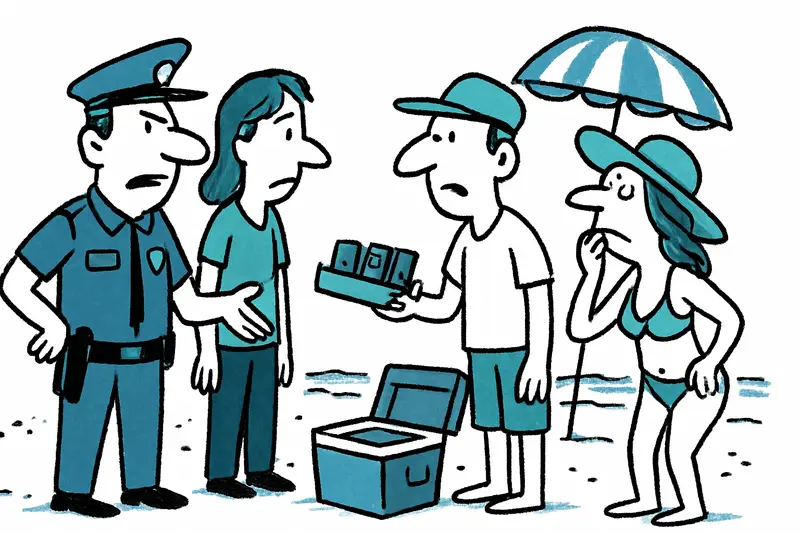
Late in the morning, heat shimmers over the pebbles of Camp de Mar, parasols open, children splash, and somewhere ice rattles in a portable cooler: then officers appear, sometimes in uniform, sometimes plainclothes. This was the scene of an action organized by the municipality on Tuesday in southwest Mallorca. Aim: to restore everyday beach life to orderly channels — by stopping illegal street vending, unlicensed massages (hidden camera report on massage salons offering sexual services) and improper waste disposal.
What happened on site
Officers intervened at several spots on the beaches of Camp de Mar and Sant Elm, confiscated a vendor's goods according to the operation report and removed people from the beach area who were offering massages without permission. Several reports were filed in total; the operation combined covert observation with visible uniformed presence, an approach also examined in an assessment after a night raid at Playa de Palma. There was also a small win for an honest finder: a lost wallet in Cala Blanca could be returned to its owner. Two other proceedings involved rubbish that had been left next to bins rather than inside them — and moreover not at the permitted disposal time.
Key question: Does taking action achieve more than just order?
The measure appears to be effective in spots: immediate interruption of illegal activities, fewer stalls on the promenade, and the clear signal that rules are enforced (as with Palma's tally of 7,700 fines between July and September). But it raises questions: Do such operations address the root causes of problems on the beaches — or do they only target the symptoms? Have preventive measures, social education and alternative income opportunities been considered, or does it remain a daily cat-and-mouse game between enforcers and those who seek quick earnings on hot days?
Critical analysis
First: enforcement alone is short-lived. If vendors and self-organized service providers regularly appear without licenses, this indicates gaps in the permitting system, difficult access to formalities or a lack of information about local rules. Second: visible controls improve beachgoers' sense of security in the short term, but rarely change behavior when economic motivation is high. Third: interventions on tourist beaches are affected by language barriers and mistrust; quick expulsions without counselling can sharpen conflicts.
What is missing from the public debate
There is too little discussion about feasible alternatives: temporary, regulated sales zones for local vendors; easy-to-obtain day permits; information stands in several languages; and a clear roadmap for transitioning people into legal, safe forms of work. The debate also lacks consideration of waste infrastructure: more — not just larger — bins at key points and clear notices about disposal times would prevent many violations.
Everyday scene from Andratx
In the evening, when the beach bars close and the seagulls get loud, everyday life unfolds: residents carry their bags up the steps, retirees meet at the quay of Port d'Andratx for a café con leche, and delivery vehicles look for parking on the narrow coastal road. It is here, between tourism and residential life, that interests collide: cleanliness, quiet and safety on the one hand, quick income on the other.
Concrete solution approaches
1. Short term: expand the information campaign on the beach — multilingual notices, flyers and a small info team on key days. 2. Medium term: introduce simple day or week permits for sales and services, linked to hygiene and safety standards. 3. Infrastructure: additional and better positioned waste bins, clearly marked disposal times, and mobile cleaning teams in the evening hours. 4. Social approach: cooperation with social services and employment agencies so that repeated violations are understood and addressed as signs of socioeconomic problems. 5. Transparent enforcement: document operations, publish results and examine whether reports lead to sustainable effects, rather than simply shifting problems as seen in other inspections such as the raid at Ballermann examining the souvenir market and vendor displacement.
Conclusion
The local police's crackdown has created short-term order — which is good for tourists, residents and shopkeepers who expect clean beaches. But in the long term, more is needed than fines: clear rules, low-threshold legalization paths and better waste infrastructure. Otherwise the ritual repeats each year: controls in July, calm for a few days, and the same game next summer.
If you now stroll through Camp de Mar on a late afternoon, alongside the sound of the sea and voices you will also hear the quiet questions: How do we want to shape coexistence on our beaches? And who ensures that rules are not only enforced but also explained?
Frequently asked questions
What is Mallorca's weather like throughout the year?
When is the best time to swim at Mallorca’s beaches?
What should I pack for a trip to Mallorca?
How easy is it to get around Mallorca without a car?
What are must-see places in Mallorca?
Do I need a rain jacket for Mallorca?
Is it safe to swim with currents on Mallorca’s beaches?
What family-friendly activities or cultural highlights are good for visitors to Mallorca?
Similar News

Rental Car Theft in El Arenal: What This Incident Reveals About Our Gaps
A teenager steals a running rental car in El Arenal, flees on foot, climbs over walls and is caught by the Guardia Civil...

Red Rope in Palma's Library: What Helps Against Selfie Tourism — and What's Missing
Palma's city library cordoned off an area with a red rope to keep selfie tourism away from reading and working activitie...

Fort San Carlos: Museum, Harbor Dispute — and a Conflict That Demands Answers
The military museum at Fort San Carlos sits right on Palma's harbor, with unexpectedly quiet rooms filled with cannons a...

Old Town Under Pressure: When a Doorway Becomes a Sleeping and Shower Place
For months a woman has been living with a parasol, a clothes rack and personal belongings next to the social welfare off...

When Shopping Weighs Heavier: Mallorca Demands a Tax Pause on Food and Fuel
Rising prices are putting pressure on households and agriculture. The Balearic Islands are calling for temporary tax rel...
More to explore
Discover more interesting content

Can Cap de Bou

Townhouse Lleo 72
