
Sperm Whales off Mallorca: Drones Document Head-Butting for the First Time
Sperm Whales off Mallorca: Drones Document Head-Butting for the First Time
Aerial footage from Balearic waters shows sperm whales bumping each other with their heads — documented for the first time, including calves. What does this mean for the island?
Sperm Whales off Mallorca: Drones Document Head-Butting for the First Time
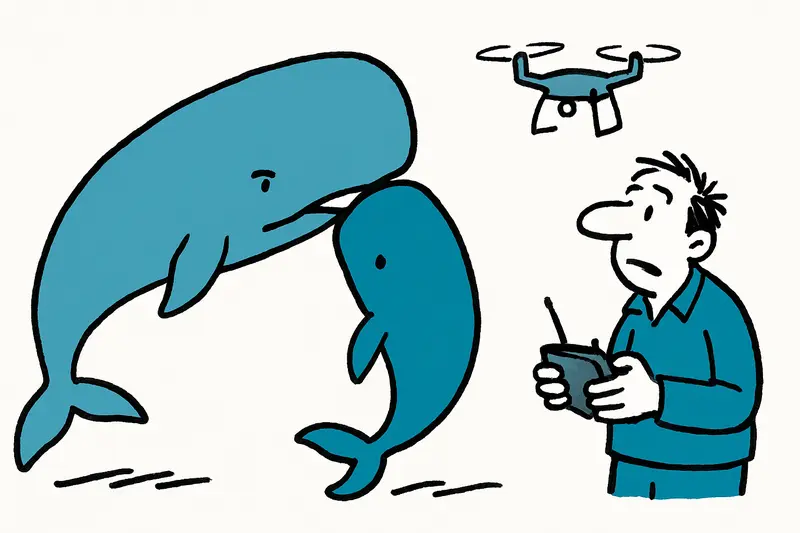
New aerial footage from the Balearic Sea shows sperm whales ramming each other head-first — calves are involved as well.
In the early morning, when boats quietly rock in Portixol harbor and the seagulls scream over the Passeig des Born, the sea often looks harmless. Beneath the calm surface, however, a dramatic scene plays out: research teams from Scotland, the Azores and a Balearic marine conservation organization used drones to capture moments in which sperm whales meet head-on and collide with their heads.
The footage comes from observations between 2020 and 2022 and was published in a scientific journal. It is remarkable because it is the first systematic documentation of what this behavior looks like and shows that it does not only occur among massive adult males, but also involves younger animals and calves. Until now, the picture was based largely on accounts from the whaling era in the 19th century — stories Herman Melville worked into his novel.
What the researchers observed is not a wild attack on boats, as old seafaring tales might suggest, but a complex interplay within the whale groups. Some encounters appear vigorous and brief, others last longer and seem ritualized. The aerial perspective reveals movement patterns and distances between the animals that are hard to see from a boat deck.
The function of the head-butts is still unclear. Possible explanations include social signalling, expression of hierarchy, mating behaviour, or practice sequences for young animals. The novelty of drone footage helps test such hypotheses: researchers can now compare scenes repeatedly, measure timings and systematically catalogue behaviour patterns.
For Mallorca this discovery has a practical side: our waters are more than just tourist beaches; the condition of underwater meadows influences habitat quality (the disappearance of seagrass meadows off Mallorca). On the beach at Cala Major, when walkers peer toward the horizon with binoculars, awareness will grow that science is happening here — not only in offices but out on and above the sea.
At the same time, the publication is a reminder of how sensitive such recordings are. Drones are a good observation tool but can cause disturbance if flown too close to animals; a recent drone alarm and Menorca refueling stop highlights wider airspace concerns. Concrete proposals from research groups and conservation organizations are easy to implement: minimum distances for drone flights, temporary no-fly zones during whale observations, and mandatory training for operators working from boats or on beaches.
Another step would be a coordinated reporting centre for whale sightings where local fishers, excursion-boat captains and tourists can log their observations. Such citizen science platforms already exist elsewhere and could help here too to better contextualize behaviour patterns in space and time, as do organised dolphin-watching trips with Cruceros Cormoran, which demonstrate how operators can work with observers.
On a personal level, I have often seen in recent years how curious locals and visitors are: in the harbour of Soller people stop when a research boat sets out; on windless afternoons children at Cala Estancia look out for spouts on the horizon. This curiosity can be used. Informed observers disturb less but provide valuable data.
The aerial footage has raised questions, but it also gives hope: science and everyday life can go hand in hand here on Mallorca. Greater knowledge of sperm whale social behaviour could improve protection measures, make whale-watching more responsible and strengthen the island as a location for modern marine research.
In the coming months, when someone watches a boat through binoculars or sits on the Passeig and looks out to sea, they might think of the aerial images: instead of a solitary monster, a society of marine mammals with its own rules appears. That is a reason to be glad — and an invitation to look more closely without disturbing.
What remains: Drone images have, for the first time in Mallorca and neighbouring waters, documented that sperm whales approach and butt each other with their heads. The observation expands our knowledge, demands responsible observation rules and offers the island new opportunities for research and nature-based tourism.
Frequently asked questions
Can you see sperm whales off Mallorca?
What did drone footage of sperm whales off Mallorca actually show?
Is whale watching near Mallorca safe for the animals?
When is the best time to look for whales off Mallorca?
What should I do if I spot a whale from the coast in Mallorca?
Why are drones used to study sperm whales in Mallorca waters?
What do sperm whales off Mallorca use head-butting for?
How does marine research off Mallorca help protect the sea?
Similar News

Fewer Airlines, Fewer Destinations: What Palma's Winter Flight Schedule Means for Mallorca
Analysis shows: Winter at Son Sant Joan Airport will be quieter, with significantly fewer airlines and destinations. Who...
German tourist dies in Sa Calobra – a reality check for emergencies on Mallorca's beaches
A 40-year-old tourist died at the Torrent de Pareis. The emergency call, a doctor who happened to be present, a defibril...

Deadly Tractor Accident in Bunyola: What Needs to Be Done Now
In a work accident on an estate near Bunyola, a roughly 40-year-old man lost his life. His wife and a small child were o...
Head-first dive into the shallow part of Cala Fonoll: An accident and the unresolved question of responsibility
A young tourist dove into Cala Fonoll and was seriously injured. Key question: Why are clear warning signs missing at da...

Mistaken identity with fatal consequences: Brutal assault in S'Aranjassa — what's missing in the follow-up?
At S'Aranjassa a visitor to a finca was tied up, beaten and thrown out of a van. Three men have been arrested, including...
More to explore
Discover more interesting content

Can Cap de Bou

Townhouse Lleo 72
