
Nightmare in Cala Vinyes: When an Apartment Suddenly No Longer Belongs to Its Owner
Nightmare in Cala Vinyes: When an Apartment Suddenly No Longer Belongs to Its Owner
In Cala Vinyes, owners and alleged tenants are fighting over two apartments. Behind forged contracts, changed locks and lengthy court proceedings lies a larger problem — and the question of how to effectively protect property.
Nightmare in Cala Vinyes: When an Apartment Suddenly No Longer Belongs to Its Owner
Forged contracts, changed locks and the question: Who protects homeowners and apartment seekers?
Key question: How can an island municipality like Calvià prevent individual flats from becoming playgrounds for fraudsters, while owners and innocent tenants end up caught in the middle?
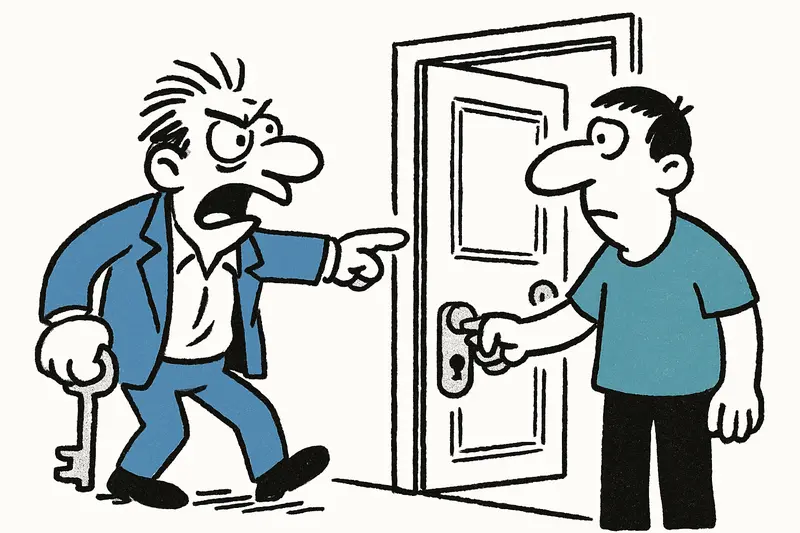
In an otherwise quiet corner of Cala Vinyes, where in February the wind carries the smell of paint and sea through the streets and radios occasionally hum at construction sites, unrest has arrived. Two apartments in a complex are at the center of a dispute: the registered owners claim they have been locked out, locks have been replaced, and in one of the units a woman lives with her son. Those involved say they are victims of a scam: they paid a deposit and received a rental contract — which later allegedly turned out to be forged.
The owners describe being suddenly informed by neighbors that life was visible in an otherwise seasonally empty apartment. Locks had been changed, the key was missing, the rooms were dirty. Feelings of powerlessness and loss dominate: it's not just about a property, but about memories and financial value that people wanted to retain.
On the other side are people who explain that they were deceived for rental purposes. One of those affected already has a court eviction date scheduled in April, according to documents. He says he was presented with a contract and did not know it was false. Such stories match reports from the municipality, as documented in Illegal Subletting in Mallorca: When Long-Term Tenants Become 'Inquilinos Pirata': cases repeatedly appear in which keys circulate and are passed on in exchange for high advance payments.
Critical analysis: the pattern is known and problematic. A triangular situation emerges — owners, alleged tenants, and perpetrators who organize keys, papers or access. Legal proceedings take time; the judiciary must distinguish between criminal investigation (fraud, forgery) and civil eviction procedures. In the meantime, people live in an apartment that may legally belong to no one.
What is often missing from public discourse is the perspective of the small neighborhood: many residents feel powerless, see construction work stalled (as reported in Who Acts First? Squatters in Santa Margalida Cause Trouble in Half-Finished Housing Blocks), hotels in winter hibernation and believe the business with such apartments thrives in the off-season. Authorities and courts are competent, but weeks to months pass between filing a report, investigations and an enforceable eviction order — time in which facts and public sentiment form that are difficult to untangle later.
A typical everyday scene: late in the morning the owner of the small café by the access road sits outside as light rain sprinkles the terrace, locals discuss the cases — 'They sold the keys,' says an older man, while two construction workers quietly joke by the wall. No one wants to immediately take sides, but everyone has an opinion, and concern is growing.
Concrete solutions can be divided into two levels: short-term for those affected and medium-term for the municipality.
Short-term, owners should: file a formal criminal complaint (Denuncia) with the Guardia Civil or Policía Local, keep all proof of ownership (Escritura, Nota Simple from the Registro de la Propiedad, owner ID) together and seek legal help to apply for an urgent eviction order. For people who were presented with a questionable rental contract: secure copies of all payment receipts, messages and the alleged rental contract and also file a complaint. Important note: unilateral actions such as forcibly removing residents create new legal problems.
At the municipal level, several measures make sense: a publicly accessible reporting procedure for vacancy cases, closer cooperation between the town hall, Guardia Civil and courts for faster interim measures, information campaigns on how to verify genuine rental contracts (notary, Registro de la Propiedad, presentation of the title), and inspections of complexes in need of renovation where seasonal vacancies could be abused, a problem discussed in When Neighborhoods Become Postcards: Illegal Vacation Rentals in Palma. A rapid-response unit for acute cases — realistically organized, not as a permanent police authority — would also increase pressure on perpetrators.
Moreover, the administration should examine how trade in duplicate keys and forged documents can be prevented: this includes stricter requirements for property managers, mandatory handover protocols when keys are changed and sanctions against unlicensed intermediaries. A central municipal information page with checklists for owners and prospective tenants would lower the barrier for fraud victims to seek help.
Is anything missing? Yes: an open dialogue between owners, prospective tenants and neighborhood associations. While media images quickly pass judgment, as in Molinar in Turmoil: When a Rent Dispute Turns Violent — What Does This Say About Mallorca's Housing Shortage?, the gray areas remain large. Victims deserve support, but prevention is at least as important as prosecution.
Conclusion: The cases in Cala Vinyes reveal a systemic weak spot — not only individual perpetrators, but gaps in administration, control and information. Owning property in Mallorca includes the scent of the sea in the nose, but also uncertainty at the front door. If the municipality and authorities do not act now, the methods of fraudsters will prevail: quick deposits, forged papers, replaced locks. A pragmatic trio of reporting obligations, rapid legal intervention and education could make this nightmare much rarer for those affected in the future.
Frequently asked questions
What should I do if my apartment in Mallorca has been taken over by strangers?
How can I tell if a rental contract in Mallorca is real?
Can police in Mallorca remove illegal occupants right away?
What documents do I need to prove I own property in Mallorca?
Why do rental scams in Mallorca often happen in empty winter apartments?
What should tenants do if they were given a fake rental contract in Mallorca?
Is Cala Vinyes in Mallorca affected by apartment fraud cases?
How can Mallorca municipalities help prevent forged rental contracts?
Similar News
Bendinat as a meeting place: Padel Cup brings together nearly 120 players
Three days of padel at the Bendinat Urban Country Club: organized by El Económico and Borbalán, with around 120 particip...
Large-scale Anti-Tourism Graffiti at Cala Mendia: Protest or Vandalism?
On the morning walkers discovered an approximately 50-meter-long slogan against tourism on the wall above Cala Mendia. W...
Bomb threat before Jet2 flight in Tenerife: A reality check for security protocols
A passenger reported a bomb in luggage shortly before departure in Tenerife. Evacuation, baggage checks, delays — and ma...
Who is stripping Mallorca's coast bare? Why entire slopes are being removed for villas
On Mallorca steep slopes are again being removed to make way for luxury construction sites. Who bears the responsibility...

Robber Falls While Fleeing in Sant Agustí: Who Takes Responsibility?
During a purse-snatching in Sant Agustí, a non-commissioned officer chased the suspect; the man jumped from a bridge and...
More to explore
Discover more interesting content

Can Cap de Bou

Townhouse Lleo 72
