
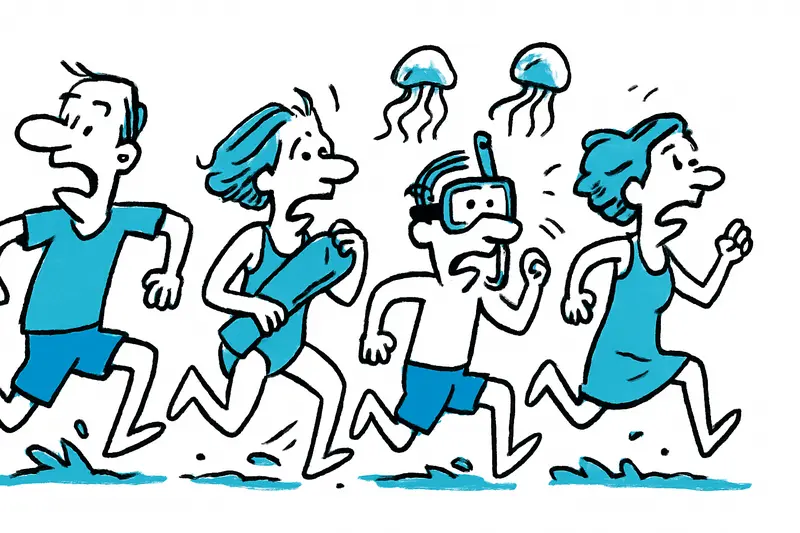
Stinging jellyfish in Cala Banyalbufar: Why everyone suddenly fled the water
Stinging jellyfish in Cala Banyalbufar: Why everyone suddenly fled the water
In Cala Banyalbufar, Pelagia noctiluca washed up in droves. A personal account of why this is no coincidence, what is often missing — and how we can better protect ourselves.
Stinging jellyfish in Cala Banyalbufar: Why everyone suddenly fled the water
Key question: Do we understand enough about the aggregations of Pelagia noctiluca — and are authorities and beachgoers responding appropriately?
Late on Sunday morning the small cove of Cala Banyalbufar was still relatively calm: a few fishing boats in the harbor, the creak of hulls, the calls of seagulls and the steep terraces of former vineyards shimmering in the sun. Then people arrived with towels, masks and snorkels – and after a short time many left the cove again, faces pale, some heading back up the steep path into the village.
The trigger was visible: hundreds of small, reddish-brown stinging jellyfish (Pelagia noctiluca) floating among swimmers and rocks. This species is not new to our coasts; it has long, sticky tentacles that can sting and be painful. After periods of bad weather or when the sea is strongly mixed, they appear more frequently. It was exactly such a week of wind and thunderstorms that recently stirred up the sea.
What made me uneasy was not only the sighting itself, but how quickly panic spread — and how thin the information available remained. At the cove there were no official signs, no lifeguard station warning on site, and hardly any instructions for first aid after jellyfish stings. A few capable locals explained to newcomers how to remove tentacles and when to see a doctor, but that was verbal and patchy.
In short: we often react improvised. Locals, tourists and some beach operators do what they can, but structured procedures are missing. What measures would be sensible and quickly implementable? First steps would be clear warning signs at the approaches to the cove, information in several languages, flags to indicate jellyfish aggregations and a coordinated reporting point that collects sightings and maintains up-to-date maps.
From a medical perspective, education is important: stay calm, don’t pull tentacles off with bare hands, use a sand shovel or gloves, rinse residues with seawater and seek shelter as soon as symptoms such as breathing difficulties, severe swelling or circulatory problems occur. In serious reactions, seek immediate medical help. Anyone swimming off Mallorca’s coasts should know these basics — and the island should make such information easily accessible.
In the longer term, the question arises about the causes of these aggregations: ocean currents, seasonal weather shifts, water temperatures and a shifted food web all play a role. Fish stocks that reduce jellyfish predators can also tip the balance. This is not a quick process, but authorities could work with universities and coastal fishers to identify recurring patterns and improve forecasts.
A pragmatic plan for the cove: a simple reporting system via WhatsApp or a local number that involves existing rescue personnel; mobile information boards that are put up on weekends or during warning situations; first-aid kits with gloves and appropriate materials at central points; regular training for harbor and beach staff; and a simple online status for the most important coves on the west coast.
What is often missing in public discourse is the connection between everyday experience and science: fishers know sea changes, lifeguards see trends, scientists have measurement methods. These voices are rarely brought together before the photos of jellyfish go viral on social media and the discussion cools down into panic. A lasting exchange could help inform preventively instead of warning reactively.
A small everyday scene that remains: people under the waterfall of the cove, avoiding the sea and cooling off under freshwater, children collecting shells, and older residents watching calmly — with the knowledge of the next small storm and respect for the sea. This calmness is not fatalism, but the basis for sensible precaution.
Conclusion: The sighting of stinging jellyfish in Cala Banyalbufar was not a coincidence, but part of a pattern we should take seriously. In the short term, better on-site information and a coordinated reporting system help. In the medium term, research, monitoring and a dialogue between coastal communities and science are needed. Then such events will lose their surprise factor, and we will prefer to stay in the water with a snorkel rather than sit startled on the rocks.
Frequently asked questions
When is the best time to visit Mallorca for sunny weather and fewer crowds?
Is it safe to swim in Mallorca's sea year-round, and what should I know about currents?
What should I pack for a trip to Mallorca to stay comfortable?
What are the best ways to get around Mallorca to explore towns and beaches?
What should I know about food in Mallorca and where to eat locally?
What is Mallorca's typical weather like throughout the year?
Which Mallorca beaches are best for families or snorkeling?
Are there any major events or local happenings to plan around in Mallorca?
Similar News

New low-pressure trough brings rain — and the heat remains: What's missing in Mallorca?
A short, intense window of showers hit Mallorca, yet the air remained muggy and warm. Key question: Why does rain hardly...

Klaus-Michael Kühne has died: The entrepreneur who gave Mallorca a second home
He first arrived on the island at 60; later the holiday house became Castell Son Claret – a hotel, a music venue and an ...

Buying Instead of Moving Away? Why Every Fourth Property Owned by Balearic Residents Isn't Located Here
Almost a quarter of the apartments purchased by Balearic residents are located on the Spanish mainland. A concise analys...

Palma markets itself in the USA — but who is the city really for?
The tourism foundation is investing over €200,000 in US promotions to attract affluent visitors to Palma. Does that acco...

From Deposit to Arson: How a Dispute over Jet Skis in El Molinar Escalated
After a nighttime fire in El Molinar a detainee is in pretrial detention. How could a conflict between a rental company ...
More to explore
Discover more interesting content

Boat Tour with BBQ along Es Trenc Beach

Private transfer from Mallorca Airport (PMI) to Pollensa
