
Struck Tanker "Arctic Metagaz": What Danger Does Mallorca Really Face?
Struck Tanker "Arctic Metagaz": What Danger Does Mallorca Really Face?
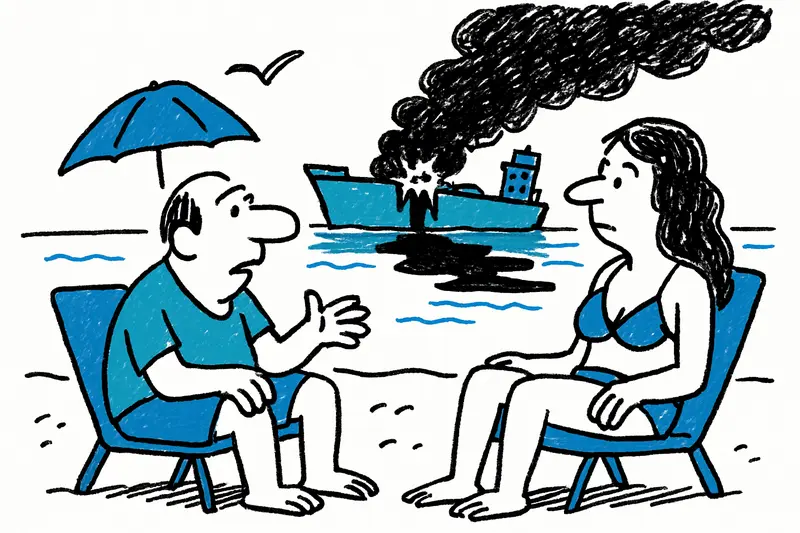
A damaged Russian tanker with 900 tonnes of diesel and two liquefied gas tanks is drifting in the Mediterranean. How great is the risk to the Balearic Islands?
Struck Tanker "Arctic Metagaz": What Danger Does Mallorca Really Face?
Key question: Can a disabled oil tanker in the central Mediterranean endanger Mallorca's beaches and fishing grounds — and if so, how quickly and in what form?
Critical analysis
Since early March the ship named "Arctic Metagaz" has been drifting through the Mediterranean. On board: about 900 tonnes of diesel and two tanks of liquefied gas. This combination of liquid fuels and pressurised cargo makes the situation complex. Diesel can float on the surface, spread and remain visible along coasts for a long time. Liquefied gas behaves differently: under pressure it is liquid, under normal conditions it becomes gaseous and rises. The risk of explosion exists mainly if gas is suddenly released and forms a flammable mixture with air. If the ship sinks, the diesel would remain in the marine environment and could affect the seabed, seagrass meadows and benthic organisms. Additionally, the Mediterranean is not an open ocean basin — water separation processes are very slow; expert estimates name timescales on the order of generations, so pollutants can have stronger local impacts.
At present the immediate threat to Mallorca is not confirmed. The ship has moved into southern waters, was previously drifting near Italy and Malta, and is now heading toward Libya. Nevertheless, risk is not defined only by current position: wind, waves and currents can transport oil slicks for kilometres, and an uncontrolled gas release can cause local fires or explosions that threaten nearby vessels. International cooperation mechanisms for maritime accidents exist — such as the European Maritime Safety Agency (EMSA), which is reassuring, experts note — but practical questions remain open: who assumes the technical risk, who pays for salvage operations, who protects fisheries and tourism businesses?
What is missing in the public discourse
The debate often focuses on the image of a drifting ship and alarming headlines. Less attention is given to these points: a concrete salvage option (e.g. towing to a safe port or controlled offloading at a suitable pier), the differing risks to deep-sea ecosystems versus surface environments, and the cost and liability questions for affected coastal states. Local early-warning systems for air and water quality are also rarely discussed, even though they could provide decisive protection for beaches and ports.
A typical scene in Mallorca
On a cool morning walking along the Passeig Mallorca, you hear seagulls circling over Portixol, the hum of motorboats and the clank of chains. Groups of fishermen in Port de Sóller chat about catch quotas and fuel costs; they are practically the first to notice pollution, as a recent report on almost 6.5 tons of waste pulled from the sea off the Balearic Islands showed. In Palma, café-goers on the Passeig Marítim look out to sea and ask: do we have to worry about our beach this summer? Such conversations reflect a real fear: not only for the ecosystem, but for incomes and everyday life.
Concrete proposed solutions
1) Transparency: Authorities should openly communicate the ship's location, planned measures and possible timeframes. 2) Monitoring: Combine satellite, AIS and aerial patrols so movements and first signs of oil are detected quickly, and make use of services such as the Copernicus Emergency Management Service. 3) Technical options: Be prepared for controlled pumping in stable seas or towing to a safe transfer point; prepare sonar surveys and diver charts before any salvage attempt. 4) Coastal protection: Have vessels with booms and skimmers ready, prioritise sensitive areas such as Posidonia meadows. 5) Health protection: Install monitoring stations at exposed beaches and ports for air and water quality; provide clear guidance for bathers and fishers. 6) Regional cost-sharing: Establish a clear procedure for how costs are divided between the flag state, the owner and EU aid so that municipalities are not forced to pay in advance.
These measures are pragmatic and would likely reduce damage in most cases if implemented quickly. They require coordination at EU and Mediterranean levels — and that is not only technical management, but a matter of political will. Local preparedness discussions have also considered extreme weather impacts, as explored in the piece Storm Alert: Is Mallorca Prepared for the Deluge?.
Concise conclusion
The danger to Mallorca is real, but not necessarily immediate. What matters is how quickly and transparently the actors involved act. For local people this means: do not panic, but insist on transparency and visible protective measures. On the promenade, in the harbour and in cafés residents and businesses do not want vague promises but clear answers and readily available technical assistance. Those who want to ensure this must now put pressure on national authorities and European mechanisms alike.
Frequently asked questions
Could a drifting oil tanker really affect Mallorca's beaches?
What is the risk if diesel spills into the sea near Mallorca?
Is liquefied gas on a ship a danger for Mallorca?
When is the risk to Mallorca from a ship accident in the Mediterranean most likely?
How could an oil spill affect Mallorca's fishing sector?
What should Mallorca do first if pollution is suspected at sea?
Can Mallorca help prevent damage from a drifting tanker?
Should people in Palma worry about swimming if there is a tanker incident in the Mediterranean?
Similar News

Nipping Sea Creatures: Why Bathers in Cala Major and Elsewhere Should Be Cautious
In Cala Major, bathers have reported being nipped by small fish. What is behind it, how can problems be avoided — and wh...
Forced eviction in Santa Catalina: When a 65-year-old slept in her car and showered on the beach — a question of responsibility
The story of Pilar López from Santa Catalina represents a problem affecting many Mallorcans: How can an island with a bo...

New traffic rules from October 1: What Mallorca visitors and locals need to know
From October 1, 2026, Spain will implement far-reaching changes to traffic regulations. Important for Mallorca: greater ...

More water than last year: Mallorca's reservoirs breathe easier
September rain refilled the Tramuntana's reserves: overall fill around 35 percent, Cúber at 40.42 percent, Gorg Blau at ...

Three Luxury Hotels in Banyalbufar: Lots of Money, Many Questions
A Danish investor plans three exclusive accommodations in Banyalbufar — including the historic Son Valentí. The announce...
More to explore
Discover more interesting content

Can Cap de Bou

Townhouse Lleo 72
