
S-71 "Galerna" in Portopí: Routine visit or signal? A reality check for Palma
S-71 "Galerna" in Portopí: Routine visit or signal? A reality check for Palma
The submarine S-71 "Galerna" is currently at the Portopí naval base. Between public curiosity and global conflict reports, the question remains: What does this really mean for Mallorca?
S-71 "Galerna" in Portopí: Routine visit or signal? A reality check for Palma
A large submarine, many questions — and the certainty that calm rarely means insignificance
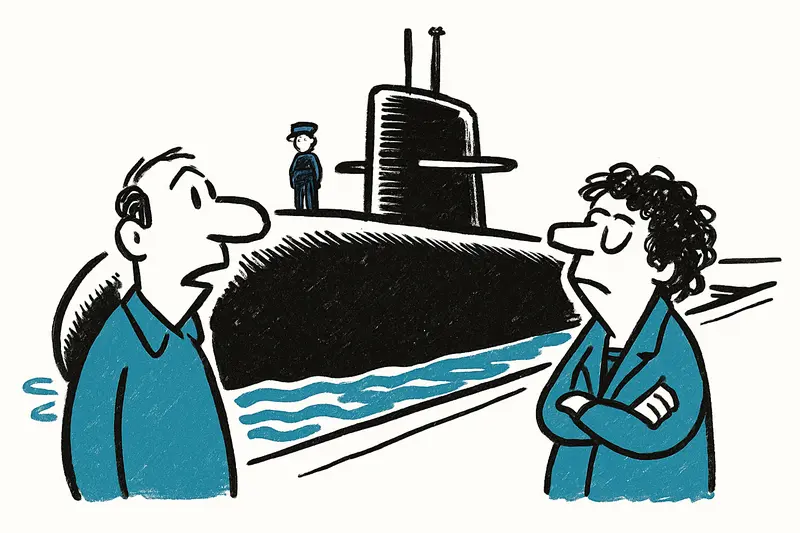
In the early morning, when cups clink in the cafés along Avenida Gabriel Roca and the buses toward Plaça d'Espanya are still half empty, a different scene often unfolds on the Portopí quay: sailors in dark blue jackets, a tugboat, the low hum of logistics vessels and seagulls squabbling over a fresh catch. A few days ago that very scene attracted attention when the submarine S-71 "Galerna" docked at the Portopí naval base and many passersby stopped to look at the grey stern.
Key question: Should Mallorca be worried — or is this simply routine naval activity? Short answer: both, and not nearly as dramatic as some have speculated. The "Galerna" is the first boat of its class, built in Cartagena and in service since the early 1980s. It is currently anchored in Palma after maneuvers with NATO participation and is using the Portopí facilities so the crew can take a break. The port's logistical units assisted with the docking.
Critical analysis: For outsiders, a large military vessel automatically draws attention, especially at times when headlines from the Middle East fuel fear and speculation. But military units train regularly — mine-simulation exercises are also part of the program to protect harbor and shipping lanes. Such maneuvers are not inherently a sign of escalation, but preparation for a range of scenarios. Still: the simultaneous deployment of other units to the Mediterranean, for example a frigate heading to the eastern Mediterranean, reinforces for some the impression that this is a direct response to current crises.
What is missing from the public debate: clear, understandable information. Residents and tourists usually do not receive detailed explanations about why units arrive, how long they will stay and what security measures affect the port. The vacuum is filled by the rumor mill — from conspiracy narratives to false links with distant conflicts. Transparent communication would help dampen speculation without compromising military secrets.
An everyday scene from Palma: a fish seller at the Pont de Portopí shakes his head with a laugh when a neighbor talks about a possible war; an elderly pensioner on the promenade counts the ships like he used to count holidaymakers. For many residents the immediate concern remains practical: will there be delays in trade, increased checks at the harbor or restrictions for commercial fishermen and yachts? Such practical impacts are more realistic than the fear of a direct threat on Mallorca's streets.
Concrete proposals: 1) The port authority and the Armada should provide a compact information page with anonymized, relevant facts — berthing times, expected restrictions for civilian traffic, contact persons for affected businesses. 2) A municipal information point on the Passeig Marítim could offer short, factual updates during visible maneuvers so tourists and residents are not reliant on speculation. 3) Regular meetings between port operators, fishing associations and tourism stakeholders would make economic consequences visible early. 4) In schools and neighborhood centers, simple guidance could be posted to help avoid misinformation — how to identify reliable sources when tensions in the world rise.
Conclusion: The presence of the "Galerna" in Portopí is militarily plausible and likely a mix of post-exercise procedures and crew rest. For Mallorca, however, the most important lesson is not military but communicative: more transparency and pragmatic on-site information would reduce fears and protect everyday life. The seagulls on the quay care little — but the people who live and work there deserve clarity.
Frequently asked questions
Is it normal to see a submarine docked in Portopí, Palma?
Should people in Mallorca be worried when a military submarine appears in Palma?
What kind of impact can naval activity have on Portopí and Palma harbour?
Why do rumours spread so quickly when a submarine is seen in Palma?
What should residents and visitors in Palma do if there is unusual naval activity?
How long do military vessels usually stay in Portopí, Palma?
What is Portopí in Palma used for by the Navy?
Can naval exercises in the Mediterranean affect everyday life in Mallorca?
Similar News

"Expensive chaos" and many open questions: What clients can do when a lawyer suddenly stops responding
Several clients complain that a well-known German lawyer in Mallorca has been unreachable for months. Key question: What...

TV tip: 'The Last Problem' — Mallorca as the setting of a classic crime
A classic whodunit on Mallorca: A new miniseries set in spring 1959 brings storm, an isolated hotel and a dense web of s...
Nipping Sea Creatures: Why Bathers in Cala Major and Elsewhere Should Be Cautious
In Cala Major, bathers have reported being nipped by small fish. What is behind it, how can problems be avoided — and wh...

Forced eviction in Santa Catalina: When a 65-year-old slept in her car and showered on the beach — a question of responsibility
The story of Pilar López from Santa Catalina represents a problem affecting many Mallorcans: How can an island with a bo...

New traffic rules from October 1: What Mallorca visitors and locals need to know
From October 1, 2026, Spain will implement far-reaching changes to traffic regulations. Important for Mallorca: greater ...
More to explore
Discover more interesting content

Can Cap de Bou

Townhouse Lleo 72
