
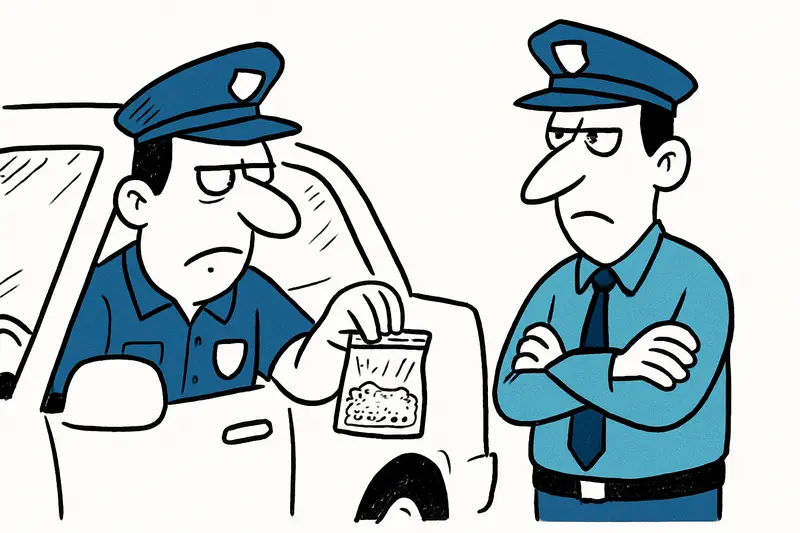
Interim Suspension after Drug Find in Son Banya: An Isolated Case or a Systemic Problem?
An officer from Capdepera was provisionally suspended after a positive drug test and drugs were found in his car. The case raises questions about oversight, transparency and trust in the local police. A look at gaps and solutions.
Interim Suspension after Drug Find in Son Banya: An Isolated Case or a Systemic Problem?
Tarnished honour, a quiet morning: What the incident says about trust and oversight
Key question: Can public safety in Mallorca function credibly when a member of a local police force drives into a well-known drug sales area at night (see Major raid in Son Banya: Arrest of the alleged drug boss — and then?), tests positive during a stop and is later suspended without pay for 102 days?
The facts are clear: the incident occurred in November 2024. A police officer from Capdepera was off duty, left Son Banya and was searched during a traffic stop by the National Police. Drugs were found in the vehicle; the accused said they belonged to an accompanying person. Later, he also tested positive in a drug test. The municipal administration initiated disciplinary proceedings and the officer was suspended without pay for 102 days. The Balearic Institute for Public Safety was informed. The investigation is considered closed; further administrative measures have not yet been made public.
So much for the sober chronology. But the picture is not sober: Son Banya has stood for years for open small-scale drug dealing. Anyone who appears there knows what to expect. That a uniform was found in the trunk of a car is not only embarrassing; it sends a signal about the boundary between official duty and private life, between oversight and entanglement.
What is missing from the public discourse is an honest engagement with structural questions. Is the 102-day unpaid suspension a severe sanction or a half-hearted start? Who checks, after the procedure is completed, how resilient the unit's integrity really is? How often are unannounced tests carried out? Are uniforms and service equipment sufficiently secured? These points remain in the shadows.
An everyday scene many readers will recognize: it's a cool morning in Palma, Passeig Mallorca slowly fills up; the smell of café con leche mixes with the engine noise of buses, and behind the market sanitation workers call the paper bins together. In Capdepera itself you see the same small gestures: retirees with newspapers, delivery vans heading to construction sites. Such places live on trust. When the behaviour of individual officers scratches at that trust, it is not just a personnel matter – it affects neighbours, shopkeepers, parents and young people.
Critical analysis: this case reveals not only individual misconduct but also gaps in prevention, oversight and transparency. The National Police carried out the stop, the local administration suspended the officer (see Drugs, Millions and Suspected Abuse of Office: What the Major Operation in Mallorca Reveals). Yet the process feels fragmented: notification to the Balearic Institute for Public Safety, then disciplinary proceedings, without the island public being able to follow which standards were applied. Without comprehensible clarification there is room for speculation (see Arrest of 'El Indio' in Palma: A Step Forward with Many Questions) – the wounds to public trust heal more slowly than any administrative act.
What is missing from the public debate, specifically:
1. A publicly accessible overview of disciplinary proceedings and their sanctions at the local level, anonymized but informative.
2. Transparent rules on how often off-duty checks may take place and what rights officers have in such cases.
3. Measures to secure uniforms and service equipment so that the impression is not created that official items are used privately.
Concrete solutions (not abstract demands, but practical steps):
1) Introduction of regular, unannounced drug tests for all security personnel on the island, accompanied by a binding protocol that safeguards data protection and the rule of law.
2) Establishment of an independent complaints office at regional level to review cases of police misconduct and publish reports in aggregated form.
3) Mandatory inventory lists for uniforms and equipment, regular checks by the municipal administration and clear sanctions for misuse.
4) Training on ethics in service, supplemented by low-threshold support offers for staff with personal problems – prevention rather than only punishment.
5) After the conclusion of judicial or disciplinary proceedings: a transparent feedback culture towards the public so that citizens know which consequences were actually taken.
Such measures cost time and money. But they cost less than the creeping loss of trust in places like Capdepera or neighbourhoods like Son Banya. If citizens take the police less seriously in the evenings, the risk increases that crimes are not reported, witnesses stay silent and prevention fails.
Conclusion: the individual case may appear as a human error. But the authorities' reaction and the way the matter is processed say more than the incident alone. 102 days without pay are a clear punishment – but not a complete answer. Those who want order to work in Mallorca must think beyond controls: transparency, independent oversight and concrete prevention measures. Otherwise, after years of small and large incidents, a feeling remains that is hard to dispel: people care about appearances, not the foundations of order.
In the end there is the simple truth you can hear on a street corner in Capdepera when the bakery takes its break: 'The police are for us, not against us.' If that is no longer a given, a disciplinary sheet is not enough; honest work on systems and relationships is needed.
Frequently asked questions
What happened to the police officer in Son Banya, Mallorca?
Is Son Banya still known as a drug area in Mallorca?
How hot is Mallorca in November, and is it still warm enough to go out?
Can you still swim in Mallorca in late autumn?
What should I know before visiting Son Banya in Mallorca?
Why does a case like this matter for trust in Mallorca’s police?
What kind of disciplinary action can police officers face in Mallorca?
What does the Capdepera case say about oversight in Mallorca?
Similar News

"Expensive chaos" and many open questions: What clients can do when a lawyer suddenly stops responding
Several clients complain that a well-known German lawyer in Mallorca has been unreachable for months. Key question: What...

TV tip: 'The Last Problem' — Mallorca as the setting of a classic crime
A classic whodunit on Mallorca: A new miniseries set in spring 1959 brings storm, an isolated hotel and a dense web of s...

Nipping Sea Creatures: Why Bathers in Cala Major and Elsewhere Should Be Cautious
In Cala Major, bathers have reported being nipped by small fish. What is behind it, how can problems be avoided — and wh...
Forced eviction in Santa Catalina: When a 65-year-old slept in her car and showered on the beach — a question of responsibility
The story of Pilar López from Santa Catalina represents a problem affecting many Mallorcans: How can an island with a bo...
New traffic rules from October 1: What Mallorca visitors and locals need to know
From October 1, 2026, Spain will implement far-reaching changes to traffic regulations. Important for Mallorca: greater ...
More to explore
Discover more interesting content

Can Cap de Bou

Townhouse Lleo 72
