
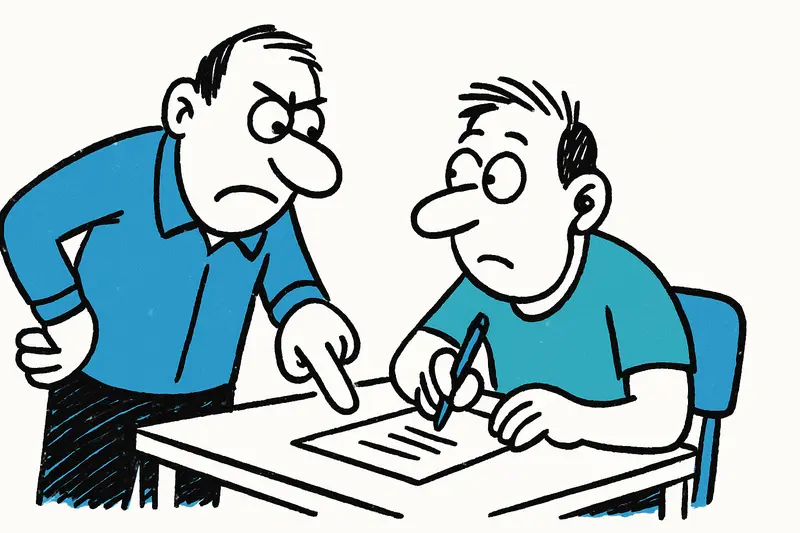
Suspicious Button in the Ear: How Gaps in the Examination System Create Security Risks
Suspicious Button in the Ear: How Gaps in the Examination System Create Security Risks
Five candidates in Mallorca were caught using hidden radio technology while passing the driving test. A reality check: how could the systems fail — and what needs to change?
Suspicious Button in the Ear: How Gaps in the Examination System Create Security Risks
Five cases, elaborate technology — and the question: who pays the price for such deception?
In May, authorities in Mallorca discovered five candidates who used prohibited technical aids during the theoretical driving test. The Guardia Civil and the regional traffic authority filed reports; fines of 500 euros and bans of six months could be imposed on those involved. In two further cases during qualification exams for truck and bus drivers, illicit devices were also detected. In short: the manipulations are not trivial. But how could this happen, and what does it say about the system?
Key question: How do sophisticated "spy kits" manage to undermine exams — and what consequences should authorities, driving schools and society draw from this?
The described method is technically sophisticated: exam questions are transmitted from the room to helpers outside, who send back the correct answers by radio. Receivers are hidden as barely visible "buttons" in the ear. On the street in front of the exam center on Avinguda Gabriel Roca in Palma you hear voices, car doors and the usual everyday noises on a working day. Inside, an exam session is running — and apparently modern technology can disrupt such routines. It is good that checks uncovered the devices. But the revealed extent shows: these are not isolated incidents, but a structural problem, as seen in When Bits Became Hopes: Sabotage at Son Llàtzer and What Must Happen Now.
Critical analysis: the examination system works with clear rules, but technological development outpaces many controls. Examination rooms are usually designed for order, not for the detection of high-frequency radio transmissions or miniature micro-receivers. Examiners are often instructors, not technical investigators. At the same time, there is a market for such devices: online platforms and private vendors sell "solutions" for exam cheating, which mirrors how technology can fail in protection like When the Beep Fails: Why Protective Bracelets on Mallorca Are Not Enough. Added to this are economic incentives — for some candidates the driving licence is directly linked to work or mobility. This combination creates demand, and suppliers respond with ever more sophisticated products.
What is mostly missing in public debate: the role of driving schools and their responsibility. Driving schools are not only service providers for theory and practical lessons; they shape driving behaviour, exam routines and ethical standards. There is often a lack of discussion about how training content, examination modalities and control mechanisms can be developed together. Equally underexposed is the trade in cheating devices — who distributes them, through which channels, and how can this trade be more effectively stopped?
Everyday scene: A driving instructor sits down in a café at Plaça del Mercat after the afternoon training. He sighs, hears the clinking of cups, looks at his notes and says, without naming names: "In the past people cheated on the exam — with glances and a pencil. Today comes a button that doesn't even attract attention." This mix of resignation and concern is typical. People in Mallorca sense that road safety is not only about rules on paper, but about trust and real skills behind the wheel, a broader concern echoed in Night Robbery in Puerto Portals: Luxury Watch Theft Raises Security Questions.
Concrete approaches to solutions:
1) Technical countermeasures: exam centres should invest in equipment: simple RF detectors, sweep scans for eavesdropping before exams begin, signal-jamming measures within legal limits. Mobile security checks similar to those at airports are excessive for exam operations, but random spot checks could be a deterrent.
2) Training of invigilators: examiners need training to recognise suspicious behaviour patterns (e.g. unusual head movements, repeated leaning back, unusual eye contact) and basic technical knowledge to identify devices.
3) Greater involvement of driving schools: licensing requirements, quality checks and clear sanctions for involvement in cheating networks can discipline the industry. Positive incentives — such as discounts for demonstrably quality-oriented training — would be an additional lever.
4) Legal and law enforcement measures: in addition to fines, prosecution of the suppliers of such systems should be intensified. A transparent statistics of discovered cases and their origin would create transparency and raise public awareness.
5) Education and awareness: an information campaign explaining the risks an inexperienced driver poses to other road users hits the core: it's not just about exams, but about human lives.
What can be implemented immediately: randomized seating plans, phones and bags left outside the exam room, visible spot checks in the corridors. Such measures cost little time and money, yet reduce the temptation to cheat.
Punchy conclusion: Whoever obtains a driving licence through deceit endangers others — not only during the exam period, but permanently on our roads. The five revealed cases and two further ones in professional driver exams are a wake-up call. Mallorca does not need surveillance bureaucracy, but well thought-out, practical measures: a bundle of technology, training, regulation and education. Then the exam will be what it should be again: an honest match between rules and ability — not a platform for fraudulent shortcuts.
Frequently asked questions
Why are there concerns about cheating in Mallorca’s driving theory tests?
How do hidden earpiece devices work in driving exams?
What penalties can apply if someone cheats in a driving exam in Mallorca?
Why is driving exam cheating a road safety issue in Mallorca?
What can exam centres in Mallorca do to prevent cheating?
What role do driving schools in Mallorca play in exam integrity?
Where were the cheating cases discovered in Mallorca?
Why is cheating in Mallorca’s professional driver exams especially worrying?
Similar News

Golden October: Island pleasures instead of a winter coat – Mallorca stays warm
A late-summer remnant in October: Up to 27 °C, pleasant water temperatures around 22–24 °C and sunny days – ideal for be...
Son Sant Joan Control Center: What Questions Remain When the Island's 'Brain' Relocates
The air traffic control center in Palma manages the airspace over the Balearic Islands. With the planned move to Son Bon...
Son Gotleu under pressure: Why many rental cars were broken into in recent weeks
Residents in Son Gotleu have experienced a series of break-ins of parked cars in recent weeks. A reality check: what is ...
From Jungle Camp to Hotel Stage: Julian F. M. Stoeckel Delights in Camp de Mar
Berlin entertainer Julian F. M. Stoeckel performed two evenings in the atrium of The Camp de Mar Hotel & Resort and prov...
Man hides under bus in Cales de Mallorca: Why did the rescue take so long?
On Passeig Manacor a man stopped a bus, climbed underneath it and caused a traffic jam and a tense police operation. Wha...
More to explore
Discover more interesting content

Can Cap de Bou

Townhouse Lleo 72
