
Two-year-old falls from balcony in Inca — what the accident reveals about safety on the island
Two-year-old falls from balcony in Inca — what the accident reveals about safety on the island
A two-year-old boy fell from a first-floor balcony in Inca on Wednesday afternoon and was admitted to Son Espases with severe head injuries. The Guardia Civil is investigating. What is missing from the public debate — and what needs to happen now?
Two-year-old falls from balcony in Inca — what the accident reveals about safety on the island
A guide to the questions that must now be asked out loud
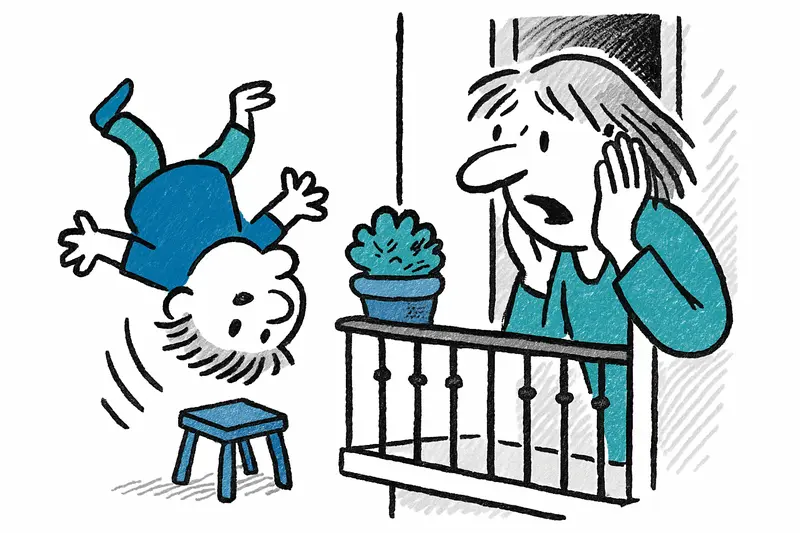
On Wednesday afternoon, around 4 pm, the quiet Carrer de Andreu Caimari in Inca briefly turned into a scene of fear: a two-year-old boy fell from a first-floor balcony and suffered a severe traumatic brain injury. Emergency responders from SAMU 061 stabilized the child on site; he was then taken to the University Hospital Son Espases, where he is currently receiving intensive care. The Guardia Civil has taken over the investigation. Similar emergencies involving toddlers have occurred elsewhere on the island, such as Careless Moment in Llucmajor: Family Rescues Two-Year-Old from Pool – Medical Teams Fight for His Life.
Key question: How can a toddler fall unnoticed from a balcony on a residential street — and what gaps in prevention, housing conditions and communication does this case reveal?
The facts are short and brutal: first floor, afternoon, emergency call by a resident, mother accompanied the child to hospital. That is enough for headlines. It is not enough for answers. In the hours after the accident many voices are raised — parents, passersby, politicians. But often there is a lack of sober examination of causes and practical measures.
Critical analysis: On Mallorca many older houses have balconies that are used differently in everyday life than in new developments. Flower pots, clotheslines, bicycle parts or a stack of boxes can quickly become climbing aids for curious children. In addition, many balconies are built so that small children can climb between balusters or pull themselves up on low parapets. A balcony on the "primer piso" may feel safe for adults — for a two-year-old it can be life-threatening. A similar incident was reported in Palma earlier, described in Balcony fall in Palma: When sleepwalking can become a deadly danger.
Another point: occupancy and supervision. In households with several small children, in rental flats with changing occupants or in holiday apartments, the established supervision systems are sometimes missing. People from many countries live and work on Mallorca; language barriers and a lack of information about local safety standards also play a role. Even briefly leaving an apartment — to fetch laundry, see a neighbor — is often enough for a child to encounter a dangerous situation. This theme was explored in Fall in Can Pastilla: More Than an Accident?.
What is often overlooked in the public debate is the chain of responsibility. Parents primarily carry supervisory duty, but landlords, builders and municipalities influence structural safety. Are there clear requirements for railing heights, spacing of balusters or additional protective nets? How are holiday lets inspected? And what role do residential communities and neighbors play in early detection of hazards?
A small everyday image from Inca: the market hall smells of oranges, children run between stalls, the church bells ring. Many balconies are draped with fabrics and plants — you can see how easily a small foot could find purchase on a flower ledge. Such scenes make clear that prevention must not be abstract. It has to reach into daily life.
Concrete proposals that can be implemented immediately:
• Immediate measures: landlords and residents should secure apartments with small children by simple means — temporary grilles, higher parapets, removal of climbing aids (pots, chairs), child locks on doors to balconies.
• Information campaign: municipalities could distribute short checklists („Balcony safety for families") in pharmacies, health centers and town halls, multilingual and easy to understand.
• Regulation and inspection: the Balearic government and municipalities should review whether building regulations on parapet heights and baluster spacing need to be adjusted, especially during renovations of older buildings and for the rental of holiday apartments.
• Support for families: subsidies or one-off assistance to retrofit protective devices for low-income households could immediately save lives.
• Prevention through the health system: pediatricians and health centers should address the issue during routine check-ups; a short home safety test could raise parents' awareness.
• Neighborhood networks: local initiatives, such as parent groups or neighborhood apps, can quickly raise awareness and offer practical help with securing homes.
What is missing from the flood of headlines is the question of responsibility beyond individual blame. An accident like this is often the result of several small failings — structural shortcomings, lack of awareness, crowded living conditions. Outrage alone is not enough. Practical steps are needed that sound as banal as "move the chair away from the railing" and act as systemically as "minimum requirements during renovations".
Conclusion: The case in Inca is a wake-up call. It shows how vulnerable toddlers are in everyday environments and how many simple protective measures would be possible. In the short term, neighbors' attention and rapid action by emergency services help — in the long term we need clear rules, fair support for families and more visible prevention in our neighborhoods. The Guardia Civil is currently investigating the exact circumstances; in parallel the question must be answered how we can prevent such accidents in the future.
As the sirens subsided and the street in Inca slowly returned to normal, neighbors stood around, exchanged visibly shocked looks and casually cleared the flower pots from the balcony the next day. Small changes in everyday life — often overlooked — can make the difference here.
Frequently asked questions
How can parents make a balcony safer for a toddler in Mallorca?
Are older apartments in Mallorca more risky for small children?
What should I do if a child falls from a balcony in Mallorca?
How common are balcony accidents in residential areas like Inca?
What balcony safety rules apply in Mallorca holiday rentals?
What role do landlords have in balcony safety in Mallorca?
What are the best practical ways to childproof a flat in Mallorca?
Why is balcony safety often overlooked in Mallorca homes?
Similar News
Ryanair Flight Diverted to Barcelona: An In-Flight Emergency and the Questions That Follow
A Ryanair jet from Pisa to Málaga landed in Barcelona after a passenger became acutely ill. Why these cases need more at...
Alarm in Port de Pollença: What now for the polluted bay?
Hundreds of people protested on the beach of Port de Pollença. The environmental organization Arrels Marines demands a p...

Micaela Schäfer: Between Playa de Palma and a Berlin Law Firm — New Calm, an Old Tomcat and Solid Finances
The party artist from the Ballermann scene appears surprisingly down-to-earth: a new relationship with a Berlin lawyer, ...
At Playa de Palma: Fire in Residential Building – six people rescued on the roof, what is missing in prevention?
In the evening a fire broke out on the first floor of a five‑storey building on Calle Trasimé. Six residents fled to the...
New License Requirement for Mini-Boats in Mallorca: Protection Measure or Tourism Brake?
From October 1 renters of small recreational boats in the Balearics must present a boating license. Critical questions r...
More to explore
Discover more interesting content

Boat Tour with BBQ along Es Trenc Beach

Private transfer from Mallorca Airport (PMI) to Pollensa
