
Yellow-green whip snake on the move: The Zornnatter is on Mallorca — what matters now
Yellow-green whip snake on the move: The Zornnatter is on Mallorca — what matters now
The yellow-green Zornnatter (Hierophis viridiflavus) has been recorded on Mallorca for the first time. Why this is more than a curious find for the island, what gaps exist in the response and how residents and authorities should react now.
Yellow-green whip snake on the move: The Zornnatter is on Mallorca — what matters now
Key question: Can we stop the new reptile before it becomes a problem for our native wildlife?
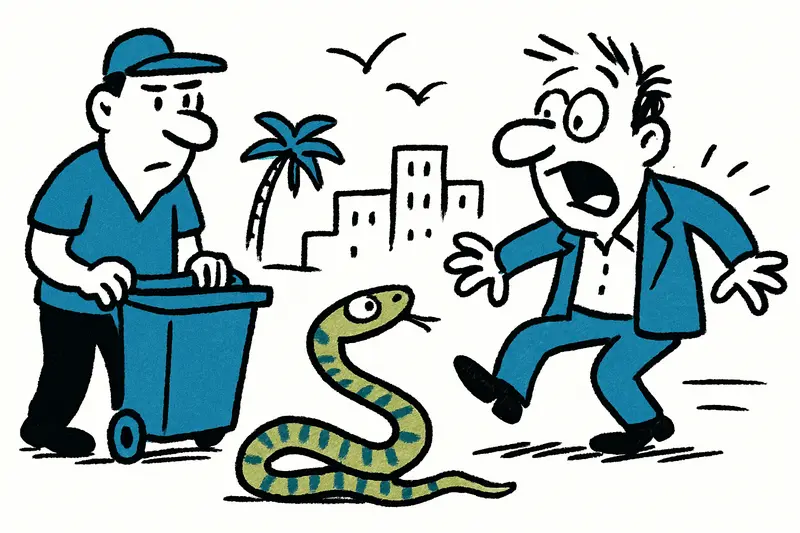
It is warm this morning at the Passeig Marítim, about 25 °C, a few clouds drift over the bay, seagulls cry, and street sweepers push their machines along the plaça. Amid the usual island life a news item appears that briefly disrupts everyday routine: Natura Parc has confirmed the presence of the yellow-green Zornnatter (Hierophis viridiflavus) on Mallorca. The consequences are not as shaky as a blurry phone photo on WhatsApp might suggest: ecosystems work differently on islands than on the mainland — and new predators can quickly cause damage there.
Important to know: the Zornnatter is not among the species dangerous to humans, the foundation confirms. Nevertheless, its presence is not harmless for local wildlife. Other non-native snake species have already become established on Mallorca: ladder snakes (Zamenis scalaris), horseshoe snakes (Hemorrhois hippocrepis) and Montpellier snakes (Malpolon monspessulanus). Every additionally introduced species alters the balance of prey and predators. Small lizards, ground-nesting birds or young individuals of native species often have no suitable defenses here. This trend is discussed in Why Snakes Are Appearing More Often in Mallorca Now — Danger, Causes and What We Should Do.
Critical analysis: Where the debate falters
The report is correct but incomplete: finding a species is only the beginning. Public discussion often misses questions about resources and responsibilities. Who continues monitoring? Which financial resources are available for capture and monitoring teams? How are data consolidated — between municipalities, conservationists and rescue centers? Currently there are indications to report sightings to the wildlife rescue center COFIB, the emergency number 112 or environmental officers; a photo and an exact location help. But reporting alone is not enough if the reporting centers cannot respond quickly to too many calls.
Another blind spot is assessing the actual risk of spread. Will the Zornnatter remain confined to coastal areas, search for prey in gardens and plantations, or advance into the Tramuntana? Without regular mapping such forecasts remain open. In conversations with gardeners and market vendors I repeatedly hear: plant imports and crates at the port are potential introduction pathways. This practice is hardly adequately controlled, as reported in Oriental hornet on Mallorca: First nest in Esporles raises serious questions.
A scene from everyday life
Yesterday afternoon, at the small car park near Cala Mayor, a taxi driver asked whether the snake was dangerous. A family from Germany sat in the shade, the children played with a ball. Such encounters are likely: beaches, parking lots at coves and even single-family gardens provide hiding places. It is not the horror scenario of a giant snake in the pool, but rather small, mobile populations that spread unnoticed — until you notice that lizards are disappearing.
Concrete solutions
The island now needs practical steps, not feelings. Suggestions that can be implemented quickly:
1) Early-detection map — A central, publicly accessible map where COFIB, municipalities and citizens can enter sightings. Photos and coordinates should be mandatory fields.
2) Mobile teams — Short response units in affected municipalities, trained in safe capture and verified documentation, so reports do not go unprocessed.
3) Control of entry routes — More checks on plant transports and packaging at ports and airports; simple visual inspections and information for shippers.
4) Local public information — Information posters at beach access points, municipal offices and garden markets: How should I behave if I see a snake? Take a photo, note the location, do not touch.
5) Research and monitoring — Support for smaller studies on the species' diet and distribution on Mallorca, combined with genetic analysis to trace possible origins.
6) Networking — A forum for municipalities, conservation organizations, COFIB and agriculture to coordinate measures and share resources.
What is missing from the public discourse
It is still too rarely said: these problems are long-term. A single capture solves nothing if breeding or further introductions occur. The question of long-term funding is also missing — monitoring costs money, as do training sessions for municipal workers, foresters and volunteers. And: there is a lack of transparency around data. Citizens should be able to report, but they should also be able to see how reports are processed.
One last point: fear is a poor adviser. Panic leads to rash actions and false reports. Factual information and fast, visible responses from authorities build trust. Related coverage includes 'A snake eats another' - what cannibalism among invasive snakes reveals about Mallorca's ecosystem.
Conclusion
The Zornnatter on Mallorca is not a horror-movie scenario — but a realistic wake-up call. Early detection, coordinated responses and clear information are now needed. If you see a snake: take a photo, note the exact location, inform COFIB or call 112. The sooner we work together, the more likely Mallorca will remain a place where our native lizards, birds and small mammals can continue to exist.
Frequently asked questions
What kind of weather can I expect in Mallorca in April?
Is April a good time to swim in the sea in Mallorca?
What should I pack for Mallorca in April?
What is Mallorca like in spring for outdoor activities?
Is Palma de Mallorca nice to visit in April?
What is Pollença like in spring?
When is the best time to visit Mallorca if I want mild weather?
Can you still have a beach holiday in Mallorca before summer?
Similar News
From the Reality Studio to the Pitch: Aleks Petrovic Makes Mallorca His Base
The former participant in numerous TV shows moves from Dubai to the island and launches a project with FC Germania Mallo...

When the Phone Falls Silent: Concern for Sarah Joelle in Mallorca — and What It Reveals
After days without a response, the TV personality's unreachability in Mallorca sparked concern. Shortly afterwards an al...

Ultraluxury on the Ground: Four Seasons Jet in Palma — a Reality Check for Formentor and the Island
A high-priced flight crosses Mallorca and its guests stay for days at the Formentor resort. What does the island get bes...
Death of a Witness and the Justice Backlog: Why the Kegel Brothers Trial Matters in Mallorca
A witness in the Playa de Palma fire case has died, and the trial against eight German holidaymakers has been delayed un...

Champagne Reception, Red Carpet and Mini Originals: The Pre-Nit del Art at Gallery Mensing
Almost 400 guests, champagne, pop-art feats by Tom Boston and a raffle for the Parkinson's foundation: Gallery Mensing t...
More to explore
Discover more interesting content

Can Cap de Bou

Townhouse Lleo 72
