
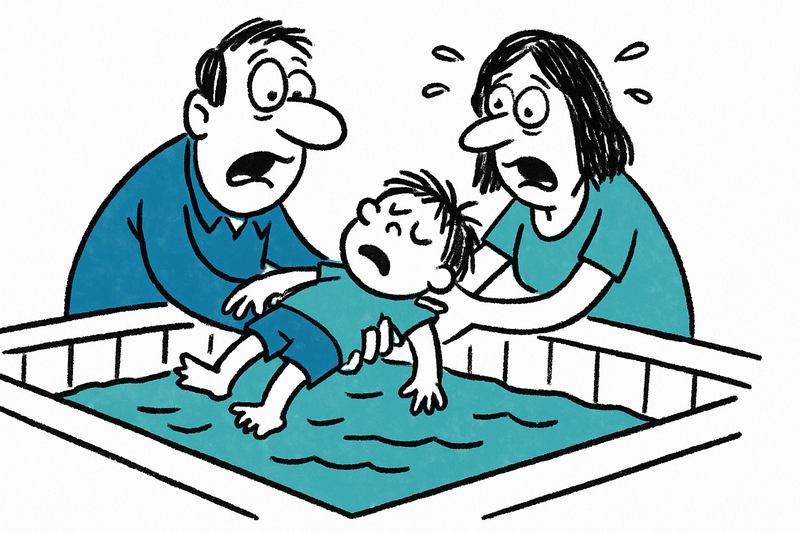
Careless Moment in Llucmajor: Family Rescues Two-Year-Old from Pool – Medical Teams Fight for His Life
On a hot Monday afternoon in Camí de Buniferri a moment of inattention turned into a life-threatening situation: a two-year-old boy was found unconscious in a pool. A quick rescue took him to Son Espases — but many questions about the safety of private holiday homes remain open.
A brief moment — with grave consequences
It was the familiar picture of a Spanish summer afternoon: sun, cicadas, the scent of rosemary and the soft chime of a distant church bell in Llucmajor. On Camí de Buniferri, an area with scattered holiday homes and private pools, idyllic calm turned into pain and action. A two-year-old boy lay motionless in the pool, discovered by his parents in a moment that had no warning.
Quick response — a fortunate coincidence?
The family reacted immediately: the child was pulled from the water, first aid and resuscitation measures were started, and they chose the nearby PAC in Llucmajor. There the boy was stabilised enough for emergency specialists to order a transfer to the Son Espases University Hospital in Palma. Reports are detailed in La familia salva a un niño de dos años de la piscina – médicos luchan por su vida. A 'green alert' ensured police accompaniment, cleared intersections and a rapid blue-light transfer — in emergencies every minute counts.
Reports indicate that the child was conscious on arrival in Palma; at the same time doctors described his condition as very serious. The coming hours and days remain critical.
The central question: Why do such accidents happen in private holiday accommodations?
Drowning is one of the most common causes of death among toddlers worldwide — WHO factsheet on drowning. But on Mallorca most cases occur in private pools. But where exactly is the problem? Is it negligence by individual families, structural gaps in holiday rentals, or a combination of both? The discussion often stops at warnings. What is needed are more precise answers: Who inspects holiday homes? Are there minimum requirements for fences, alarms or lockable pool areas? And how well prepared are families for such situations?
What is often missing in the public debate
Supervision obligations are often the only obvious topic addressed. Less discussed are concrete obstacles: language barriers between landlords and guests, unclear contract clauses about safety equipment, or simply a lack of on-site information about first aid and resuscitation. In rural areas like Camí de Buniferri, longer response times for emergency services and the low visibility of houses on unlit roads add to the problem — factors that cost time in an emergency.
Concrete measures that would make sense now
From the tragedy, practical measures can be derived that could save lives:
- Mandatory information for holiday rentals: Hosts should be required to state in listings and at key handover which pool safety measures are in place (fences, alarms, covers).
- Minimum standards for pools: Regional regulations could recommend or require barriers or self-closing gates for pools in rental properties.
- Free or subsidised first-aid courses: For residents and frequent hosts — basic resuscitation skills are often decisive for survival, as described in Red Cross guidance on performing CPR for adults, children and infants.
- Technical solutions: Motion or water alarm systems, pool covers and childproof locks are not luxuries but prevention measures.
- Better on-site information: Clear instructions in several languages on arrival, including the location of the nearest PAC, emergency numbers and basic safety guidance for families with young children.
An appeal to local politics and neighbours
Authorities could launch a small but visible programme: safety seals for family-friendly holiday homes, refresher campaigns on life-saving measures and cooperation with rental platforms, as highlighted in Fatal Rescue Attempt in Son Bauló: What Must Change on Our Beaches. Neighbours in rural districts could also share information more quickly in local groups (the village shop, the bar or WhatsApp communities) and point out risks — community often helps more than a rigid guideline.
Thoughtful conclusion
The scene at the pool in Llucmajor is a reminder of how fragile our days are: a brief moment, a missing gate, a second of inattention — and life can suddenly come to a halt. Let us hope the boy recovers in the coming days and that the events in Mallorca spark a serious, constructive conversation about pool safety in private accommodations. Prevention may cost time and money, but it can be the most important investment of all: a child's life.
Frequently asked questions
Why are private pools in Mallorca a safety risk for small children?
What should you do first if a child is found unconscious in a pool in Mallorca?
How important is CPR in a drowning emergency in Mallorca?
Are holiday rental owners in Mallorca required to have pool safety measures?
Why can emergencies take longer to handle in rural parts of Mallorca?
What pool safety information should a Mallorca holiday home provide on arrival?
How can families reduce the risk of pool accidents in Mallorca?
Which area in Llucmajor was involved in the pool emergency?
Similar News
Who Gets Left Out? Why Overbookings Will Hit Many Mallorca Travelers This Summer
On hot check-in days at Son Sant Joan, frustrated travelers pile up. New figures from Reclamador.es show that a large sh...
When the Handyman Came: How an Engagement Ring Disappeared in Mallorca and What It Says About Trust
During a repair in Andratx a highly personal engagement ring went missing — a case that calls not only for punishment bu...
How Burglars Test Fincas in Mallorca — and What You Can Do About It
The Spanish National Police warn of a simple but effective trick: small markings on doors reveal whether a finca is occu...
Palma doubles blue zone: What this means for residents, tourists and narrow streets
From 1 January 2027 Palma's ORA area will grow from around 12,000 to 24,000 spaces. Key question: Will the expansion bri...
Engagement ring disappears during repair: court upholds prison sentences for plumber and partner
During a heating repair in an apartment in Andratx an engraved engagement ring disappeared. After a trace to a pawnshop ...
More to explore
Discover more interesting content

Can Cap de Bou

Townhouse Lleo 72
