
Holiday Rentals on Mallorca's Coasts: Who Pays the Bill?
Holiday Rentals on Mallorca's Coasts: Who Pays the Bill?
Weekly rents on the Balearic coasts rise to an average of €2,271 — almost €1,000 above the Spanish average. Key question: How long will this remain bearable for residents?
Holiday Rentals on Mallorca's Coasts: Who Pays the Bill?
Key question: Can locals and regular visitors still bear the price increases?
The stark number is now on the table: on average, holiday apartments on the Balearic coasts cost €2,271 per week this summer. That is €918 more than the Spanish average of €1,353. Such amounts are noticeable not only in tour operators' accounting, but directly here on the island — in the cafés on Passeig Mallorca, on signs above front doors and in conversations at the Santa Catalina market. This figure is detailed in Balearic Islands: Rents to rise by an average of €400 in 2026 — who will pay the bill?.
Why is that? In short: location, location, location — and the scarce availability in the most tourist-attractive coastal stretches. Tecnitasa, which collected the data, also shows that weekly rents nationwide are on average 6.5 percent higher than in 2025. The Balearics are at the top of the list, and this has concrete faces: in Santanyí a 60-square-meter apartment in Cala Figuera costs around €1,375 per week in summer; not far away in Portocolom a detached house of 250 square meters fetches roughly €3,600 per week.
The report also reveals extreme contrasts: Puerto Banús (Marbella) tops the list at €3,800 per week for a 110-square-meter apartment, while on the other end Playa Murallón in Asturias shows €560 for 55 square meters. Such ranges show: it is not just the island, it is the address.
Critical analysis: growth has slowed somewhat, but price pressure remains. Three mechanisms drive this: first, short-term holiday rentals displace affordable long-term housing, as discussed in Vacation Rentals Are King — But at What Cost for Mallorca?. Second, investor demand and expected returns lead owners to prepare properties for weekly rentals — refurbishments, luxury upgrades, professional cleaning services. Third, true proximity to the beach and hotspots remains a scarce resource; it pushes prices up faster than general inflation rates.
What is often missing in public debate are the everyday consequences for people who live here. Not only middle-income renters, but also tradespeople, teachers and young families feel the displacement. This trend is explored in Rising Cost of Living in Mallorca: Who Pays the Price?. Early in the morning on Carrer de Sant Miquel you hear the delivery vans; teams of craftsmen get out — many of them now live outside the city and commute because rents in the center and near the beach have become unaffordable.
Another blind spot: transparency. There are figures for weekly rents and peak values, but hardly any traceable data on the total number of holiday flats versus regular rental apartments in individual municipalities. Without that calculation planning is difficult: how many homes could be returned to permanent housing without paralysing the tourist infrastructure completely? Recent coverage such as Payday 2026: Why Many Renters in Mallorca Have Reason to Be Afraid discusses pressures in the rental market that complicate such planning.
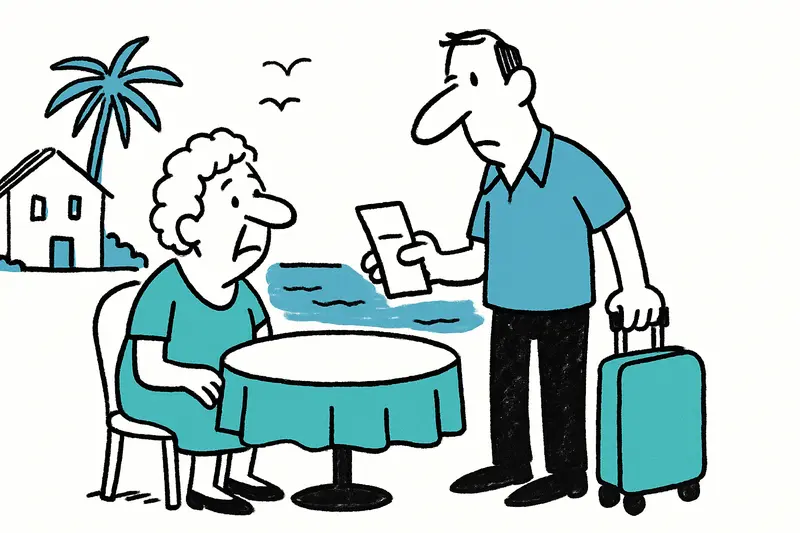
Everyday scene: on a warm morning in Portixol an elderly woman sits in front of the bakery, her shopping bag on the ground. She says her son is giving up his flat because the landlord prefers to rent to holidaymakers. In the background gulls screech, a tram fanfare passes, tourists push suitcases. Such scenes repeat along the coast — and they cost the island quality of life.
Concrete solutions we can see right away:
1. Better data and transparency: Municipalities should maintain mandatory registers for short-term rentals and publish them regularly — size, location, duration of use.
2. Tax incentives for long-term rentals: Short-term tax breaks or reduced charges for owners who rent apartments permanently to locals.
3. Quotas and targeted occupancy controls: Instead of blanket bans, quotas per municipality help, combined with consistent inspections and fines against illegal rentals.
4. Promotion of affordable housing: Public–private models for housing projects tied to employees in the tourism sector — not just converting vacant buildings into luxury residences.
5. Strengthen local governance: More neighborhood participation in change-of-use decisions and a mandatory review before approving holiday rental permits.
A touch of irony is allowed: the beaches are not less beautiful, only more expensive — and one wonders whether soon sunbathing will be a luxury. The fact is: as long as a week on the coast here costs an average of €2,271, the balance between the tourism economy and living space remains fragile.
Bottom line: the high weekly prices are not a law of nature, but the result of market choices, planning gaps and political inaction. Those who want Mallorca to remain more than an exclusive weekly address must act now: transparently, locally and practically. Otherwise, in the end it will not only be holidaymakers who pay more — but the people who keep this island alive every day.
Frequently asked questions
Why are holiday rentals on Mallorca so expensive in summer?
How much do holiday apartments on Mallorca's coast cost per week?
Is it still possible for locals to afford housing near the beach in Mallorca?
What should I pack for a Mallorca holiday apartment by the coast?
Why do places like Santanyí and Cala Figuera have such high rental prices?
Are holiday rentals in Portocolom more expensive than in other parts of Mallorca?
What can Mallorca towns do to reduce pressure from holiday rentals?
Why does holiday rental pressure affect everyday life in Mallorca?
Similar News

When the Wallet Becomes a Danger: Attack in Peguera and Lessons for Mallorca
In Peguera, two women are said to have stolen the wallet from a 75-year-old German couple. When the victim intervened, t...
Plata stays Plata: Young people take over, Llonguets remain
A small bar on Carrer de l'Argenteria will continue: Tolo Serra hands the place over to young Mallorcans at the end of t...

Unnoticed in the Luggage Compartment: How a Boy Traveled More Than 100 Kilometers in a Team Bus
A minor traveled in the undercarriage of a team bus for more than 100 kilometers until his cries for help were heard. A ...

Cap Vermell Grand: Second Michelin Key – a Gift for the East
The Cap Vermell Grand in Capdepera has been awarded its second Michelin key. For the region this elevates the luxury off...
Eurowings lets four aircraft carry names – a friendly idea that also reaches Mallorca
Eurowings is launching a campaign: four Airbus A320s are to carry the first names of people who help others in everyday ...
More to explore
Discover more interesting content

Can Cap de Bou

Townhouse Lleo 72
