
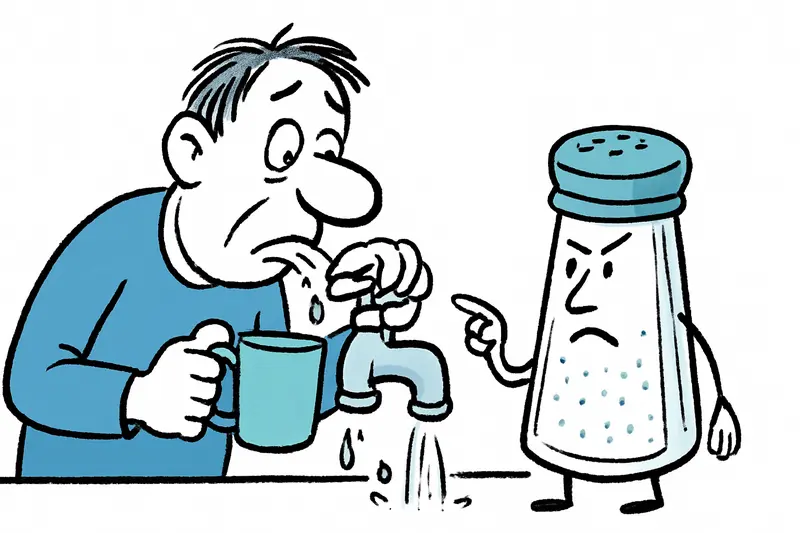
Tap water in Campos: Anyone still drinking from the tap risks salt in the glass
Tap water in Campos: Anyone still drinking from the tap risks salt in the glass
The municipality of Campos warns: rising sodium levels have contaminated the municipal well water. A critical assessment of what this means for daily life, health and the future — and which steps are now necessary.
Tap water in Campos: Anyone still drinking from the tap risks salt in the glass
Why rising sodium levels are more than just a less pleasant taste
Morning on the Plaça Major in Campos: vendors put away boxes of lemons, the church bell rings on the hour, and the scent of freshly baked pa amb oli still lingers outside some houses. People fill their coffee cups, turn on the taps — and only then notice something different: a faint salty note in the water that one wouldn't expect. The city administration has meanwhile advised not to use the tap water for drinking or cooking. The question now hanging over the municipality is clear: How serious is the problem really — and how do we respond so that health and everyday life are not affected?
A first reality check: the cause is known — prolonged dry periods lower the groundwater table, so the balance between fresh and saltwater in some wells tips. This leads to increased sodium concentrations, and readings at several measurement points are above what authorities consider harmless. A salty taste is the harmless consequence; more serious are potential health effects for specific groups, such as people with high blood pressure, cardiovascular conditions, or patients on low-sodium diets.
What needs critical scrutiny is the flow of information: residents lack easily accessible, up-to-date measurement data. Transparency is not a bonus, it is now the most important thing. People want to know which wells are affected, how much the values fluctuate, and how long restrictions are likely to last. Without this data, distrust grows — and creativity: some switch to bottled water, some continue cooking as before and accept a salty result.
What hardly appears in the public discourse is the social imbalance of water provision. Not every household can permanently invest in bottled water. Older people or families on tight budgets are particularly vulnerable. At the same time, blanket bans on garden watering or filling pools mainly affect residents with properties — and businesses like small nurseries or campers who rely on drinking water. Such consequences must be considered in measures — as when seven municipalities turned off the tap.
On Mallorca, not everything is just reaction; there are also levers for action. In the short term, municipalities should present binding emergency plans: designated distribution points for safe drinking water, delivery priority for care homes and medical practices, free pickup options for risk groups. Mobile desalination or treatment units can bridge gaps if organized in time, a step already under consideration in Palma examines desalination. At the same time, routine monitoring must be stepped up: daily or several-times-weekly measurements at all relevant well systems, with publicly accessible result tables on the internet, similar to the real-time water map for Mallorca.
In the medium term, it's about infrastructure: expansion of desalination and treatment facilities that can be flexibly and quickly switched on, and networks that clearly distinguish between drinking water and non-potable service water. Targeted use of treated wastewater for agriculture and public green spaces can conserve drinking water resources. The same applies to repairing old pipes and reducing losses from leaks — a problem many municipalities underestimate.
Concrete proposals for Campos and similar places on Mallorca:
1) Immediate publication of all laboratory values and a map of the affected network segments.
2) Set up at least two central water distribution points in the municipality, with priority for addresses with limited mobility.
3) Emergency procurement of drinking water by truck and short-term rental of mobile desalination units.
4) Temporary subsidies or vouchers for bottled water for households with vulnerable persons.
5) Ban on public use of drinking water for pools, but clear exemptions for existential needs of small businesses.
6) Monitoring program and a municipal information hotline providing daily updates.
The role of the island administration is also central: funding for rapid technical solutions, coordination between municipalities, and long-term grant programs for decentralized rainwater storage or connection to more robust networks. And yes — agriculture and tourism must be held more honestly to account: watering schedules, more efficient systems and a tiered pricing system that penalizes waste. The tension between tourism and water resources is explored further in When the Tap Runs Scarcer: Mallorca Between a Tourism Boom and a Dwindling Water Source.
An everyday scenario that remains: the elderly woman on the Carrer Major cooking her soup at midday and now adjusting her habits, the farmer near Ses Salines wondering which plots he still waters, the families switching from tap water to bottles. Such small decisions add up. If authorities act quickly, transparently and with social balance, the situation can be eased. If they do not, discontent will grow — and trust in public systems will suffer.
Conclusion: The problem is not a singular event, but part of a larger pattern: falling groundwater levels, increasing dependence on technical solutions and unclear distribution rules in dry periods. Campos now needs pragmatic emergency aid plus binding plans for the coming years. In the short term it is about safe drinking water and protecting vulnerable groups. In the long term it is about a water supply that works in droughts and is socially fair and ecologically responsible. Whoever turns the tap in Campos must know what comes out — and whoever is responsible must act, without further excuses.
Frequently asked questions
When is the best time to visit Mallorca for outdoor activities?
What should I pack for a Mallorca trip, considering the weather?
Is Mallorca suitable for family vacations with kids?
How easy is it to get around Mallorca without a car?
What are must-see sights in Palma de Mallorca?
Are there scenic drives or walking routes in the Serra de Tramuntana?
Which Mallorca towns are great for a relaxed beach holiday?
What should I know about Mallorca’s weather and sea conditions for swimming?
Similar News

Palma's Subway Project: Environmental Review Begins — More Questions Than Answers
The environmental review for Palma's planned subway extension to Son Espases has started, raising concerns and unanswere...
When Tents Return by the Sea: Palma Between the Congress Palace and Sleeping Places
Tents repeatedly appear in Albert Camus Park and on the beach at Can Pere Antoni. Why don't evictions solve the problem ...
Alleged Rape in Palma: How Home Videos Changed the Investigation
A woman reports an assault in Palma. Secretly recorded videos are said to have supported her account. Why migrant women ...
After Major Partners Exit: Palma Rewrites the Rules for the Waterbus
The port authority has changed the rules for the planned waterbus: removal of rigid minimum revenue guarantees, higher u...
Rats in Llucmajor: How Uncollected Garbage Became a Health Problem
In Llucmajor, uncollected trash bags, overflowing containers and rain are leading to increased rat sightings. An assessm...
More to explore
Discover more interesting content

Can Cap de Bou

Townhouse Lleo 72
