
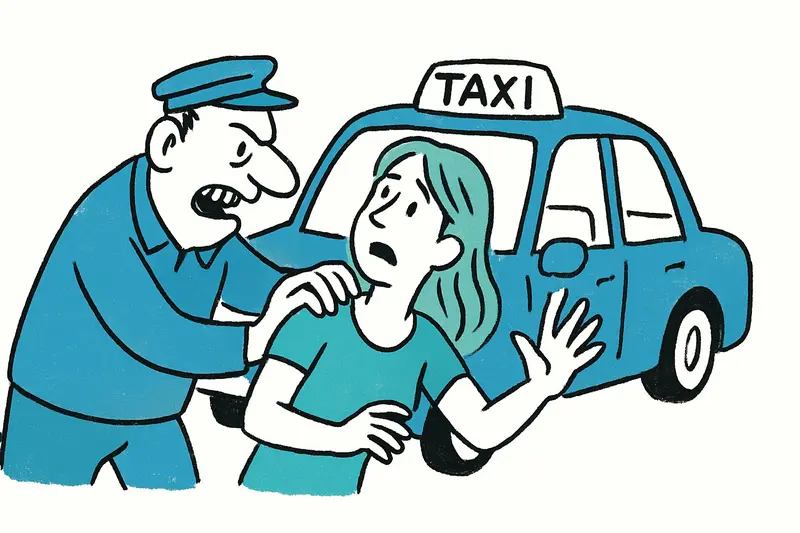
Taxi assault in Calvià: One case, many questions
A taxi driver from Calvià was convicted of the sexual abuse of a British tourist. What does the case reveal about night-time transport, controls and victim support in Mallorca?
Taxi assault in Calvià: One case, many questions
A court ruling, compensation – and a British tourist who needed psychological help
Key question: How safe are people at night in Mallorca when a taxi becomes not just transport but a threat?
The facts are scarce but bitter: On the night of 3 October 2023, a 33-year-old British tourist was inappropriately touched and harassed after getting into a taxi in Calvià. The 29-year-old driver stopped shortly after the journey began, demanded a €50 prepayment, had the woman move from the back seat to the front passenger seat, took the payment by card and continued driving. During the ride he is said to have touched her over her clothing on the chest and groin and attempted to kiss her. At the airport he let her out and, according to the victim, said: 'That's how it is in Spain, get used to it.' The man pleaded guilty, paid the victim €5,000 in compensation and was fined €2,880 in the accelerated procedure. The woman suffered anxiety, depression and flashbacks after the assault and needed psychological help.
Critical analysis: At first glance this reads as an isolated incident — yet the details suggest structural failures. That a driver demands payment during a trip, changes seating positions and commits physical assaults points not only to individual misconduct. It also raises questions about control mechanisms: How are drivers vetted? How quickly do companies that dispatch taxis intervene? How often are complaints recorded and taken seriously? Similar convictions, such as Tribunal condena a turista tras agresión en Llucmajor: ¿qué tan seguros están realmente los empleados de hotel?, speak to a broader pattern and the need for systemic responses. The sentence in the accelerated procedure and the compensation payment may speak to the speed of justice, but they do not replace sustainable protective measures for potential victims.
What is missing from public debate: Discussion often revolves around single facts, possible legal terms and the tourist image. Less attention is paid to practices around night shifts, alcohol, transparent payment methods and the responsibilities of taxi companies and supervisory authorities. Rarely is asked how victims are supported long term or how anonymous reporting systems and low-threshold complaint procedures could be improved. Also often absent is the perspective of those who travel at night: women, solo travelers, and people exhausted after work shifts.
An everyday scene from Mallorca: It is half past three in the morning in Punta Ballena. Bars are half-empty, the wind smells of pine and exhaust, scooter bells ring in the distance, groups stand on the street with plastic bags and bottles. At the taxi stand by the airport the yellow lights glow, drivers discuss the next trip, arriving planes spit out tired faces. Incidents like De noche en Palma: despertó en la calle — ¿qué implica para la seguridad de los taxis? underscore how easily the safety of an individual passenger can be overlooked in this mix.
Concrete solutions: Responsibility must be made visible. Concretely this means: mandatory clearly visible driver identification and registration for every trip, mandatory signals or panic buttons in taxis, verifiable electronic payment receipts, compulsory training on consent and de-escalation for all drivers and regular inspections by authorities. Taxi operators should offer transparent complaint channels and keep follow-up logs so that patterns are detected sooner. Airports and hotels could provide information leaflets on how to report assaults and what support is available locally. Also important is an independent, easily accessible hotline and funding for psychosocial care — so that trauma is not ignored.
Pragmatic steps for travelers: Anyone out late can share their destination in advance by message, book return trips through known dispatchers and insist on electronic receipts. Companions should stay attentive; a quick glance at the app or a photo of the license plate increases the chance of tracing an incident later.
Conclusion: The case in Calvià is more than a local news item. It is a wake-up call: Night-time safety requires clear rules, transparent procedures and a culture that does not trivialize assaults. Penalties and compensation may restore a measure of justice in the short term, but real protection only arises when prevention, oversight and victim support go hand in hand. Mallorca deserves a night economy where people can get home without worry.
Courtroom: A photo shows the defendant in a courtroom at the Vía Alemania courts in Palma; the trial is part of the official record. After the verdict, many residents and night-time passengers will ask: Was this an isolated incident — or does the system have a gap?
Frequently asked questions
How safe are taxis in Mallorca at night?
What should I do if a taxi driver in Mallorca makes me feel unsafe?
Are taxi rides from Palma Airport safe late at night?
How can I check if a taxi in Mallorca is licensed?
What should tourists in Mallorca do if a taxi driver asks for prepayment?
What support is available in Mallorca after a taxi assault?
Is it safer to book a taxi in Mallorca through an app or dispatcher?
What can taxi companies in Mallorca do to prevent assaults?
Similar News
High heel slips, car accelerates: accident on Camí de Son Hugo
A woman lost a high-heeled shoe on the forecourt of the sports facility at Camí de Son Hugo. The car accelerated, mounte...
Phone Scam: How Two Hotel Employees at Playa de Palma Lost Thousands of Euros
One morning in September, two reception employees at Playa de Palma were pressured by alleged alarm-company staff — in t...
When the Wallet Becomes a Danger: Attack in Peguera and Lessons for Mallorca
In Peguera, two women are said to have stolen the wallet from a 75-year-old German couple. When the victim intervened, t...
Plata stays Plata: Young people take over, Llonguets remain
A small bar on Carrer de l'Argenteria will continue: Tolo Serra hands the place over to young Mallorcans at the end of t...
Unnoticed in the Luggage Compartment: How a Boy Traveled More Than 100 Kilometers in a Team Bus
A minor traveled in the undercarriage of a team bus for more than 100 kilometers until his cries for help were heard. A ...
More to explore
Discover more interesting content

Can Cap de Bou

Townhouse Lleo 72
