
When Ten Degrees Become Biting Cold: Why Mallorca's Winters Shouldn't Be Underestimated
When Ten Degrees Become Biting Cold: Why Mallorca's Winters Shouldn't Be Underestimated
Why do many people on Mallorca feel colder at comparatively mild temperatures than in colder countries? An analysis: clothing, building construction, wind and electricity prices create a different perception of cold — and clear solutions are lacking.
When Ten Degrees Become Biting Cold: Why Mallorca's Winters Shouldn't Be Underestimated
Guiding question: Why do many people on Mallorca find winter temperatures unpleasant — often despite double-digit positive degrees — while people in much colder regions do not?
Critical assessment
The answer doesn't start at the thermometer, but with the surrounding circumstances. On Mallorca several factors come together that amplify the feeling of cold: humid air, cutting wind along the coasts, often poor building insulation in old town areas and a heating system primarily designed for summer use. Added to this is the expectation of many people: "Mallorca = sun", which tempts people to dress too lightly. All of this can make ten degrees feel unpleasant very quickly.
What is missing in the public discourse
The winter discussion here mostly revolves around Storm warning on the coast: Ten-meter waves and freezing nights in Mallorca and Cold snap in Mallorca: Is the island really prepared?. The interconnected everyday problems — such as old housing stock without proper window seals, rising electricity prices and lack of information for travelers and new residents — are discussed far too little. There is a lack of practical guidance from municipalities and targeted subsidy programs for energy retrofits, which could particularly help people with low incomes. And: tourist information rarely mentions how windy and damp a January on the west or north side of the island can be.
The island concretely: an everyday scene
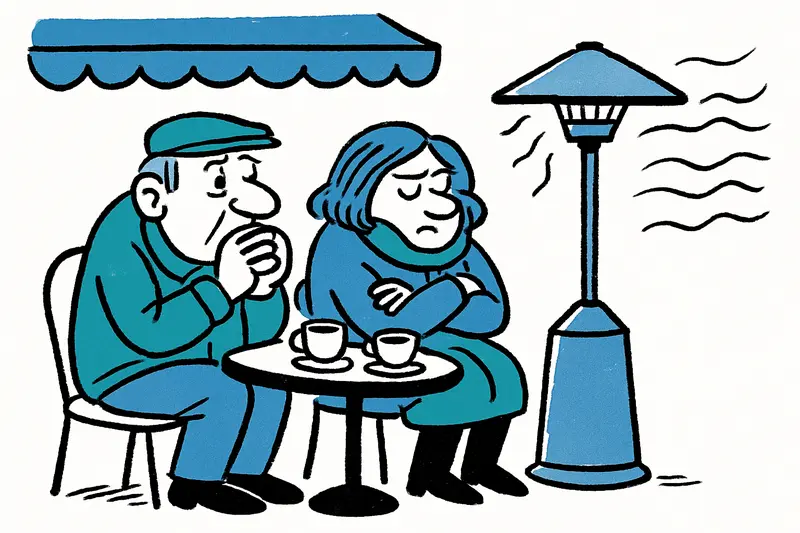
Imagine Plaça de Cort on a cold January morning. The café awning across the square clatters, a bicycle courier pulls his collar up, and the Tramontana whistles through the narrow streets of the Juderia. Outside, an older couple sits on the promenade of Portixol, both in thin jackets, drawing closer to the patio heater under the awning — which gives off barely any noticeable warmth. These small images repeat: not dramatic, but persistent. People are cold not only because of the temperature, but because of the combination of wind, humidity and light clothing.
Critical analysis: Why ten degrees feel different
- Humidity: Damp cold air takes heat from the body more effectively than dry cold. The result is a clammy chill that you can't simply get rid of with a sweater.
- Wind chill on exposed coasts: A stiff breeze can significantly lower the perceived temperature, especially on promenades and open beach areas.
- Buildings: Many old buildings in Palma and smaller towns have simple windows, little insulation and doors that let drafts whistle through. Heating is often provided by electric split units that neither heat evenly nor economically.
- Behavior: A cultural factor is the reluctance to wear thick winter clothing for fear of looking "too warm" or not fitting in with the Mallorca image.
Concrete approaches to solutions
The situation is not a law of nature. Residents, authorities and tourist providers can take practical steps:
- Information campaign: Municipalities could distribute simple guidance: expected wind strengths by coastal side, tips on layering clothing, and recommendations for cafés with functioning heating.
- Energy checks and subsidies: A local subsidy program for sealing windows and doors, thermostats on radiators and simple insulation measures would noticeably help — especially older people and renters.
- Public warming spots: Public libraries, community centers and some cultural venues could be deliberately opened and visibly promoted as warming destinations during colder months.
- Tourist information: Hotels and hosts should clearly state how well they heat and advise guests what to pack. A short note saves countless shivering moments for visitors.
What anyone can do immediately
In the short term, good layering helps: a breathable base layer, an insulating mid-layer and a windproof outer shell. Wearing a hat on a promenade walk, a scarf against the wind and warm socks in the apartment makes a big difference. Test windows and balcony doors: a simple strip of paper can show whether drafts are coming through the gaps. And when possible: prefer cafés with visible heating sources or small sunlit inner courtyards.
Concise conclusion
Mallorca's winter does not hinge on a single culprit. It's the interplay: climate, buildings, costs and behavior. Those who recognize that act differently: they dress where necessary, demand better energy adaptations and do not expect the island to function solely in swimwear. A little pragmatism, a few simple urban policy measures and a clear flow of information would noticeably ease the winter for many. Until then, the image of a mild winter on Mallorca remains a convenient but often misleading notion.
Frequently asked questions
Why does Mallorca feel so cold in winter even when temperatures are around ten degrees?
What makes winter on Mallorca feel worse on the coast?
What should I pack for Mallorca in winter?
Are Mallorca apartments cold in winter?
Is January a bad time to visit Mallorca if I dislike cold weather?
What is winter like in Palma de Mallorca?
Why do people in Mallorca still get cold when the temperature is above zero?
Where in Mallorca can you warm up on a cold winter day?
Similar News
Injured captain, big plans: Germania Mallorca before the away match in Consell
The newly founded FC Germania Mallorca travels to Consell on Saturday. Captain Bastian Müller is out injured, but coach ...
Palma, Palma de Mallorca, Palma‑Mallorca: What is it really about?
The debate over the city's name is more than grammar: it concerns identity, law and branding policy. A sober reality che...
Warning to Bathers: Nipping Fish in Cala Major and Other Coves — a Reality Check
In Cala Major and several beaches around Mallorca, bathers report painful “nips”. Who are the animals, why are they gett...
Rental Car Theft in El Arenal: What This Incident Reveals About Our Gaps
A teenager steals a running rental car in El Arenal, flees on foot, climbs over walls and is caught by the Guardia Civil...
Red Rope in Palma's Library: What Helps Against Selfie Tourism — and What's Missing
Palma's city library cordoned off an area with a red rope to keep selfie tourism away from reading and working activitie...
More to explore
Discover more interesting content

Can Cap de Bou

Townhouse Lleo 72
