
Terraferida raises the alarm: Why Mallorca's land is disappearing faster than we notice
Terraferida raises the alarm: Why Mallorca's land is disappearing faster than we notice
Environmental group Terraferida reports: between 2021 and 2024 an average of five new chalets on open land appeared each week. Over ten years more than 1,400 hectares were converted — almost as large as Costitx. What does this mean for the island?
Terraferida raises the alarm: Why Mallorca's land is disappearing faster than we notice
Key question: Who protects open land when huts, driveways and garden walls gradually build up the island's interior?
The figures cited by the environmental organisation Terraferida are plainly concrete: between 2021 and 2024 an average of five new chalets per week were built on Mallorca's open land — almost 60 percent of all new constructions outside towns. And over the last ten years more than 1,400 hectares have been converted, an area roughly the size of the municipality of Costitx. These are not abstract areas — they are small valleys, field edges, dry stone walls and pastures that are disappearing.
Analysis: What is behind the building boom away from the villages such as described in Mallorca's new residential axis: Villages grow, Palma keeps moving? On the one hand the desire of many property buyers for privacy and panoramic views, on the other the economic attractiveness of single properties for developers — and finally gaps in planning and control. Where municipal boundaries and responsibilities blur, spaces open up for construction projects that fragment the landscape. The consequences are visible: more access roads, longer utility lines, increased fire risk in fragmented landscapes.
The perspective of the land stewards is often missing in public discourse: farmers, shepherds, winemakers who for generations have worked with dry stone walls, irrigation channels and shade-providing pines. Instead of debating hotel occupancy or beach use, we should more often ask: How much nature do we still need to preserve water, soil and species? What costs arise when agricultural land is converted into single-family plots?
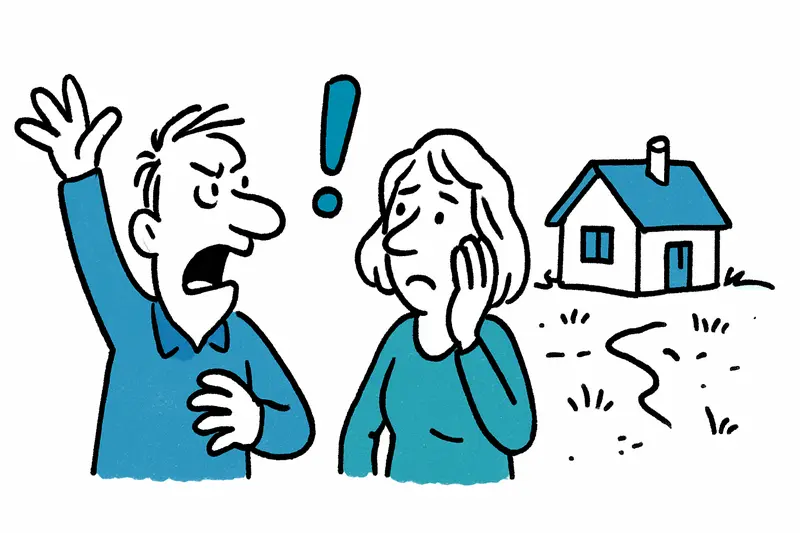
An everyday scene in Son Servera or just outside Llucmajor: around 8 a.m. you hear the distant clattering of construction equipment, the scraping of gravel on new driveways. The neighbour, a farmer with stained hands, drives past with his tractor, looks at the access road leading to a newly built chalet and shakes his head. Such scenes repeat across the island — not only in holiday spots but in the middle of agricultural areas.
Critical points that are too rarely mentioned: first, the fragmentation of habitats. Small plots with hedges and pools interrupt animal migration corridors. Second, the burden on infrastructure: more single-family homes mean more traffic, sewage and waste problems when decentralized systems are overwhelmed. Third, the social consequence: when land is permanently sold for holiday homes, the supply available to locals who need affordable housing shrinks, as discussed in How many residents can Mallorca sustain? Growth, pressure and ways out of overcrowding.
Also missing in the public debate is transparency: up-to-date, freely accessible maps that document land conversions, clear figures on approved versus actually built objects and a binding overview of which parcels have been permanently taken out of agricultural use. Without data the debate remains diffuse — and politics often reactive rather than preventive.
Concrete solutions are needed — and are usually practicable: a temporary moratorium on new rural construction in particularly sensitive zones, coupled with a revision of land-use plans. Support and financial incentives for renovating vacant houses within villages instead of new construction on greenfield sites. A requirement to cluster new buildings so that instead of five scattered chalets there are compact settlement islands that reduce infrastructure costs and land consumption.
Also sensible: a binding mapping of all hectares affected in the last ten years, publicly and interactively accessible so neighbours, municipalities and environmentalists can jointly adjust policy. Sanctions for unauthorised interventions must be enforced consistently; fines should not be treated as merely a price tag for illegal land conversion.
At the local level simple rules help: bans on watering ornamental areas in particularly dry zones, mandatory buffer zones for flora and fauna along new access roads, and compulsory fire and evacuation plans for newly developed plots. And not least: stronger involvement of farming communities in approval procedures. Those who work the land daily have a direct interest in its long-term protection.
For anyone who thinks this is just administrative detail: landscape is both memory and provision. The 1,400 hectares are not a statistical lump but space for acoustic quiet, for rain infiltration and for pines that provide shade. If we lose this space piece by piece, we will later pay higher costs for water, fire protection and losses in food production.
Conclusion: Terraferida's figures are a wake-up call. The central question remains: do we want an island that stays compact around its towns, or one whose interior disintegrates into a mosaic of driveways, pools and individual houses? The decisive factor is to install instruments now that are effective, transparent and locally anchored. Otherwise we may wake up one morning in a landscape whose character we can no longer recover.
What to do now: transparent mapping, a moratorium in sensitive zones, incentives for inner-village renovation, sanctions for illegal conversion, involvement of land users. Without a combination of these measures Terraferida's alarm will remain just another report on the web. For broader context on how peripheral growth affects municipalities and planning, see When the Surroundings Overtake Palma: Opportunities, Risks and the Quiet Revolution on the Island.
Frequently asked questions
Why is open land disappearing so quickly in Mallorca?
How does building on rural land affect Mallorca’s landscape?
Is Mallorca losing farmland to new chalets and villas?
Why do farmers in Mallorca worry about rural development?
What problems do scattered homes create in Mallorca’s countryside?
What can Mallorca do to protect its rural land?
Why is Son Servera often mentioned in Mallorca’s rural building debate?
What is happening to the countryside outside Llucmajor in Mallorca?
Similar News

Mistaken identity with fatal consequences: Brutal assault in S'Aranjassa — what's missing in the follow-up?
At S'Aranjassa a visitor to a finca was tied up, beaten and thrown out of a van. Three men have been arrested, including...
High heel slips, car accelerates: accident on Camí de Son Hugo
A woman lost a high-heeled shoe on the forecourt of the sports facility at Camí de Son Hugo. The car accelerated, mounte...

Phone Scam: How Two Hotel Employees at Playa de Palma Lost Thousands of Euros
One morning in September, two reception employees at Playa de Palma were pressured by alleged alarm-company staff — in t...
When the Wallet Becomes a Danger: Attack in Peguera and Lessons for Mallorca
In Peguera, two women are said to have stolen the wallet from a 75-year-old German couple. When the victim intervened, t...
Plata stays Plata: Young people take over, Llonguets remain
A small bar on Carrer de l'Argenteria will continue: Tolo Serra hands the place over to young Mallorcans at the end of t...
More to explore
Discover more interesting content

Can Cap de Bou

Townhouse Lleo 72
