
Thieves on Duty: How Sports Equipment Disappeared from Nadal's Academy and What Mallorca Should Learn
Thieves on Duty: How Sports Equipment Disappeared from Nadal's Academy and What Mallorca Should Learn
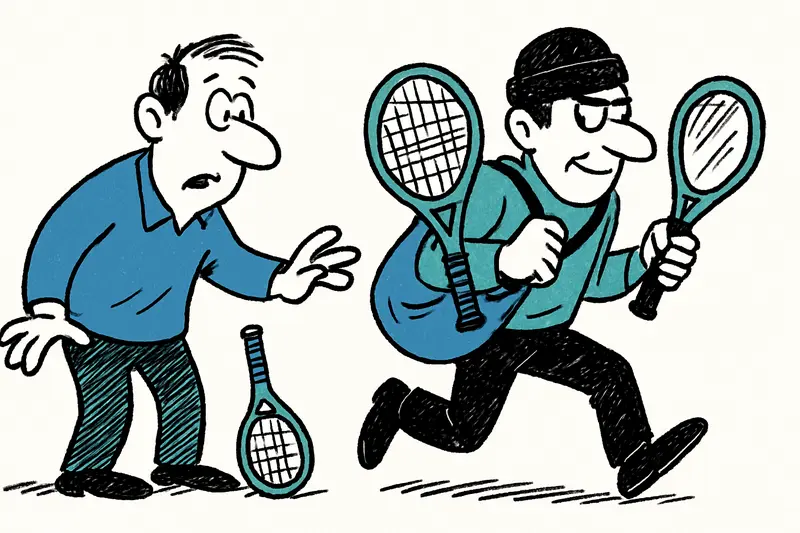
In December 2025 several rackets disappeared from the tennis and padel academy in Manacor, including a racket signed by Rafael Nadal. Two employees and a third person are under suspicion. A critical appraisal, a local scene and concrete solutions.
Thieves on Duty: How Sports Equipment Disappeared from Nadal's Academy and What Mallorca Should Learn
Leading question: How could valuable training equipment, including a signed racket, systematically go missing from a heavily frequented sports facility in Manacor without internal controls triggering?
In December 2025 the sports center in Manacor, known for its links to tennis professional Rafael Nadal, reported several missing items. Tennis and padel rackets and other sports accessories were affected, with an estimated total damage of more than €6,000. Two academy employees are suspected of being involved in the thefts, and a third person is said to have offered the items online. After investigations by the National Police, one employee was arrested, as covered in Clothing Thefts at Mallorca Fashion Outlet: Arrest in Manacor – Time to Rethink.
Anyone thinking this was a one-off theft underestimates the problem, which mirrors other crimes on the islands documented in Organized watch robbers in the Balearics: Why Mallorca must also stay vigilant. The disappearance of equipment at a training facility indicates gaps in storage, documentation and responsibilities. In the weeks when the case came to light, the loss of four padel rackets intended as prizes for a tournament was initially reported. Shortly afterwards it became apparent that other used rackets were missing from a storage room.
The case came to light because an employee offered used rackets online to a member of the academy. A coach recognised the pieces and alerted management. Investigations found that the sales profile online was registered to a third person, but the contact details were linked to the employee. The woman told the authorities she had done a favour for a relative.
Everyday scene: On a morning in Manacor, when delivery vans fill the market stalls on the Plaça and an old man drinks espresso on the Carrer Nou, the academy looks like any other local business — open, agile, with a constant flow of coaches and young people. It is precisely this bustle that is a risk factor: storage rooms, prize award stations and interim storage for used equipment are temporary places where control easily fades.
Critical analysis: Three weak points immediately stand out. First, inventory management: there was clearly no seamless, timely documentation of items going in and out. Second, access control: storage rooms with valuable equipment must be reserved for clearly designated persons. Third, the culture of responsibility: when employees are allowed to move things "as a favour," a grey area emerges that facilitates abuse.
What has been underemphasized in public discourse: the focus is usually on the celebrity status of the affected items — a racket signed by Rafael Nadal attracts attention. More important for the local sports landscape, however, is the question of prevention and restoring trust. How do clubs and academies handle internal incidents without broadcasting existential fears? How do they sustainably protect honorary prizes, loaned equipment and sponsor goods?
Concrete solutions that can be implemented locally and quickly: 1) Immediate introduction of simple inventory logs for borrowing and returns, even via a tablet at the entrance. 2) Marking valuable items (serial numbers, photos, digital IDs) and separate storage for prize and sponsor equipment. 3) Access restrictions to storage areas, combined with short access lists and regular spot checks. 4) Training for staff on ethics and reporting obligations — short awareness sessions often suffice. 5) Clear loan agreements, signatures and deadlines when lending to third parties. 6) For particularly valuable memorabilia: secure display cases with alarms or storage away from training areas.
On the legal level, the case shows that a prompt report and involving the police were the right steps. For institutions: internal investigations must not obstruct external clarification. Transparent reporting channels and neutral documentation of incidents protect both victims and innocent employees.
Another tangible prevention measure would be cooperation between sports centers on Mallorca: exchanging experiences about lost or recovered items and a central reporting point for stolen sports equipment could help spot offers on second-hand platforms earlier, and learn from seizures such as Hidden Compartments and Fake Sneakers: Major Raid in Can Picafort Raises Questions.
For the people of Manacor this means: trust is not a state, but work. The neighbour who sits in the domino club on the Plaça expects children to find safe training conditions in the afternoon. Parents expect clear rules, not stories of "a favour." Those who invest in youth should also protect their equipment.
Conclusion: The theft of sports equipment in a renowned academy is more than a scandal about a signed item. It is a wake-up call for all sports organisations on Mallorca to review their internal procedures and introduce simple, practical protective measures. Those who do so prudently preserve not only property but also the reputation of an entire training culture.
Frequently asked questions
What is the weather like in Mallorca in late May?
Is Mallorca warm enough to swim in May?
What should I pack for Mallorca in late spring?
Is late May a good time to visit Mallorca?
What is Alcúdia like in late May?
Can you visit Palma comfortably in late May?
Is late May a good time for hiking in Mallorca?
What kind of Mallorca trip suits late May best?
Similar News

More Electric Cars in the Balearic Islands: Sales Rise Sharply
Between January and August, 14,185 vehicles without petrol or diesel propulsion were sold — an increase of more than 40 ...

Autumn in Mallorca: What Truly Remains of Summer
The days grow shorter, the evenings cool — and yet more of summer lingers than you might think: sounds, recipes, people,...
Rescue operation at Tolleric: Why nighttime cliff parties become dangerous
A British holidaymaker fell about ten meters at the cliffs of Tolleric during the night, later climbed back up and was r...
Car accident on the MA-1: Mother and daughter on a bicycle struck by a fellow countryman – Who protects cyclists here?
On the MA-1 between Portopí and the Cala Major exit, a mother and her daughter on a bicycle were struck by a car. A para...

Smoke over the UIB: Who is responsible for the fire on the roof?
On Saturday afternoon a fire broke out on the roof of the Arxiduc Lluís Salvador building at the University of the Balea...
More to explore
Discover more interesting content

Can Cap de Bou

Townhouse Lleo 72
