
Maltese Falcon off Cala Llamp: Luxury yacht, crowd magnet — and what we don't talk about
Maltese Falcon off Cala Llamp: Luxury yacht, crowd magnet — and what we don't talk about
The 88‑metre yacht Maltese Falcon anchored off Cala Llamp. A spectacle, yes. But what impact does such a giant really have on the coast, marinas and everyday life in Mallorca?
Maltese Falcon off Cala Llamp: Luxury yacht, crowd magnet — and what we don't talk about
A three‑masted ship, much amazement — and open questions for ports, the environment and tourism
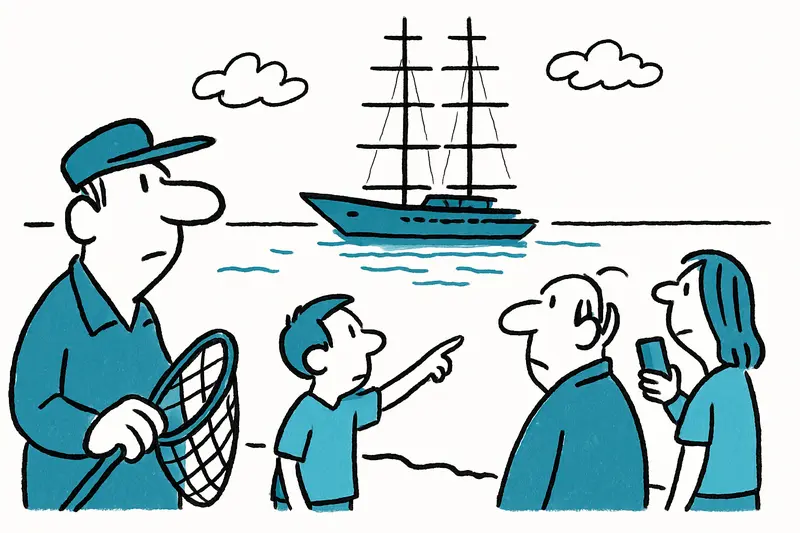
On Thursday morning the three‑masted Maltese Falcon lay off Cala Llamp, clearly visible from the shore – 88 metres, three free‑standing masts, a silhouette that evokes old sailing romance, only in modern oversized form. In mildly warm weather (around 23 °C in Palma and a few clouds) locals and walkers gathered on the shore, as with other high‑profile visits such as Yasmine of the Sea: the smell of sea and boat fuel in the air, gull calls, the clatter of a fisherman's nets as he looked curiously at the unusual visitor.
Key question: What does the short‑term visit of such a luxury yacht mean for Mallorca — purely as an attraction, but also for the environment, the ports and the people who live here?
Briefly: The Maltese Falcon (yacht) — Wikipedia is a sailing vessel built in 2006, 88 metres long, designed by Ken Freivokh. Three masts made of carbon‑fibre‑reinforced material, an Art Deco‑style interior, a spa, cinema, pool and several VIP suites are part of the fit‑out. Its home port is often given as Valletta. At sea up to 16 crew members sail; a maximum of twelve passengers, plus space for around 50 day guests on charter trips.
Critical analysis: Such ships produce contradictory effects. On the one hand they attract attention, give the port short‑term prestige and can employ local service providers — from bunkering and cleaning firms to glossy caterers. On the other hand real burdens arise: anchoring in small coves disturbs seabed sediments and seagrass meadows, large engines emit particulates and noise, and the required berth and service capacity tie up resources that would otherwise benefit smaller fishermen and charter boats.
What is often missing from the public debate: transparent figures. How much do charter clients and owners pay to local ports? How is removed waste controlled, and where do blackwater and kitchen waste end up after a day with 50 guests? These details usually remain hidden while photos from the deck circulate on social media, as illustrated by coverage of the former king's yacht between Ibiza and Mallorca.
An everyday scene: tables are moved outside on the paseo, a waiter brings a café con leche, tourists point at the ship with their phones. A boy asks his grandfather whether the people on board are rich. The answer is a shrug — many here know the feeling of looking on and still being left out.
Concrete solutions that could be seriously discussed in Mallorca now:
1) Publicly accessible transparency: Clear information on berth and service fees, contributions to municipalities and registration data for charter openings.
2) Environmental rules for anchoring spots: Zones where anchoring is prohibited, mandatory use of mooring buoys in protected coves and regular inspections of seabeds.
3) Waste and sewage control: Proof of disposal for blackwater and rubbish; mobile pumping services at marinas with mandatory logging.
4) Fee model for preservation: An additional environmental levy for large yachts, earmarked for coastal protection, seagrass restoration and local monitoring.
5) Local labour integration: Prioritising local suppliers for service contracts and clear rules so small boat owners are not disadvantaged.
Conclusion: It's nice to see such a spectacular ship — the Maltese Falcon is a technical and aesthetic one‑off. But amazement alone should not replace the debate. If we want Mallorca to continue to have clean coves, functioning marinas and a balanced coexistence of tourism and everyday life, we need more transparency and rules that consider not only the photos but also the consequences.
And in the end: when another three‑masted ship arrives, people stand on the coast, espresso cups clink, and someone says: "Nice, but who will clean up afterwards?" That's the question we should answer.
Frequently asked questions
What is the best time of year to visit Mallorca?
Is Mallorca warm enough for swimming?
What should I pack for a trip to Mallorca?
What can you do in Mallorca if you are not going to the beach?
Is Palma de Mallorca worth visiting?
What is Sóller like for a day trip in Mallorca?
Is Alcúdia a good area to stay in Mallorca?
What should I know before visiting Valldemossa in Mallorca?
Similar News

More Electric Cars in the Balearic Islands: Sales Rise Sharply
Between January and August, 14,185 vehicles without petrol or diesel propulsion were sold — an increase of more than 40 ...

Autumn in Mallorca: What Truly Remains of Summer
The days grow shorter, the evenings cool — and yet more of summer lingers than you might think: sounds, recipes, people,...

Rescue operation at Tolleric: Why nighttime cliff parties become dangerous
A British holidaymaker fell about ten meters at the cliffs of Tolleric during the night, later climbed back up and was r...

Car accident on the MA-1: Mother and daughter on a bicycle struck by a fellow countryman – Who protects cyclists here?
On the MA-1 between Portopí and the Cala Major exit, a mother and her daughter on a bicycle were struck by a car. A para...

Smoke over the UIB: Who is responsible for the fire on the roof?
On Saturday afternoon a fire broke out on the roof of the Arxiduc Lluís Salvador building at the University of the Balea...
More to explore
Discover more interesting content

Can Cap de Bou

Townhouse Lleo 72
