
Balearic Islands: Demand, Prices — and the Downside of a Stable Market
Balearic Islands: Demand, Prices — and the Downside of a Stable Market
The Balearic Islands show strong price and transaction figures. But what does that mean for locals, infrastructure and the islands themselves? A critical assessment with concrete proposals.
Balearic Islands: Demand, Prices — and the Downside of a Stable Market
Guiding question: How long can the real estate market in Mallorca, Ibiza and Menorca tolerate rising prices and internationally driven demand before the quality of life for island residents suffers?
The raw figures that lift the spirits of dealers and investors sound simple: in 2025 official data reported an increase of around 9% in property prices and about 6.5% more transactions. Buyers from Germany account for a good third of purchasers (38%), followed by the UK (10%) and Italy (9%). Mallorca itself is responsible for about 80% of registered sales in the Balearics; the new-build sector most recently grew by around 34.5%. For a detailed look at rising square-meter prices see Balearic Islands in the Price Squeeze: Who Can Still Afford Mallorca?.
Critical analysis
What the numbers do not automatically show are the shifts in everyday life: flats that were previously occupied by teachers, tradespeople or young families are being converted into second homes or investment properties. Demand is highly concentrated in the 1–5 million euro segment; that shapes supply and willingness to invest. At the same time, developable land is scarce: strict regulations, nature protection zones and limited development possibilities mean new projects quickly become expensive. This leads to a double logic: prices rise, supply remains tight, new construction becomes more luxurious — a vicious cycle for affordable housing.
The desirability of the islands also has a cultural component. Gastronomy, international schools (around 19 on the islands) and a denser offering of high-quality leisure options make the region more attractive. The fact that the islands now have over ten Michelin-starred restaurants is not merely a culinary detail but part of brand building: quality attracts high-end buyers and changes neighborhoods. The higher cost of living, including food, is examined in Why Food Is So Much More Expensive in the Balearic Islands — A Reality Check.
What is missing from public discourse
The debate often focuses on prices and returns. Less visible are questions about labor mobility, long-term rentals, supply infrastructure and social mixing. Also hardly on the radar: who is actually upgrading neighborhoods — and who bears the follow-up costs? In Plaça de España or at the Mercado de l’Olivar you hear that many locals no longer return to the city center because central flats have been converted into holiday apartments.
Everyday scene on the island
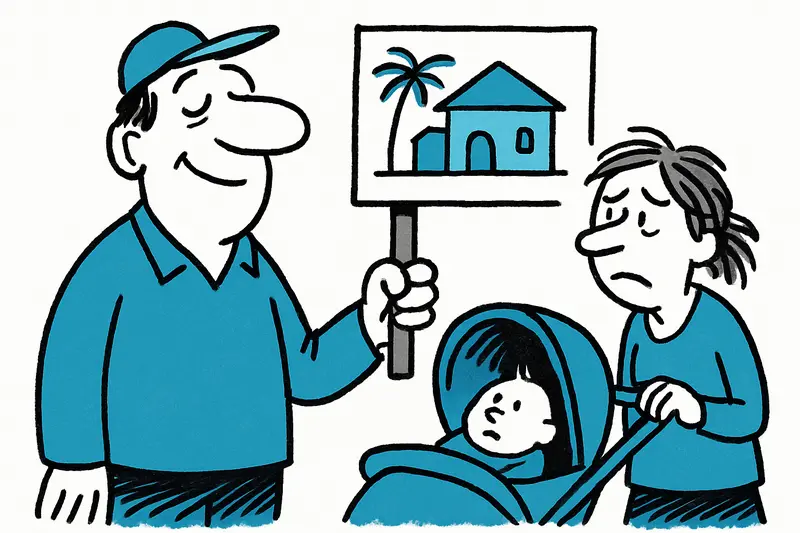
A morning in Santa Catalina: delivery vans drive over the cobblestones, the coffee machine hums, a young teacher pushes her baby stroller past a new-build sliding-door house that is now marked as a holiday rental. The baker knows her worries; rents are rising, colleagues now live further out. Scenes like this are not isolated — they repeat along the coastal towns and in Palma. This changing composition of buyers is analysed in Fewer Foreign Buyers — Mallorca between Price Boom and a Breather.
Concrete solutions
There is no simple cure-all. But practical steps could be possible: first, more transparency in purchase statistics and buyer flows so planners know who really intends to stay. Second, targeted promotion of affordable housing — for example by requiring a share of social housing in major projects. Practical measures for buying and renting pressure are discussed in Buying and Renting in Mallorca: Why Prices Are Pushing Locals to the Edge — and What Could Help Now. Third, incentives for converting and renovating existing building stock instead of building on greenfield sites: this can reduce land consumption and preserve the townscape. Fourth, fiscal instruments: a differentiated property tax or levies on vacant second homes could reduce vacancy and generate revenue for municipal housing projects. Fifth, municipal steering of the tourism offer: channel funds from tourist taxes into infrastructure for residents (daycare centers, schools, local public transport).
Conclusion — pointed
Yes, the Balearic Islands appear stable and attractive — you can sense this in investments, international buyers and new luxury properties. But stability must not become synonymous with displacement. If you stand on Palma's promenade today you don't just hear the sea, you also hear the question of whether the balance between economic value and everyday life can still be saved. The challenge is to use economic strength wisely to secure housing, jobs and cultural diversity — not just for investors, but for the people who live and work here.
Frequently asked questions
Is Mallorca likely to stay warm enough for the beach in October?
Can you still swim in Mallorca in October?
What should I pack for Mallorca in October?
Is October a good time to visit Mallorca for sightseeing and outdoor activities?
What is Palma de Mallorca like in October?
Is Sóller worth visiting in October?
How busy is Mallorca in October compared with summer?
What kind of weather should I expect in Mallorca in late autumn?
Similar News
Warning to Bathers: Nipping Fish in Cala Major and Other Coves — a Reality Check
In Cala Major and several beaches around Mallorca, bathers report painful “nips”. Who are the animals, why are they gett...

Rental Car Theft in El Arenal: What This Incident Reveals About Our Gaps
A teenager steals a running rental car in El Arenal, flees on foot, climbs over walls and is caught by the Guardia Civil...

Red Rope in Palma's Library: What Helps Against Selfie Tourism — and What's Missing
Palma's city library cordoned off an area with a red rope to keep selfie tourism away from reading and working activitie...

Fort San Carlos: Museum, Harbor Dispute — and a Conflict That Demands Answers
The military museum at Fort San Carlos sits right on Palma's harbor, with unexpectedly quiet rooms filled with cannons a...
Old Town Under Pressure: When a Doorway Becomes a Sleeping and Shower Place
For months a woman has been living with a parasol, a clothes rack and personal belongings next to the social welfare off...
More to explore
Discover more interesting content

Can Cap de Bou

Townhouse Lleo 72
