
Archive Video on TikTok: How Mallorca Won Over the Germans — A Look Back
Archive Video on TikTok: How Mallorca Won Over the Germans — A Look Back
A briefly shared film on TikTok evokes images of Mallorca in the early 1970s: crowded beaches, buses full of travelers and hotels that transformed the island. Why this still matters to us today.
Archive Video on TikTok: How Mallorca Won Over the Germans — A Look Back
A found footage from the 1970s shows the first big arrival
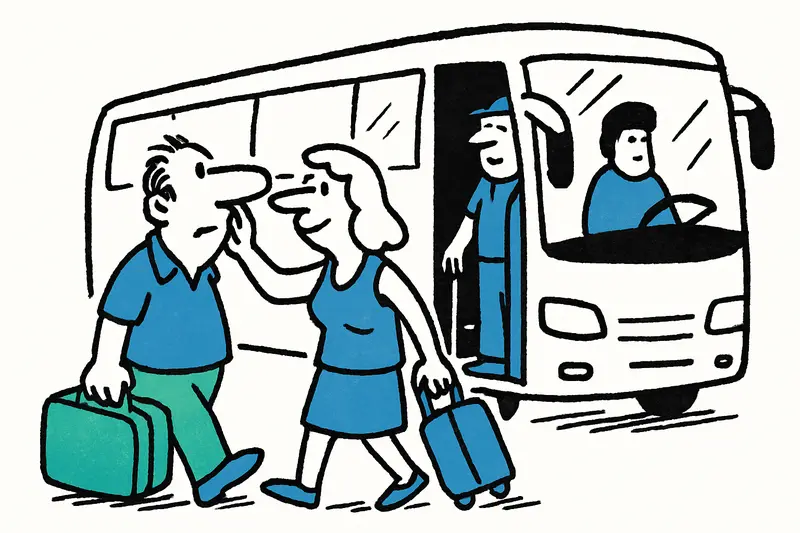
Suddenly it is back: a just-under-two-minute film that is currently circulating on social networks, similar to a recent TikTok sketch about Germans in Mallorca, and takes us on a time travel to the island's beaches and streets. Without buzzwords, without filters — just grain, off-screen voices and images of people, suitcases and buses. You can see airplanes, buses at Son Sant Joan airport and people stepping out with light suitcases and great expectations.
The scenes feel familiar and yet strange. On Passeig Mallorca you might notice small details: the clatter of objects on the pavement, a vendor shouting loudly, the soft clink of espresso cups in the corner café. The footage shows crowded beaches, hotels with signs in several languages and guesthouses that apparently cater to the tastes of visitors from the north. The picture is not a romantic postcard motif, but that of an island that is beginning to reorder itself.
What the video shows is neither an accusation nor sentimentalizing, but a moment in which Mallorca assumes a new role: a place people from all over Europe visit regularly. Tour buses bring groups to excursion sites, small travel agencies arrange tours, while stories about a German social-media creator's move to Mallorca underscore ongoing personal relocations, and income — as well as conflicts — arises along the coast. You can see the positive sides — jobs, full terraces, encounters — and you can imagine that this also brings challenges, and media attention such as a German-language thriller that climbed to number one on Netflix shows how Mallorca features in broader culture.
For those of us who live on the island or visit it often, this is in some ways a lesson. The images remind us how quickly the face of a place can change. Palma still smells of sea and two‑stroke oil today, but the city has different concerns: sustainable transport, affordable housing, preserving small shops. The archive images make clear that developments do not come out of nowhere but emerge step by step — often accompanied by the everyday soundscape of an airport, the rattling of a bus engine, the laughter on a hotel terrace.
A small, almost banal gain: nostalgia connects. Those who watch the clips do not remain neutral. Older residents remember the past and may tell anecdotes on Plaça Major, while young people online ask how the island really was. That creates conversation, sometimes a smile, sometimes debates — both are part of culture, as with a provocative Instagram post that sparked debate in Mallorca.
Why is that good for Mallorca? Because memory enables action. Those who understand how tourism began and what consequences it had can make more informed decisions today. This applies to politics and business, to hoteliers and small entrepreneurs as well as to residents near popular beaches. Looking back provides material for concrete ideas: more targeted visitor management, protection of certain coastal sections, promotion of local businesses instead of standard offerings.
On Plaça de les Tortugues or Playa de Palma the challenges are different than fifty years ago, but the lesson remains: changes can be guided, not just endured. An archive clip on an app may last only seconds, but it sparks conversations. Perhaps that is the strongest effect: the desire to ask what we want to preserve and what we are willing to rethink.
And in the end there is a small everyday scene that has nothing heroic about it: a bus driver opening the doors at the airport, a couple sharing sunscreen, a café owner serving the first cups. Such images shape an island. Those who look closely can take something from the past into the future — even if it's only the recipe for the perfect café con leche after a long flight.
Outlook: Such finds encourage collecting memories and supporting local initiatives that link history and everyday life: guided tours with eyewitnesses, archive projects in schools or small exhibitions in community halls. Not retrospective kitsch, but practical memory care — that is one way to turn a short video into real added value for the island.
Frequently asked questions
Why did Mallorca become so popular with German visitors?
What can old Mallorca archive videos tell us about tourism today?
Is Mallorca still changing because of tourism?
What was Palma like in the early years of mass tourism?
What should I know before visiting Mallorca in peak season?
How has Son Sant Joan airport changed Mallorca?
What are the main concerns for residents living near popular beaches in Mallorca?
Why do nostalgia and old footage matter in Mallorca?
Similar News
Magaluf: Watchtower Alarm – Lifeguards Pull Unconscious Beachgoer from the Water
After a drama in the late afternoon, two lifeguards at Magaluf beach rescued an unconscious 44-year-old man. He was stab...
Turquoise in the City: How dangerous is the color play of the Sa Riera?
The Sa Riera in Palma suddenly turned turquoise — a pretty motif, but behind the effect lies a discharge of saline waste...

Jeckliner at Sunnesching: Cologne spirit sets sail from Palma
In September 2027 the Mein Schiff 2 briefly becomes a floating carnival stage: four days with Cologne bands, comedy and ...
Finally Home: Mike and Leyla Heiter Buy Villa with Sea View in Mallorca
The reality TV couple Mike and Leyla Heiter have bought a house in Mallorca with a roof terrace and sea view. An Instagr...
Arrest after series in Palma: Who protects apartments from repeat offenders?
The National Police arrested a man in Palma who investigators say may have broken into several apartments. In one incide...
More to explore
Discover more interesting content

Can Cap de Bou

Townhouse Lleo 72
