
After Accident in the Tramuntana: Mourning — and the Question of Rally Safety
The death of Klaus Rader at the Rally 550 Challenge Mallorca has shaken island residents and participants. His wife asked for privacy. At the same time, the accident in Mortitx raises questions about the safety of mountain rallies.
After Accident in the Tramuntana: Mourning — and the Question of Rally Safety
Key question: How safe are sporting car races on Mallorca's mountain roads really — and what needs to change?
The death of German entrepreneur Klaus Rader during a hillclimb on the MA-10 near Mortitx has left the island in a mix of silence and bewilderment. His wife published a short, personal message on Instagram asking for calm, space to grieve and protection for the family. These are facts that cannot be reasoned away. At the same time there is an accident site in the Tramuntana, an as-yet unanswered question about cause and responsibility — and the fear of those who drive here every day.
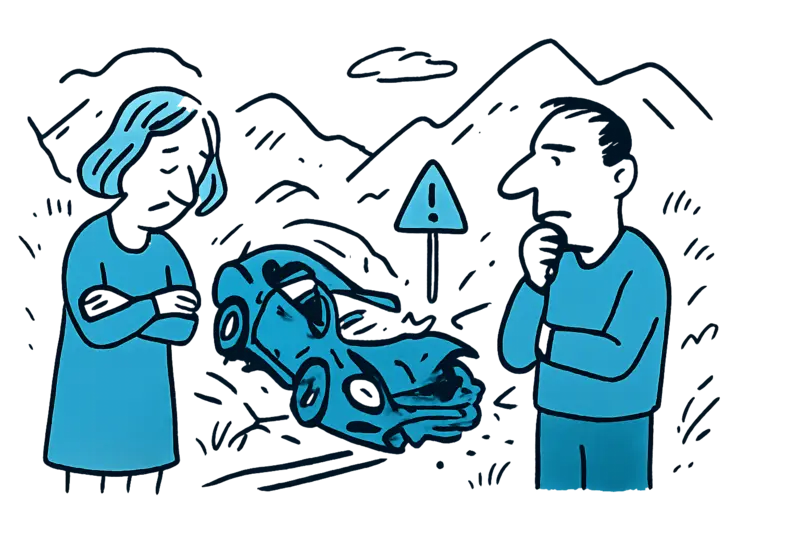
Briefly what we know: The accident occurred on the section between Pollença and Lluc, on the well-known MA-10, at kilometer 10. According to initial reports a Porsche 911 GT3 RS fell around 30 meters down an embankment; the driver died and a passenger was seriously injured. The rally event was halted after the incident. None of these details is speculation — they are derived from publicly visible statements and the facts at the scene.
Critical analysis: Such accidents have several layers. Technology and speed interact with road conditions, barriers, medical care and the event organization. On the MA-10 tight curves alternate with short overtaking opportunities; the surrounding nature is rugged and cliff edges are close. When a car loses control there, the consequences are often dramatic. Yet transparency is precisely what's missing here: What safety checks were carried out beforehand? Who officially verifies whether road sections are sufficiently secured? And how are speed and vehicle class determined for open stretches?
What has been too little present in the public debate so far is the perspective of local residents and everyday drivers. For the baker in Pollença, the bus driver, the elderly woman who crosses the MA-10 to Maravilla every morning — the rally is not a sporting spectacle but a risk on their daily route. Residents report noise, spectators on narrow escape spots, and only brief checks of barriers. These voices are important but are often only heard in passing.
Everyday scene: On a windy morning you sit in the café opposite the church in Pollença, watch young drivers flash past the old walls, hear the clatter of a delivery van and smell coffee. A shepherd dog that patrols here lifts its head, conversations fall silent: it quickly becomes clear that "sport" and normal road traffic share the same asphalt.
Concrete solutions that can be implemented locally and don't sound like bureaucratic endless tasks:
1) Pre-inspections by independent assessors. Every section, especially in areas with steep drops, needs a technical acceptance protocol. No event without written approval.
2) Improved physical protection at particularly dangerous spots. Posts, additional guardrails or catch nets where embankments drop away steeply. Simple measures can limit run-off routes.
3) Stricter class separation and speed limits per section. Not every high-performance vehicle belongs in the field on narrow mountain passes. Temporary restrictions reduce the risk without banning the sport entirely.
4) Real-time telemetry and automatic emergency alerts. Organizers could be required to use GPS trackers that immediately send coordinates to rescue services in the event of an accident — minutes can save lives.
5) Better involvement of the local population. Residents must be informed early and potential access routes for emergency services guaranteed. Communication builds trust and reduces confrontation.
6) Independent accident investigations with a public report. Only with clear, accessible results can structural weaknesses be addressed and speculation contained.
These proposals are pragmatic and sensible. They do not demand a ban on motorsport in Mallorca, but a shift toward responsible practice. The island depends on traffic and tourism — it should not tolerate thrills without clear rules.
Concise conclusion: Mourning and clarification belong together. The photos from the wedding vow in June, the family's private messages are deeply human. At the same time the public debate must not deal only in sympathy. It must ask: How do we protect those who live on and next to our roads? What rules prevent other families from walking the same path through loss and uncertainty?
The next steps are not the responsibility of organizers alone: municipalities along the MA-10, the island government and motorsport associations should now act concretely — with technical inspections, better protections and the greatest possible transparency. That leaves room for sporting passion, but not at the cost of life and safety.
Frequently asked questions
When is the best time to visit Mallorca for beach days and sunny weather?
What should I pack for a spring trip to Mallorca?
Is it safe to swim at Mallorca’s beaches?
What’s the best way to get around Mallorca?
What weather can I expect in Mallorca by season?
When can I swim in Mallorca’s sea comfortably?
What activities are popular for active travelers in Mallorca?
How busy does Mallorca get during peak season and what should I expect?
Similar News
Does Pedro Sánchez Have Better Odds in New Elections? A Reality Check from Mallorca
Sánchez weathers setbacks, forms tactical coalitions — but is that enough in new elections? A critical look with an ever...
Ses Salines Celebrates Art: ArtinSal Turns the Village into a Gallery
More than 70 artists, open houses, music on the Plaça Sant Bartomeu and the Església Vella as an exhibition space: Artin...
More than five tons of waste from the sea: Who cleans up when plastic keeps washing ashore?
In September, response boats in the Balearics recovered over 5.3 tons of waste from the sea and coasts — almost half of ...
Loose dog on the MA-19: Rescue — and an uncomfortable question
A large dog ran across the carriageway of the MA-19 near exit 12 on Sunday morning. The Local Police captured the animal...
Cala Rajada: Why the "Sharky's" Keeps Closing — a Reality Check
The "Sharky's" at Cala Agulla is vacant again. High takeover price, expensive rent and a damaged reputation: What is rea...
More to explore
Discover more interesting content

Can Cap de Bou

Townhouse Lleo 72
