
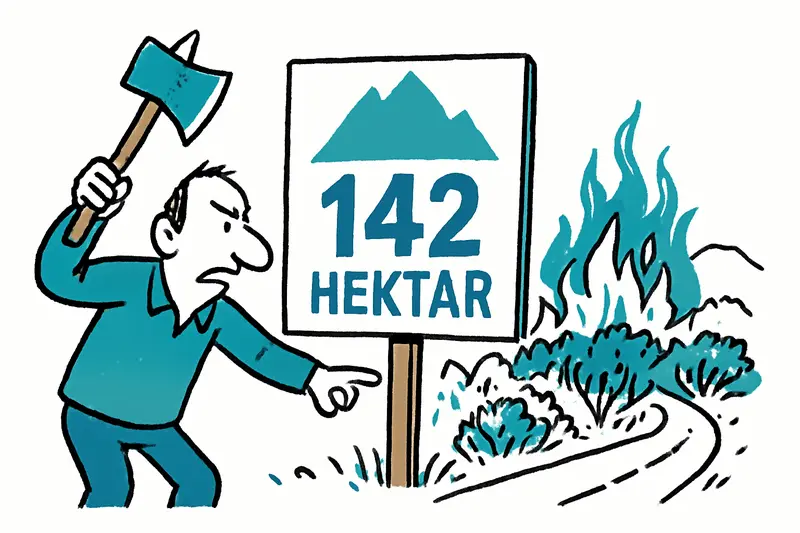
Tramuntana mobilized: 142 hectares to be made safer
Tramuntana mobilized: 142 hectares to be made safer
The island council plans extensive fire-protection work in the Serra de Tramuntana: 142 hectares, €1.8 million from the tourist tax, 19 municipalities. Measures start in 2026 and aim to remove easily flammable undergrowth — including along road edges.
Tramuntana mobilized: 142 hectares to be made safer
Prevention funded by the tourist tax, work on paths and road verges
In the early morning, when the first buses wind up the MA-10 pass and goat herds still sit in the shadow of the rocks, you can smell it: pine resin, dry grass, the summer heaviness in the air. It is precisely there, between Sóller and Andratx, that the island council wants to take greater precautions in the coming years. Preventive forestry work is to be carried out on 142 hectares in the Serra de Tramuntana; financing includes an amount of €1.8 million provided from the tourist tax. The measures concern 19 municipalities.
In short: the goal is to remove easily flammable undergrowth — including along road verges. In a landscape shaped by dry-stone walls, terraces and narrow mountain paths, this is not simply clearing vegetation: organization, timing and consideration for flora and visitors are required. According to the plans, the work will start in the first half of 2026 and run until 2027, a timeline that echoes reporting on Renovation in the Tramuntana: Six roads, five million — is that enough?.
Why this is important can be seen in everyday scenes: hikers walking the GR-221 in late summer often stop if smoke or sparks are visible. A spark at the roadside can quickly spread in the Tramuntana when warm, dry easterly winds blow. By removing dense undergrowth and maintaining road edges, potential ignition sources can be reduced and firebreaks created before a fire grows larger. Recent reporting on 115 rescue missions between May and September shows how busy mountain services can get during these months.
The good news: the project is well funded and spread across many municipalities — this increases the chance that work will begin where people live and roads run. For residents this also means: less fire risk at the access roads to villages like Deià, Valldemossa or Banyalbufar. Recent incidents, such as Accident near Valldemossa — A wake-up call for the Tramuntana country roads, underline those risks.
How it could work: experts set the pace, local forestry companies and municipalities carry out the work. Small machines and manual labor will be used where terraces and dry-stone walls prevent access with larger equipment. Targeted interventions are planned along important road verges to change fire behavior — not to gut the forest completely. Care is paramount: the Tramuntana is a biosphere reserve, not an industrial zone.
What is sometimes missing in Mallorca's public debate is the perspective of the people who live there. Farmers, shepherds, hiking guides and residents of the mountain villages know their places best. If work steps are coordinated with them, conflicts can be avoided: for example, scheduling so that the almond harvest or religious festivals are not disrupted. Practically helpful are small warning signs at work sites, clear information on municipal websites and follow-up measures that pay attention to biodiversity.
Concrete proposals that would be easy to implement locally: controlled grazing management with sheep in border areas, regular cleaning of road shoulders on heavily trafficked routes, training for volunteer fire protection helpers and a publicly accessible map with priority zones. Even simpler: avoid noisy mowing early in the morning to respect village quiet hours and reuse cut material locally — for example as mulch on agricultural fields.
The Tramuntana is more than a postcard panorama. It is a workplace, a place of retreat and a connection to nature at once. Sitting on the plaza in Valldemossa you hear the distant screech of chainsaws and dogs barking; that can be unsettling. If in the end there is less threat of fire and the landscape retains its character, that is a compromise many can accept.
Conclusion: This is a practical, down-to-earth response to a real risk. With 142 hectares, €1.8 million and the involvement of 19 municipalities, the project has real scale. The challenge will be to implement it with respect for the landscape and by bringing local people on board. Then the Tramuntana can become safer and remain vibrant.
Frequently asked questions
Why is the Serra de Tramuntana being cleared of undergrowth?
When will the Tramuntana fire prevention work start in Mallorca?
Which Mallorca villages are likely to benefit from the Tramuntana prevention work?
Is hiking the GR-221 in Mallorca affected by the Tramuntana fire work?
Why is the tourist tax being used for fire prevention in Mallorca?
How does clearing road verges help prevent fires in the Tramuntana?
Will the Tramuntana forestry work damage the landscape in Mallorca?
Who is involved in the Tramuntana fire prevention project in Mallorca?
Similar News
Are the Balearic Islands the Southern Border of Europe? A Reality Check on Immigration
The Balearic Islands are again calling for EU aid after a sharp rise in arrivals by sea. Conflicting priorities between ...

"Expensive chaos" and many open questions: What clients can do when a lawyer suddenly stops responding
Several clients complain that a well-known German lawyer in Mallorca has been unreachable for months. Key question: What...
TV tip: 'The Last Problem' — Mallorca as the setting of a classic crime
A classic whodunit on Mallorca: A new miniseries set in spring 1959 brings storm, an isolated hotel and a dense web of s...
Nipping Sea Creatures: Why Bathers in Cala Major and Elsewhere Should Be Cautious
In Cala Major, bathers have reported being nipped by small fish. What is behind it, how can problems be avoided — and wh...
Forced eviction in Santa Catalina: When a 65-year-old slept in her car and showered on the beach — a question of responsibility
The story of Pilar López from Santa Catalina represents a problem affecting many Mallorcans: How can an island with a bo...
More to explore
Discover more interesting content

Can Cap de Bou

Townhouse Lleo 72
