
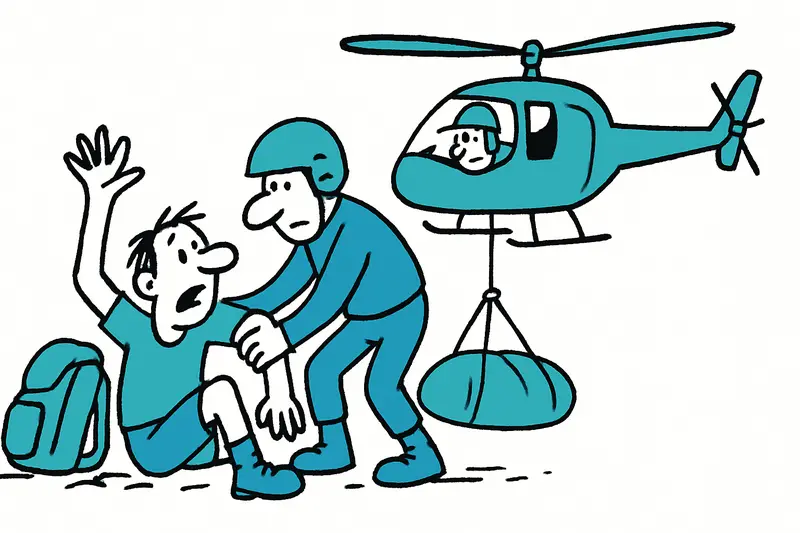
115 Rescue Missions, Hot Trails: Why Mallorca's Mountain Rescue Got Busier — and What Helps Now
115 rescue missions between May and September, faster response thanks to the 'Milana' helicopter — but the reasons run deeper. An analysis with concrete solutions for safer trips in the Tramuntana.
115 Rescue Missions, Hot Trails: The Mountain Rescue Report from Mallorca
Between May and the end of September, distressed hikers and concerned companions alerted Mallorca's rescue teams 115 times. In the parking lots of Valldemossa, on the narrow steps of the Serra de Tramuntana and in the gorges near Sa Calobra one question has been echoing through the shade: Why are we suddenly seeing so many missions again — and what can truly be changed?
Key question: More tourists — or more carelessness?
The simple answer is only half true: yes, the trails are fuller, especially between 9 a.m. and 6 p.m., when the sun beats down and the cicadas chirp loudly. But behind the 115 alerts lie several intertwined causes: heat waves, inappropriate footwear on stony paths, underestimated distances, disorientation and, unfortunately, the expectation that 'a rescue team will come anyway.' All of this meets a network of paths that in places is narrow and slippery — a puzzle where one missing piece can quickly lead to an emergency.
What changed in operations: 'Milana' and faster rescues
A positive development is the new rescue helicopter 'Milana'. Since the beginning of August it has noticeably sped up many missions: what used to take hours with stretchers and tedious foot marches now sometimes takes about 20 minutes. However, some incidents still required lengthy operations, as recounted in Dramatic Helicopter Rescue at Puig Major: Lessons from an Afternoon in the Tramuntana.
When a helicopter departs from Palma and lands within minutes at the Torrent de Pareis, the risks for seriously injured people decrease — similar timely interventions were reported in Helicopter over Cala Deià: Rescue in the Tramuntana and the Uncomfortable Questions.
That said, this does not remove the need to tackle causes at their root. Helicopters can save lives — but they are not a permanent solution to overheating, disorientation or overloaded parking areas.
A look behind the missions: volunteers, exhaustion, communication gaps
Rescues work only because full-time staff, volunteer mountain rescuers and other emergency services collaborate closely. On site this means: knowledge of the trails, improvised water supplies at the roadside (I saw trunks filled with water bottles near Valldemossa), quick first aid in dusty shoes. But there are blind spots: volunteers reach their limits, language barriers complicate initial communication with international guests, and dead zones in deep valleys make coordination more difficult — days with multiple rescues clearly strain local resources, as shown in Four missions in one day: How fit is Mallorca's mountain rescue?.
What is often neglected — and how it could be changed
Public debates like to focus on numbers. Less attention is paid to practical measures that could show effects relatively quickly. Proposals discussed on Mallorca include:
- Water refill stations: At selected trailheads and parking areas, drinking stations that are regularly maintained could prevent people from getting dehydrated. A simple sip can avoid a rescue call.
- Time windows and shuttles instead of parking chaos: Visiting Torrent de Pareis or Sa Calobra early in the morning or later in the afternoon reduces heat risks. Shuttle services could reduce overcrowding and problematic parking.
- Clearer signage and offline maps: Waymarkers, trail signs and free, multilingual offline maps (also provided via QR codes at parking areas) help people who overestimate digital maps.
- Information from hosts and rental companies: A short note about proper footwear, water needs and emergency phone numbers in accommodation materials or at car rental pickup requires little effort and can be preventive.
- Support and relief for volunteers: Small grants, organized shift models and psychological support could secure volunteers' motivation and operational capacity.
Looking ahead: sharing responsibility
The tally from this summer is ambivalent: more missions, but also much faster rescues. The challenge now is not to leave emergency management solely to technology and individual acts of heroism. A little more foresight from visitors, a few pragmatic measures by municipalities and better protection for volunteers — that would be a plan that protects not just numbers but people.
Next time the mountains call and you want to discover the island from above: pack water, good shoes and respect for the paths. And listen to the locals — they know the rocks, the heat and the quiet trails where a walk can quickly turn into a rescue mission.
Frequently asked questions
Why are mountain rescue missions in Mallorca increasing in summer?
What should I pack for hiking in Mallorca in hot weather?
Is it safe to hike in Mallorca in the middle of the day?
What is the new rescue helicopter in Mallorca used for?
Why is the Serra de Tramuntana especially tricky for hikers?
Is Torrent de Pareis a difficult place to visit in Mallorca?
What can help prevent hiking rescues in Mallorca?
Are parking problems making Mallorca hikes more dangerous?
Similar News
The End of the Cheap Ride? Why Mallorca Is Hit Harder by the Fuel-Price Shock
Gasoline and diesel average close to two euros per liter. What this means for commuters, supply chains and renters in Ma...
Relaxed liquid rules in Munich: What Mallorca travelers will notice
At Munich Airport the 100-milliliter rule will be lifted at all checkpoint lanes — thanks to new CT scanners passengers ...
For 45 Years on Mallorca — and Then This: How a Market Visit in Santa Ponsa Became a Lesson
A woman who has lived on the island for decades lost money and important documents at the Mercat Setmanal in Santa Ponsa...
10 percent surcharge on the beach: How legal and transparent is the extra charge at Playa de Muro?
A German part-time resident noticed days after a restaurant visit in Playa de Muro that the bill included a flat ten per...

Body near the Llevant Market: What this death says about our city
A man was found dead on Sunday afternoon near the Llevant Market. Police say the death appears natural. The scene raises...
More to explore
Discover more interesting content

Can Cap de Bou

Townhouse Lleo 72
