
Four missions in one day: How fit is Mallorca's mountain rescue?
Four rescue operations in one afternoon – between Torrent de Coanegra and Mortitx it became clear: helicopters don't always help. A critical look at resources, prevention and what the island can do better.
Four missions, one day – and many questions for the rescue chain
It was one of those days when the radios barely fell silent: four missions in different places on the island – Capdepera, Andratx, Mortitx and the Torrent de Coanegra, a pattern in a summer that saw 115 Rescue Missions, Hot Trails: Why Mallorca's Mountain Rescue Got Busier. Blue lights flickered in side streets, rescuers' boots were muddy from the rain, and the soft crunch of gravel paths mixed with the murmurs of onlookers. For the people who were rescued, the day ended in relief. For us, the question remains: Are the resources and the organisation sufficient to cope with such days on a lasting basis?
The Torrent de Coanegra case: When the helicopter doesn't do the trick
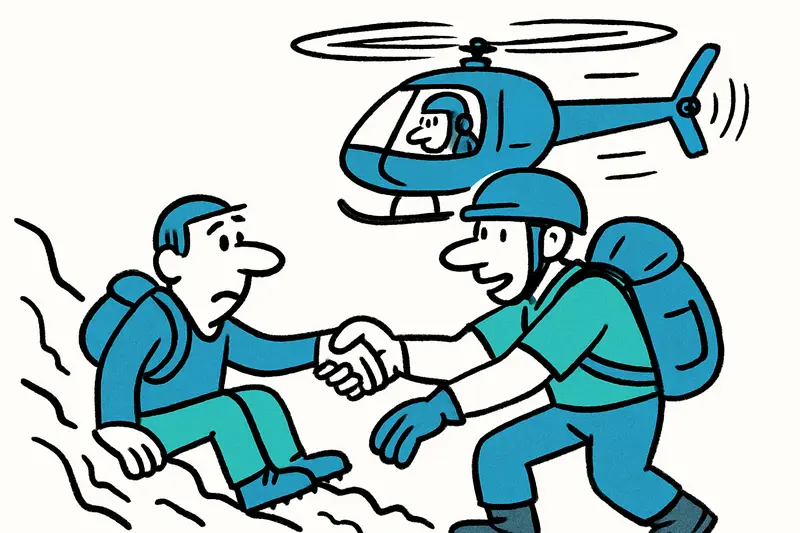
The most dramatic mission took place in the Torrent de Coanegra. Two injured hikers in a narrow gorge, slippery stones after a light drizzle – the natural recipe for trouble. A helicopter was dispatched, but at the scene a winch extraction was impossible. The rescuers relied on classic craft: two helpers secured, carried and guided the injured people out of the torrent on foot. The image was unspectacular yet impressive: when technology fails, experience, fitness and good boots count. Helicopter operations can be decisive yet challenging, as shown in Dramatic Helicopter Rescue at Puig Major: Lessons from an Afternoon in the Tramuntana.
Other missions reflect typical risks
In Capdepera the mountain rescue assisted an elderly man with a sprained ankle, in Andratx a tourist slipped on narrow coastal paths, and in Mortitx a person with circulatory problems had to be stabilised and brought down to the valley. At all locations, the fire department, ambulance services and partly the Guardia Civil mountain rescue service (GREIM) worked together. Noticeable was that many affected people had underestimated the routes or were without suitable equipment – a pattern we see repeatedly, including cases such as From Mountain to Hospital: What the Rescues at Puig de Galatzó and Torrent de Pareis Reveal About Mallorca's Hiking Tourism.
The central question: Do we invest smartly in prevention or do we only fix the consequences?
It's easy to show heroic rescue images. Harder is to name structural weaknesses: Where are clear trail markings missing? Where is there insufficient multilingual information at trailheads? What does the readiness solution for peak loads look like – for example when several missions take place simultaneously in one day? And last but not least: How resilient are the volunteer teams that carry many missions with dedication and often limited resources?
Aspects that are too rarely discussed:
- The limits of technical assistance: helicopters are expensive and not deployable everywhere. Bottleneck locations like narrow torrents require footwork, which ties up time and personnel.
- Multilingual prevention: many excursionists do not speak Spanish or Catalan – information in German, English and French is missing at some starting points.
- Data and coordination: uniform, up-to-date maps with risk information and real-time info about closed paths would reduce missions.
- Volunteer work and exhaustion: volunteer rescuers often operate at their limits, especially during the season.
Concrete opportunities and approaches
The island has good conditions for improvements if politics, municipalities and tourism work together. Some concrete proposals:
- Uniform, multilingual information and warning boards at trailheads (including GPS coordinates, difficulty level, estimated walking time).
- QR codes at parking areas that offer offline routes (GPX) and emergency contacts for download, including Spain's 112 emergency number.
- Funding programs for local rescue stations: equipment, all-terrain vehicles and regular training.
- Awareness campaigns in holiday apartments and at rental providers: checklists with footwear, water, power bank, and the reminder to tell someone your route.
- Expansion of incident management: a digital platform that connects emergency services, Guardia Civil and island fire departments in real time and visualises priorities.
- Incentives for local guides: affordable licensing models so more tourists book safe guided tours.
Such measures cost money and planning, but in the medium term they save suffering, mission hours and the costs of complex rescues. They also strengthen the trust of locals and visitors.
What each individual can do
The most important rules remain simple: good shoes, enough water, a weather check, a charged power bank, a map or offline navigation and someone who knows your route. A small emergency kit and a whistle can help in a torrent just as a helicopter can in other places.
In the evening I stood at a small layby near the torrent entrance. The rescuers packed up, their boots were muddy, the lights went out. You could see their exhaustion – but also satisfaction: once again they had made the inevitable possible. Still, the feeling remains that we could do more to make such days rarer.
Frequently asked questions
How safe is hiking in Mallorca if the trails get slippery after rain?
What should I pack for a hike in Mallorca to avoid problems?
When do mountain rescue teams in Mallorca get busiest?
Can a helicopter always rescue injured hikers in Mallorca?
What happened in Torrent de Coanegra during the rescue operation?
Why do hikers get into trouble in Mallorca’s coastal paths and torrents?
Is there enough multilingual hiking information in Mallorca?
What can local authorities do to reduce mountain rescues in Mallorca?
Similar News

Maribel: Five Decades of Service – Housekeeper from Peguera Celebrated with a Special Honor
Over 50 years in the hotel business: María Isabel “Maribel” Molinos was honored in Palma at the Nit del Turisme by Unive...
Orange Alert over Parts of Mallorca: Are We Prepared?
Dark clouds and an announced wet spell have triggered an Orange alert in parts of Mallorca. A reality check: what's miss...

Sundair & Co.: Sale speculation and what it could mean for Mallorca
Rumors about a possible sale of the airlines Sundair and Fly Air 41, which belong to Schauinsland-Reisen — and whether b...
Anne Wünsche in Mallorca: A job offer with a catch — who fits the role of personal assistant?
Influencer Anne Wünsche has left Berlin and is urgently looking for a full-time personal assistant in Mallorca. Why the ...

Daily from New York: Palma Between Boom and Strain
United will increase the Newark–Palma route to daily flights in 2027 using Boeing aircraft (231 seats). What does the in...
More to explore
Discover more interesting content

Can Cap de Bou

Townhouse Lleo 72
