
Trial in Palma: Cocaine in Wheelchairs — a Reality Check for Island Controls
Trial in Palma: Cocaine in Wheelchairs — a Reality Check for Island Controls
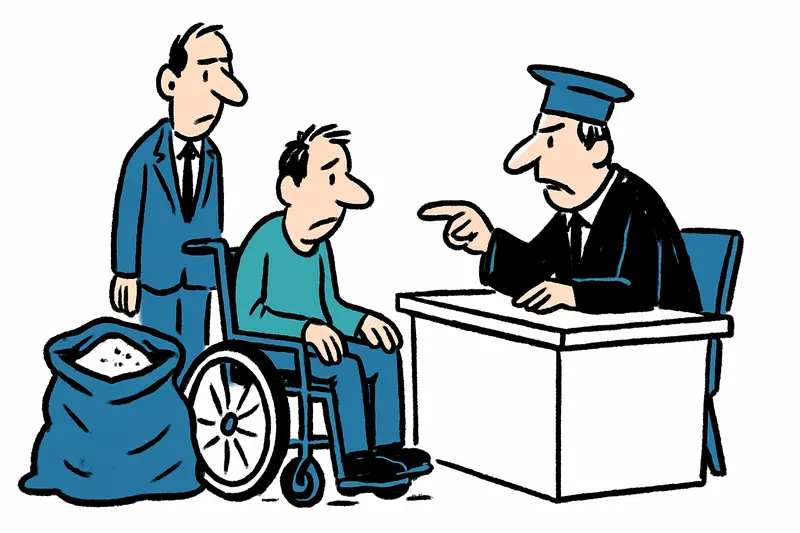
Next week a trial opens in Palma against ten defendants accused of smuggling cocaine from South America. Parts of the drugs are alleged to have been concealed in cavities inside wheelchairs. What does this case reveal about controls, supply chains and everyday life in Mallorca?
Trial in Palma: Cocaine in Wheelchairs — a Reality Check for Island Controls
At its core: ten defendants, cocaine from South America, hiding places in wheelchairs
Next week a case that is as unusual as it is troubling will appear before a court in Palma: ten people are accused of bringing cocaine from South America — according to investigators mainly from Peru — to Mallorca. According to police investigations from 2024, the inquiry included a joint operation by the Policía Nacional and customs investigators; a hidden drug lab was discovered and several kilos of the substance were seized, as in Drugs, Millions and Suspected Abuse of Office: What the Major Operation in Mallorca Reveals. The public prosecutor is seeking ten years’ imprisonment for each defendant.
Key question: What does a smuggling pattern involving hidden cavities in wheelchairs say about security gaps on the island, and how should authorities and society react?
The facts are sparse but clear: this is not just a curious hiding technique. Wheelchairs are assistive devices that enable trust and access. When such items become part of a transport system for drugs, it affects not only investigative authorities; it touches care facilities, second‑hand markets, airport logistics and controls at ports and freight centers.
From a crime‑economics perspective, smuggling networks often follow simple rules: they look for security gaps, they distrust official channels and they instrumentalize everyday objects that make observation harder, a pattern also evident in Half a Tonne of Cocaine at Playa d'en Bossa: Who Benefits — and What Must Change?. Hides in wheelchairs are an example of tactical adaptation to controls: not a daring speedway maneuver, but the use of objects that people are unlikely to view as suspicious.
What is often missing in public debate is the question about the mechanisms behind the import: How do shipments enter the EU logistics chain? What role do courier services, freight forwarders or private deliveries play? And how transparent are sales channels for used medical equipment? How do shipments enter the EU logistics chain, for example in cases like 675 Kilos of Cocaine: What the Find Means for Palma, Inca and Binissalem?
A small everyday snapshot: On a Tuesday morning at Mercado de l’Olivar the stalls smell of freshly brewed coffee and roasted almonds. An older man slowly pushes his rollator, vendors pack fruit, and somewhere in the old town a patrol car flashes, as in reports such as Drugs at the wheel in Cala Ratjada: One crash, many questions. Such scenes seem peaceful — and therein lies the danger: criminals rely on routine, on places where nobody expects a hidden transport.
Viewed critically, the 2024 investigations show two sides: police work functioned, the gang was broken up. On the other hand, it remains unclear how deep the networks reach, how much merchandise remained undetected and which gaps still exist — especially in the inspection of aid and care goods and in the monitoring of small freight consignments and parcel services.
What is often missing in reporting is the responsibility of the various parties involved: countries of origin, transport companies, sellers of used medical technology and local authorities. An isolated court case answers legal questions; but it does not automatically solve structural problems.
Concrete approaches that seem sensible:
- More precise checks of medical assistive devices: registration requirements for new and used wheelchairs and clear labeling for cross‑border transports.
- Strengthened cooperation: exchange of information between airports, ports, customs and the Policía Nacional as well as cooperation with authorities in origin countries to cut off sources.
- Improved risk analysis: give greater consideration to small shipments, courier services and parcel flows instead of only controlling freight tonnage.
- Training and awareness‑raising: train staff in hospitals, care homes, second‑hand shops and logistics companies to recognize unusual manipulations of assistive devices.
- Use community tips: set up contact points so that employees in social services and neighborhoods can report irregularities without triggering a major alarm right away.
Such measures cost money and nerves. But they are practical: it is not about inspecting every wheelchair, but recognizing weak points and addressing real workflows. Technology can help — better scanning devices, data-matching systems — but without people who think along, even the best machines remain ineffective.
To conclude with a pointed summary: the upcoming trial is important because it brings those responsible to court. But it is no substitute for a critical look at logistics, care infrastructure and cross‑border structures. If we do not want assistive devices to become a loophole for criminals, politics, authorities and civil society actors must now work on practical, local solutions. Otherwise, after the verdict everyday life in Mallorca will remain the same: a market stall, a rollator, and the certainty that crime moves where we least expect it.
Frequently asked questions
Why is the Palma cocaine case in wheelchairs raising concern in Mallorca?
How do drug smugglers hide cocaine in everyday objects like wheelchairs?
What does this Palma trial say about customs checks in Mallorca?
Could used medical equipment be a security risk in Mallorca?
What happens in a cocaine trafficking trial in Palma?
How can Mallorca improve checks on parcels and small freight shipments?
What can care homes and second-hand shops in Mallorca do to spot suspicious wheelchairs?
Is a cocaine case in Palma a sign that Mallorca is unsafe?
Similar News
Are the Balearic Islands the Southern Border of Europe? A Reality Check on Immigration
The Balearic Islands are again calling for EU aid after a sharp rise in arrivals by sea. Conflicting priorities between ...

"Expensive chaos" and many open questions: What clients can do when a lawyer suddenly stops responding
Several clients complain that a well-known German lawyer in Mallorca has been unreachable for months. Key question: What...

TV tip: 'The Last Problem' — Mallorca as the setting of a classic crime
A classic whodunit on Mallorca: A new miniseries set in spring 1959 brings storm, an isolated hotel and a dense web of s...
Nipping Sea Creatures: Why Bathers in Cala Major and Elsewhere Should Be Cautious
In Cala Major, bathers have reported being nipped by small fish. What is behind it, how can problems be avoided — and wh...
Forced eviction in Santa Catalina: When a 65-year-old slept in her car and showered on the beach — a question of responsibility
The story of Pilar López from Santa Catalina represents a problem affecting many Mallorcans: How can an island with a bo...
More to explore
Discover more interesting content

Can Cap de Bou

Townhouse Lleo 72
