
Truck crashes into bridge pillar at Porto Pi — who protects Palma from such accidents?
Truck crashes into bridge pillar at Porto Pi — who protects Palma from such accidents?
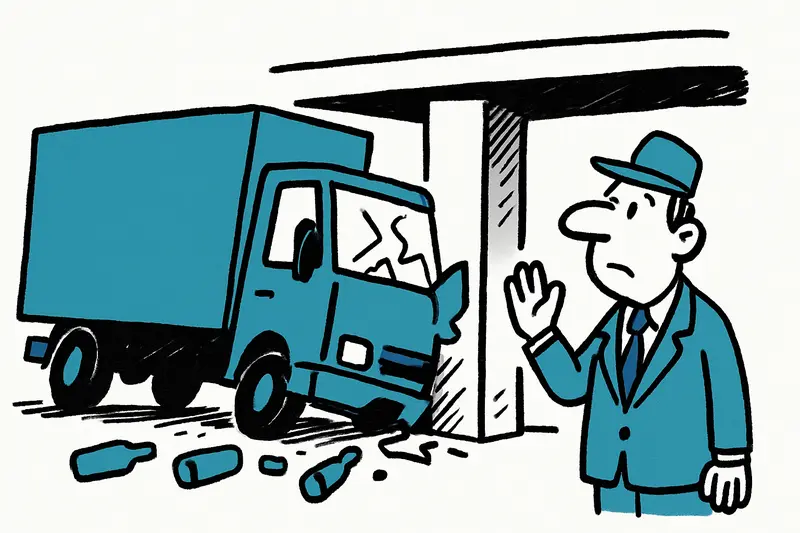
A truck driver seriously injured, a crushed cab and kilometers-long traffic jams: the collision with a bridge pillar at Porto Pi raises questions about the safety of access roads and load securing in Palma.
Truck crashes into bridge pillar at Porto Pi — who protects Palma from such accidents?
Main question: How safe are Palma’s access roads for heavy trucks and what needs to change to prevent this from happening again?
In the morning rush hour a single truck accident turned the access road to Palma into a slow-flowing bottleneck. Near the Porto Pi port, at the level of the Marivent Palace and Joan de Saridakis street, a lorry for reasons still unclear crashed into the left pillar of a bridge. The 28-year-old driver suffered serious injuries and had to be cut out of the trapped cab by the fire brigade. Road sections were closed, the Guardia Civil directed traffic, island council staff helped with the cleanup — and the city center breathed a sigh of relief when the access was reopened. Similar disruptions have occurred elsewhere on Palma's road network, such as Truck Breakdown Paralyzes Vía de Cintura – Palma in Morning Traffic Chaos.
In short: a shock for everyone who was stuck that morning on the Passeig Marítim or in the side streets. Buses were queuing, delivery vehicles were honking, and in the cafés by the harbor breakfast turned into traffic-watching. Vehicle parts, cartons and the load the truck was carrying lay on the road: glass bottles that delayed the cleanup and made the accident site more dangerous. Other mornings have seen the Ma-20 blocked by similar incidents, for instance Ma-20 Blocked: A Truck Breakdown and the Vulnerability of Palma's Roads.
Critical analysis: At first glance an accident is an accident. But the scene raises several systemic questions. Why could a truck hit a bridge pillar so forcefully? Are the protective barriers sufficient? Were speed, load securing or driver fatigue factors? How quickly did rescue teams respond and what equipment was needed to free the driver from the cab? The answers are still pending; until they are available there is room for speculation — and for real measures.
What is missing so far in the public discourse are concrete data on the bridge's technical condition, information on the condition and securing of the load, and statements about permitted operating times for heavy vehicle access to the city. Also little considered is how often municipal access routes are used by heavy traffic and whether control mechanisms — such as random checks for load securing, weight controls or time restrictions — are applied systematically. Without these facts the debate remains superficial; past collisions such as Severe rear-end collision on the Ma-13: Why the stretch between Inca and Palma often becomes a bottleneck illustrate the consequences of lacking data.
A brief look at everyday life: Joan de Saridakis street in the morning is a mix of commuters, tourists and delivery traffic. Suppliers deliver to the old town, tourists stroll along the harbor, cyclists cross paths. An accident at this spot not only causes congestion but creates a dangerous overlap of people and heavy traffic. I often see drivers in the morning maneuvering too close to curbs and open loading areas when doors are opened. This is not an accusation of individuals — it is an observation from Palma’s daily traffic picture.
Concrete solutions that could be implemented quickly and sensibly:
1. Physical protection at critical points: Crash or impact attenuators in front of bridge pillars and better designed guardrails so that in case of loss of control the impact energy is absorbed and the bridge structure is protected.
2. Preventive checks: Regular and unannounced inspections for load securing and vehicle condition on access axes as well as mobile weighing stations to prevent overloading.
3. Time windows and route planning: Restricted access times for heavy trucks to the city center and clear detours for transport routes that pass sensitive points.
4. Emergency coordination and equipment: Uniform standards for hydraulic rescue tools, joint exercises between the fire brigade, Guardia Civil and municipal services, and a stock of large absorbents for broken glass.
5. Transparency after accidents: Faster, traceable information on causes, type of cargo and infrastructure consequences so that politicians and the public can have an informed discussion.
Only the hard facts from the incident: around 10:45 a.m., location near the Porto Pi harbor at the level of the Marivent Palace, 28-year-old driver seriously injured, freed by the fire brigade, traffic regulated by the Guardia Civil, debris and glass bottles on the road, assistance from island council staff. Everything else requires inquiries with the responsible authorities — and we should insist on those answers.
Conclusion: Palma is not immune to serious traffic accidents. This incident is a wake-up call: protective measures at bridges, controlled access and strict checks of transport loads are not bureaucratic formalities but practical protection for people and the city. Anyone who sits on the Paseo in the morning, looks at the boats in the harbor and listens to the traffic does not expect a single truck to paralyze the access and seriously injure a person. That is precisely why the city should act now instead of finding excuses later.
Frequently asked questions
How can a truck accident cause such major traffic disruption in Palma?
Are Palma’s roads safe for heavy trucks?
What happened at Porto Pi in Palma?
What should be checked after a truck crashes into a bridge pillar in Mallorca?
What can Palma do to prevent similar truck accidents?
Was traffic affected around Passeig Marítim after the crash near Porto Pi?
Who responds when a serious truck accident happens in Palma?
Why are mornings on the Porto Pi access road in Palma so busy?
Similar News
Are the Balearic Islands the Southern Border of Europe? A Reality Check on Immigration
The Balearic Islands are again calling for EU aid after a sharp rise in arrivals by sea. Conflicting priorities between ...

"Expensive chaos" and many open questions: What clients can do when a lawyer suddenly stops responding
Several clients complain that a well-known German lawyer in Mallorca has been unreachable for months. Key question: What...

TV tip: 'The Last Problem' — Mallorca as the setting of a classic crime
A classic whodunit on Mallorca: A new miniseries set in spring 1959 brings storm, an isolated hotel and a dense web of s...

Nipping Sea Creatures: Why Bathers in Cala Major and Elsewhere Should Be Cautious
In Cala Major, bathers have reported being nipped by small fish. What is behind it, how can problems be avoided — and wh...
Forced eviction in Santa Catalina: When a 65-year-old slept in her car and showered on the beach — a question of responsibility
The story of Pilar López from Santa Catalina represents a problem affecting many Mallorcans: How can an island with a bo...
More to explore
Discover more interesting content

Can Cap de Bou

Townhouse Lleo 72
