
Why Trump's attacks on Spain also reverberate in Mallorca — a reality check
Why Trump's attacks on Spain also reverberate in Mallorca — a reality check
An excerpt from Washington raises eyebrows in Palma: Trump's insults and threats affect complex interests. Who benefits, who loses — and what does it mean for everyday life in Mallorca?
Why Trump's attacks on Spain also reverberate in Mallorca — a reality check
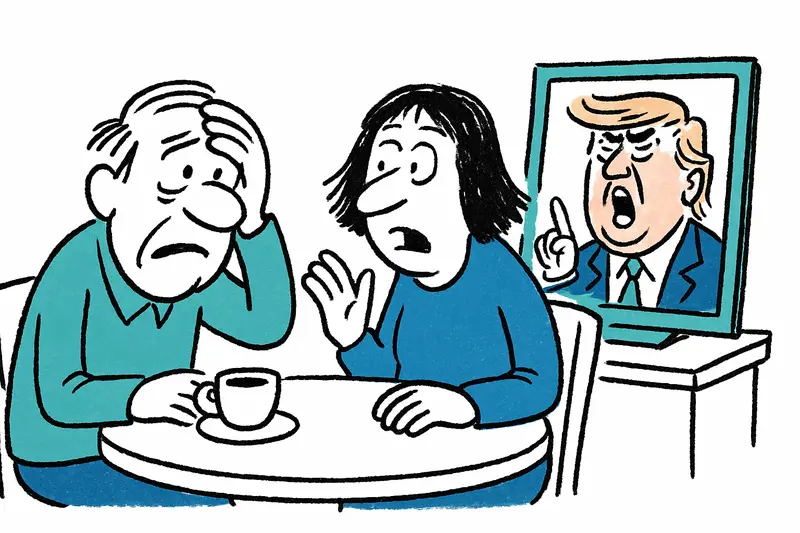
A brief, sharp remark by a US president can travel far. When the allegation recently emerged in a US interview that Spain was a "loser", I was sitting at a café on the Paseo Marítimo, hearing the clatter of espresso cups over the sound of the sea. The headlines reached the promenade faster than you can say "Puerto Portals". But what does this war of words really mean for Mallorca, for politics and for the people who fold their newspapers here in the morning?
Key question
Can a verbal escalation between Washington and Madrid have concrete consequences for the island — economically, militarily, and for confidence in international alliances?
Critical analysis
The conflict ignites around a clear decision by Madrid: the government refused to support US operations against Iran from Spanish soil. Madrid summed that up with the formula “No a la guerra” and did not want to act as an accomplice to military strikes. Washington's sharp reaction, marked by denigrations and threats of economic measures, is a political pressure tool, as reported in Trump threatens NATO expulsion: What Spain's defense row means for Mallorca.
On Mallorca you don't immediately feel troop movements — but the island is not out of the picture. There are military bases here with cooperative ties, longstanding friendships and practical interconnections. An image that circulated in recent days shows a US aircraft carrier in the bay of Palma; symbols like this reinforce the feeling that geopolitical decisions can fall close to our shores, as discussed in Trump puts Spain's NATO exclusion on the table - controversy over defense spending.
What's missing in the discourse
Public debate often lacks sober answers to simple questions: Which economic levers does Washington actually have against Spain? What would a threatened trade halt or targeted sanctions concretely mean for export sectors and tourism in the Balearics? And: How resilient are civilian infrastructures on Mallorca to political tensions — from supply chains to energy imports? Instead of slogans, transparent scenarios are needed that government bodies and local administrations can explain, a need also highlighted after visits and diplomatic exchanges such as Merz in Madrid: Why political differences with Sánchez are also felt in Mallorca.
Everyday scene from Mallorca
Early in the morning in Santa Catalina the fishmonger delivers his bags, the market women talk about prices and holiday guests still arrive with blankets. A retiree sits on the bench in front of the church, looks at his phone and murmurs, "Those over there are angry again." Nobody there is planning war, but many wonder whether political tensions could hit holiday budgets, restaurant jobs or deliveries from the mainland. Those questions are more real than some diplomatic responses.
Concrete solutions
1) Public risk communication: The regional government should explain in clear, simple briefings what the impacts of possible sanctions could be — for ferry connections, agricultural deliveries and energy.
2) Diversification of supply chains: Hotels, restaurants and retailers in Mallorca need to examine short-term alternatives for critical supplies and bundle efforts in cooperation networks.
3) Promote diplomatic de-escalation: Madrid can seek partnerships at EU level to strengthen joint positions on foreign policy and defense — this reduces the image of isolation.
4) Increase civilian resilience: Emergency plans for critical goods, energy storage and short-term subsidy mechanisms could protect local businesses.
5) Transparent defense debate: The discussion about military spending and NATO commitments is complex; it should be conducted openly, without threats, so voters can weigh strategic costs and risks.
Why this matters for Mallorca
The island lives off tourism, trade and a network of small businesses. Political skirmishes between great powers act here like a distant thunderstorm: rarely destructive, but noticeable in their branches. If trade barriers or image problems arise, parking attendants in Palma, chefs in Alcúdia and boat owners in Calvià will feel it. The answer should not be sought only in Washington or Madrid — it must be prepared locally.
Conclusion — To the point: words can pave the way for sanctions — or they can be nothing but hot air. Mallorca does not need slogans, but pragmatic precautions. The island cannot shut itself off from international politics, but it can reduce its vulnerability. Those who now rely solely on rhetorical counterattacks miss the chance to make the real lines of connection more resilient.
Frequently asked questions
Can political tension between the US and Spain affect Mallorca?
Would Mallorca's tourism be affected if Spain came under economic pressure from Washington?
Are there US military links in Mallorca that make the island part of this dispute?
What would trade restrictions between the US and Spain mean for Mallorca?
How could Mallorca prepare for international tensions affecting supplies and energy?
What does Spain's refusal to support US military action against Iran mean for Mallorca?
Could Mallorca's restaurants and small businesses be affected by a Spain-US row?
Why do people in Palma talk about US-Spain politics when the issue seems far away?
Similar News
High heel slips, car accelerates: accident on Camí de Son Hugo
A woman lost a high-heeled shoe on the forecourt of the sports facility at Camí de Son Hugo. The car accelerated, mounte...
Phone Scam: How Two Hotel Employees at Playa de Palma Lost Thousands of Euros
One morning in September, two reception employees at Playa de Palma were pressured by alleged alarm-company staff — in t...
When the Wallet Becomes a Danger: Attack in Peguera and Lessons for Mallorca
In Peguera, two women are said to have stolen the wallet from a 75-year-old German couple. When the victim intervened, t...
Plata stays Plata: Young people take over, Llonguets remain
A small bar on Carrer de l'Argenteria will continue: Tolo Serra hands the place over to young Mallorcans at the end of t...

Unnoticed in the Luggage Compartment: How a Boy Traveled More Than 100 Kilometers in a Team Bus
A minor traveled in the undercarriage of a team bus for more than 100 kilometers until his cries for help were heard. A ...
More to explore
Discover more interesting content

Can Cap de Bou

Townhouse Lleo 72
