
Capital from Istanbul: What Turkish Airlines' Stake Really Means for Palma
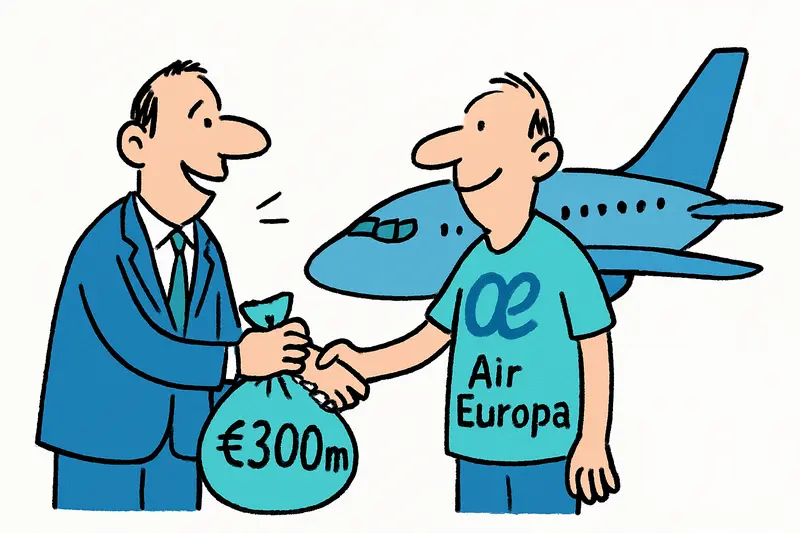
With almost €300 million, Turkish Airlines is investing in Air Europa — a cash injection that eases the balance sheet. For Palma, however, the cooperation raises more questions than answers: Who will make decisions in the future, which routes will remain, and will island residents really benefit from new connections?
Guiding question: Will Palma benefit more — or will the island remain just a transfer point?
Early in the morning, when the roar of jet engines above Avenida Argentina still echoes through the street cafés and an espresso is hastily consumed, a different name suddenly comes up: Turkish Airlines is investing around €300 million in Air Europa — pending approval. For the balance sheets this is a relief; for Palma the news is a stirred sea full of opportunities and risks. The real question is: Does this tie change the island's internal logistics — or does it only change the logos on the boarding passes?
Money relieves the balance sheet, but not everyday life automatically
The payment primarily serves to redeem almost half of the government bonds. That reduces interest burdens and creates financial room for manoeuvre. This is important: banks breathe easier, executives get some breathing space. But experience shows: a covered account is not the same as better operational practice. More money prevents insolvencies, but it does not guarantee more punctuality, not automatically more flights in winter, and not that maintenance work will be carried out locally in the future. Many decisions that determine everyday life in Mallorca — slot allocation, codeshare arrangements, prioritisation of routes in the low season — are made behind closed boardroom doors in Madrid and Istanbul, as discussed in Air Europa and Turkish Airlines: What the Stake Could Mean for Mallorca.
Who holds the levers will decide jobs and prices
Formally, the Hidalgo family with Globalia remains the majority shareholder. Practically, however, a powerful foreign partner means increased influence: Turkish Airlines brings its route network, market knowledge in Turkey and Eastern Europe, and technical resources. This can attract new groups of visitors — but it can also shift negotiating power. Locally based travel agencies, taxi drivers, bus companies and small hotels face uncertainty: Will they receive preferred access to allocations in the future, or will large, supraregional tour operators now walk the counters alone?
Less noticed: slots and seasonality. Palma lives from the summer; capacities shrink in the low season. A partner with a global strategy could weigh routes differently — to the advantage of some regions, to the detriment of other providers that rely on steady connections.
Concrete opportunities — and how they must be prepared
Undeniable: there are opportunities. Better codeshares could bring direct connections from Eastern European cities or Anatolian regions. Expansion of cargo routes would enable exports; joint maintenance depots could create skilled jobs. But opportunities will not materialise by themselves. They need binding agreements, local oversight and an implementation plan.
1) Local route monitoring and negotiation mandate: Airport operators, hoteliers, the chamber of commerce and representatives of the travel industry should compile a prioritised route table and seasonal needs. This list must become part of formal negotiations with Air Europa and Turkish Airlines — those who are not at the table lose influence.
2) Employment and training commitments: Cooperations must secure jobs: collective bargaining agreements, local training positions for technicians and ground staff, and guarantees for maintenance contracts. This way Mallorca remains more than just a transit point.
3) Transparent slot and allocation policy: Palma airport needs clear, programmatic rules for awarding additional capacities in the low season so that small providers are not systematically pushed out.
How people on site see it
A look into the departure hall: the loudspeakers announce delays, seagulls cry outside, taxi drivers discuss possible frequency increases. “More routes means more work,” says a driver on Avenida Argentina, “but the big tour operators set the prices.” Hoteliers on Passeig Marítim are already thinking about winter guests, while technicians and craftsmen hope for maintenance contracts. The mood: cautiously optimistic, but also watchful.
Risks that are often overlooked in Brussels, Madrid or Ankara
Beyond tariff and market consequences, geopolitical and regulatory hurdles threaten: EU rules on ownership and control, bilateral agreements and antitrust reviews can slow integration. Excessive concentration in the aviation market also strengthens the negotiating power of a few actors — which may mean short-term stability but, in the long run, less competition and pressure on prices and service quality.
Conclusion: an opportunity with a to‑do list rather than a rosy self-runner
Turkish Airlines' investment is a strong step toward debt relief for Air Europa and carries real opportunities for Palma. Whether the island will gain more work, secure jobs and better connections — or merely serve as a transfer point — is decided now: in offices, committees and at negotiation tables. Mallorca's politics and economy should not be spectators: clear demands, transparent agreements and protection mechanisms for local providers are now needed. Otherwise only the colour on the boarding pass may change — not who shuffles the cards on the ground.
In the sky above Palma: the familiar roar, the smell of espresso in the cafés, and at the gates the quiet speculations about whether a new name on the boarding pass will bring more than just conversation.
Frequently asked questions
Will Turkish Airlines' investment in Air Europa improve flights from Mallorca?
Could this deal lead to more winter flights from Palma?
What does the Air Europa deal mean for jobs in Mallorca?
Could Mallorca benefit from new international connections through Palma airport?
Will local travel agencies and smaller Mallorca businesses be affected by the deal?
Does the Turkish Airlines stake change who controls Air Europa?
What should Mallorca watch for next after the Air Europa announcement?
Is Palma likely to become just a transfer point for Air Europa and Turkish Airlines?
Similar News

From the Reality Studio to the Pitch: Aleks Petrovic Makes Mallorca His Base
The former participant in numerous TV shows moves from Dubai to the island and launches a project with FC Germania Mallo...

When the Phone Falls Silent: Concern for Sarah Joelle in Mallorca — and What It Reveals
After days without a response, the TV personality's unreachability in Mallorca sparked concern. Shortly afterwards an al...
Ultraluxury on the Ground: Four Seasons Jet in Palma — a Reality Check for Formentor and the Island
A high-priced flight crosses Mallorca and its guests stay for days at the Formentor resort. What does the island get bes...

Death of a Witness and the Justice Backlog: Why the Kegel Brothers Trial Matters in Mallorca
A witness in the Playa de Palma fire case has died, and the trial against eight German holidaymakers has been delayed un...

Champagne Reception, Red Carpet and Mini Originals: The Pre-Nit del Art at Gallery Mensing
Almost 400 guests, champagne, pop-art feats by Tom Boston and a raffle for the Parkinson's foundation: Gallery Mensing t...
More to explore
Discover more interesting content

Can Cap de Bou

Townhouse Lleo 72
