
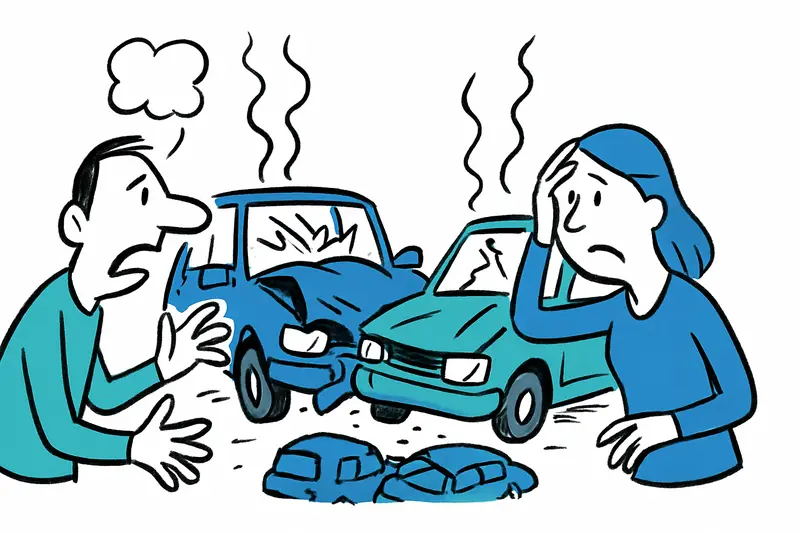
Two crashes on the Ma-13 minutes apart: Why this stretch feels dangerous again
Within about ten minutes on Thursday afternoon two collisions occurred on the Ma-13 between Alcúdia and Palma. Six vehicles were involved and several people suffered minor injuries. A reality check on what’s missing and what could be changed quickly.
Two crashes on the Ma-13 minutes apart: Why this stretch feels dangerous again
On Thursday afternoon at around 4:30 p.m. two successive traffic accidents occurred on the Ma-13, the continuation of the motorway from Inca toward Palma. At the height of Can Segué four vehicles collided, and just minutes later a second collision involving two more cars happened near Son Simó. In total six vehicles were affected and several people suffered minor injuries. The road was blocked in both directions; Alcúdia's local police alerted several patrols, the Guardia Civil assisted with traffic management, and specialists later prepared the accident reports; similar incidents have been reported previously, including Severe rear-end collision on the Ma-13.
Key question
Why are accidents piling up on this long, straight stretch even though it appears well developed, and which measures would prevent such multi-vehicle incidents in the future?
Critical analysis
At first glance the Ma-13 looks like a classic accident trap: long, straight sections, clear sightlines, few curves — which invites speed. When an incident then occurs (a breakdown, sudden braking, unexpected slowing before an exit), minutes can be enough to trigger chain reactions. Everyday factors add to the problem: rush-hour traffic toward Palma, commuters between Inca and Alcúdia, and rental or tourist drivers who may be unfamiliar with the road. If emergency teams are working at one spot, the danger increases that following drivers are distracted or notice the congestion too late, as seen in Head-on Crash on the Ma-13 near Alcúdia: Could the Accident Have Been Prevented?.
What is missing from the public debate
The discussion often focuses on individual cases and blame, rarely on the systemic problem. There is a lack of clear accident-hotspot maps, public figures on speeds at critical points and transparent communication about how quickly tow trucks and emergency doctors arrive. The perspective of commuters, bus staff and truck drivers is also barely heard — yet these groups see daily where risky situations develop.
An everyday scene on the Ma-13
Picture the Ma-13 on a late winter afternoon: cold light, the smell of coffee breaks in petrol-station shops, the hum of a bus from Alcúdia dropping off passengers. Blue lights flash on the crash barrier; taxis and vans are queued in the jam, drivers in hats lean on bonnets, phones glow. A café at the exit records delays in food deliveries, and pedestrians on the next overpass watch the recovery with a shake of the head — for many here it is not an isolated case but a recurring irritation, as with Nuevo choque en la rampa de la MA-13 en Son Cladera: dos accidentes en 20 minutos.
Concrete solutions
Short-term:
- Mobile speed controls: Deployment of patrols with mobile radar units during peak times, especially at the approaches to Can Segué and Son Simó.
- Warning systems: Mobile variable-message signs before known accident locations that reduce speed and alert drivers to hazards when congestion occurs.
- Increase visibility: Reflective markings, improved lane markings and additional lay-bys or refuge islands so vehicles do not have to remain in the traffic lane.
Medium- to long-term:
- Infrastructure check: A technical inventory along the Ma-13: widening of hard shoulders, review of overtaking bans, and intelligent signage for different times of day.
- Data-driven hotspot analysis: Publication of aggregated accident and speed data (for example, Directorate-General for Traffic (DGT) road safety data) so authorities, residents and commuters can identify and prioritize hotspots.
- Coordinated response tactics: Agreed procedures for police, Guardia Civil, emergency services and towing companies to keep disruption time short and prevent secondary accidents — including defined safety zones for first responders.
- Awareness and training: Multilingual information campaigns for commuters and car rental companies addressing risky behavior on straight stretches; and training for bus and truck drivers on defensive driving on the Ma-13.
Why these proposals are practical
Many measures require little financial outlay: mobile signs, temporary radar checkpoints and more visible markings reduce immediate risks quickly. Once installed, infrastructure improvements and coordinated response planning have lasting effects. And transparent data creates public pressure to act — enabling authorities to set priorities more effectively.
Conclusion
The two crashes near Can Segué and Son Simó are a warning: a long, straight, well-developed road does not automatically protect against accidents. More than reactions after a crash are needed — preventive measures, better coordination and greater transparency. In the short term, mobile controls and warning systems help. In the long term the Ma-13 must be made safer as a commuter axis and tourist route. Otherwise the next chain-reaction crash is only a matter of time.
Frequently asked questions
Why do accidents happen so often on the Ma-13 in Mallorca?
Is the Ma-13 dangerous for driving between Inca and Palma?
What should drivers do if there is a crash on the Ma-13 in Mallorca?
What safety measures could reduce accidents on Mallorca’s Ma-13?
Why do tourist drivers sometimes struggle on Mallorca’s main roads?
Are accidents on the Ma-13 near Alcúdia a recurring problem?
What kinds of drivers use the Ma-13 in Mallorca every day?
What is the best way to drive safely on straight roads in Mallorca?
Similar News

More water than last year: Mallorca's reservoirs breathe easier
September rain refilled the Tramuntana's reserves: overall fill around 35 percent, Cúber at 40.42 percent, Gorg Blau at ...
Three Luxury Hotels in Banyalbufar: Lots of Money, Many Questions
A Danish investor plans three exclusive accommodations in Banyalbufar — including the historic Son Valentí. The announce...
2.1 tonnes of cocaine on sailing yacht off Spain's coast – a reality check for the coastguard
A 14-metre yacht was seized with 2.1 tonnes of cocaine. Who monitors the ports, how does the international hunt succeed ...

Heat Bonus in Mallorca: 100 Euros Extra for Outdoor Staff at MarSenses
MarSenses pays employees who worked outdoors in August an extra €100 as recognition. Lighter uniforms, reduced hours for...
Renovating in Mallorca: What You Really Can Do Without Neighbour Consent
Many think they can do whatever they want in their apartment. That's partly true — but only as long as structural elemen...
More to explore
Discover more interesting content

Can Cap de Bou

Townhouse Lleo 72
