
Unidentified body near Tolleric: How can a person be overlooked in the middle of the island?
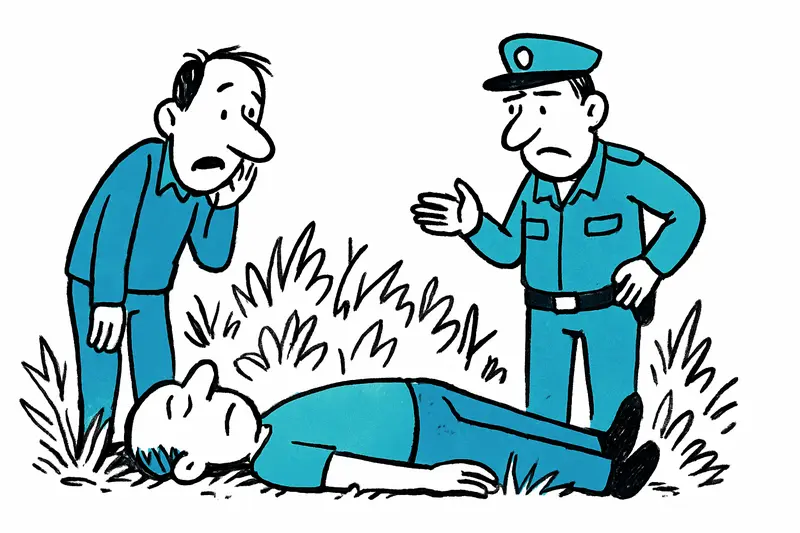
An older man was found dead in a patch of woodland near the cliffs of Tolleric. He had no identification, showed signs of sunburn and apparently lay undiscovered for several days. The Guardia Civil has taken DNA samples — the island is waiting for answers.
Unidentified body near Tolleric: How can a person be overlooked in the middle of the island?
Over the weekend a walker discovered the corpse of an older man in scrub close to the coast at Tolleric (municipality of Llucmajor). The Guardia Civil took over the operation; investigators found that the deceased was carrying no identification, had signs of sunburn and, based on the scene, had likely been dead for several days. After retrieval, blood or tissue samples were sent to the Institute of Forensic Medicine for DNA comparison. The results are still pending.
Key question
How can it happen that a person remains in an accessible area for days or even weeks without being identified or found sooner?
The answer is not a single mistake but a web of circumstances: remote paths, limited visibility to passersby, mobile phone dead zones and the summer mobility of visitors. Another factor is that no one on site knew who the man was. Without identification, police and emergency services are significantly limited because they cannot immediately clarify identity, origin or possible medical history.
Critical analysis
The visible facts tell a concise story: sunburn points to prolonged sun exposure and an extended stay outdoors. This speaks against an immediate accidental death with prompt recovery; possible causes include heat injury, a sudden illness followed by loss of consciousness, or a fall in difficult terrain. For the Guardia Civil's investigations it is important to avoid hasty conclusions. A DNA match is routine in such cases, but it also highlights structural problems: How quickly were missing-person reports checked? Were there tips from neighbors? Were hiking trails or coastal sections that are busier in summer regularly patrolled?
What is missing from public debate
In discussions about discovered corpses, how social infrastructure protects elderly or solitary people is often overlooked. While safety at beaches and against drug crime is discussed, everyday risks are less frequently addressed: loneliness, undetected illnesses, and lack of checks in peripheral areas. It is also often forgotten that Mallorca in summer has a massive mix of tourists, seasonal workers and short-term residents. That complicates quick identifications because reports from inland or abroad must first be matched.
Another rarely mentioned point is the balance between nature conservation and public accessibility. Many coastal paths are intentionally left undeveloped so flora and fauna remain undisturbed. That also means people in trouble are less likely to be seen.
An everyday scene
Anyone driving the small road to Tolleric late in the morning knows the sound of waves hitting the cliffs, the salty wind and the smell of pine resin. In summer there are walkers and families, but in some places the path remains so narrow that a body between scrub and rock bands can easily be overlooked. On a hot day like those in recent weeks, a motionless person does not immediately stand out: holidaymakers seek shade, attention is on the sun and sea, not on an out-of-the-way patch of brush.
Concrete proposals
1. Better marking of emergency points: steep coastal paths should have clear waypoints with numbers and GPS coordinates so emergency services can be guided more quickly to a discovery site.
2. Mobile emergency call stations or SOS buttons at particularly remote coastal sections; simple solar-powered transmitters are often sufficient.
3. Stronger cooperation between municipalities, the Guardia Civil and health services on missing-person reports; a regional reporting system for older or vulnerable people could reduce matching times.
4. Information campaigns for visitors: important guidance on how to behave in the terrain and why ID/emergency contact details matter could be distributed at airports, ferries and accommodations.
5. Promotion of wearable identification solutions for at-risk groups: a discreet bracelet with a QR code and emergency numbers or a central voluntary registry for people with health risks.
Who is responsible?
Responsibility is shared. The Guardia Civil clarifies the circumstances of the death. Municipalities are responsible for infrastructure and information. Socially, we all bear responsibility because neighborhood networks and attention often make the difference. Authorities can improve systems, but without social awareness gaps will remain.
The DNA samples are now waiting in the queue at the forensic institute. For relatives — if there are any — the wait is bitter. For Tolleric it is a reminder of vulnerability: an island loud in high season, quiet in its corners.
Conclusion: The discovery is not only a sad individual fate; it exposes weaknesses that could be mitigated with manageable effort. The DNA analysis will clarify who the man was. The real test for the island comes afterwards: will we learn from this case and strengthen neighborhoods, paths and social networks so that a person in need is found more quickly?
Frequently asked questions
What is Mallorca's climate like and when is the best time to visit?
What should I pack for a trip to Mallorca?
Where are the best beaches for swimming in Mallorca?
How is transport on Mallorca and what's the best way to get around?
Is Palma the best base for exploring Mallorca?
What activities are family-friendly in Mallorca?
Are there day trips from Mallorca to nearby islands or sights?
What should I know about safety and health when visiting Mallorca?
Similar News

Born conflict: Who owns Palma's most elegant promenade?
The city ordered bars on Passeig del Born to dismantle their terraces ahead of a planned sit-in. Residents, restaurateur...
Water shortage in Mallorca: Reserves shrinking, answers lacking
Despite rainfall, reservoir volumes remain low: Gorg Blau falls, Cúber rises slightly — together only 39.9 percent. Key ...
Arrest in Frankfurt after Mallorca Flight: What the Case Reveals About Gaps in the System
A 67-year-old Dutchman was arrested during a check in Frankfurt. Behind the scenes is an international warrant from Spai...
Chairs gone, debate remains: Who can really use Palma's Born in the evening?
The city had terraces on Passeig del Born dismantled shortly before a planned public action. A conflict between restaura...

The 'Fifth Season' in Port d'Andratx: A Pool That Looks Down
An unusual 39.2-meter yacht is currently moored at the Port d'Andratx Yacht Club: black-grey, with plenty of glass and a...
More to explore
Discover more interesting content

Boat Tour with BBQ along Es Trenc Beach

Private transfer from Mallorca Airport (PMI) to Pollensa
