
Vandalism in Santa Maria del Camí: Five Real Estate Agencies Vandalized — Engel & Völkers Also Affected
Vandalism in Santa Maria del Camí: Five Real Estate Agencies Vandalized — Engel & Völkers Also Affected
Several real estate offices in Santa Maria del Camí have been targeted by property damage. Rooms in the historic Convent dels Mínims are also said to have been damaged. Who is behind it — and why is a practical response often missing from politics and administration?
Vandalism in Santa Maria del Camí: Five Real Estate Agencies Vandalized — Engel & Völkers Also Affected
How much space do we give radicals in our neighborhood?
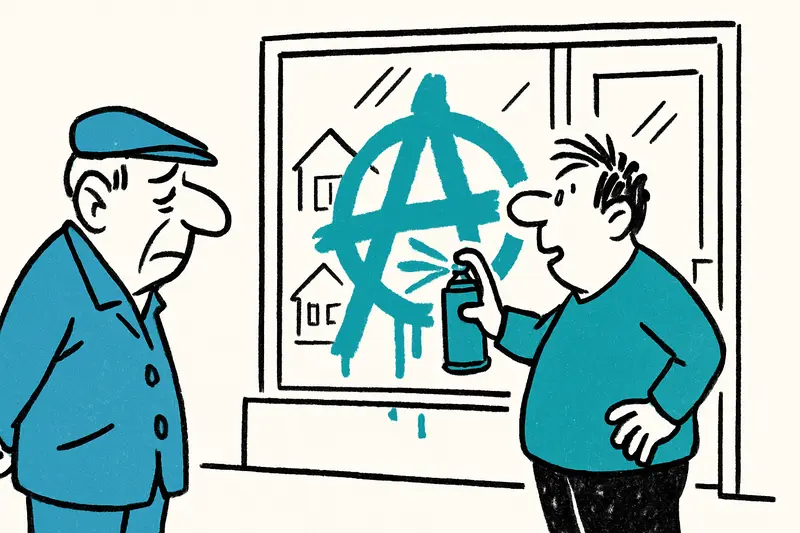
Early on Wednesday morning in Santa Maria del Camí: the weekly market still smells of coffee, bakeries are opening, and the bus from Palma is making its rounds. Between fruit stalls and the clatter of shop shutters, residents and workers discovered conspicuous paint splashes, torn padlocks and scratched façades at several real estate offices. In total, five agencies are said to have been affected; one of the targeted offices is located in a part of the Convent dels Mínims, a protected building in the town. Similar acts affecting vehicles were reported elsewhere, for example Scratched Cars in Santanyí: Scratches Instead of Holiday Peace.
The incidents prompted political reactions: a party made the events public, called the actions an attack on social coexistence and pointed to an increase in actions aimed at entrepreneurs, property owners and players from tourism and real estate. In that party’s account, perpetrator circles in the far-left scene as well as from the so-called anti-tourism movement are suspected. The demand was: police clarification, tough punishment and clear condemnation by the municipality.
Key question: What produces such acts — and how do we as a community respond practically? This is not only a legal question. It is about the sense of neighborhood, the protection of property and the protection of cultural heritage when a historic building is affected. Residents, shopkeepers and tourists experience such incidents directly: the annoying trip into the old town, increased fear, concern about economic livelihoods — Arrest in Santanyí: How vulnerable is Mallorca's real estate market to fraud? — this has consequences for everyday life far beyond the sight of paint.
Critical analysis: Public discussions often limit themselves to blame and occasional outrage. That helps the victims little. What is missing is a clear look at patterns: are there recurring locations, the same methods, similar messages? How quickly do the police and municipality act when cultural heritage is damaged? Current reports name perpetrator groups only in general terms; however, reliable evidence collection and transparent information sharing by the authorities are crucial so that investigations do not run cold and rumors do not fill the gap.
What is missing in the public discourse: the perspective of those directly affected. Reports rarely give employees of the agencies and owners a detailed voice; their economic and emotional losses often remain vague. The question of prevention — better lighting, neighborhood networks, technical security measures — also rarely takes center stage. And finally, a nuanced engagement with motives is lacking: not every action by the anti-tourism scene automatically leads to violence, but blanket attributions do little to help investigations.
A simple everyday scene shows the dividing line: a pensioner from the town pushes his shopping by, stops in front of the damaged façade and shakes his head. The floral signage of the Convent garden receives a splash of paint; children returning from school point to the scribbles and ask their parents whether those were “bad people.” Such small reactions add up and change the mood of a place faster than one might think.
Concrete approaches: First, better cooperation between those affected, the municipality and the police — a fast, clear contact channel so that every damage is immediately documented and analysed. Second: preventive measures on site that not only deter but also strengthen the sense of community: regular neighborhood services, community meetings or façade sponsorships where local craftsmen and business owners work together. Third: targeted investment in protection for historic buildings — discreet but effective locks and alarm systems can help without damaging the appearance. Fourth: transparency in the investigation process; when inquiries are ongoing, the municipality should clearly communicate what it is doing without jeopardizing the investigations.
Another point: schools and youth centers should intensify discussions about forms of protest and their boundaries. Criticism of economic structures is part of democratic debate — but destruction is not an argument that wins support; it divides communities.
Conclusion: Colored slogans on façades are not just a visual nuisance. They measure how well communities respond to conflicts. Santa Maria del Camí now needs less symbolic outrage and more practical steps: rapid evidence collection, support for those affected, targeted prevention and an honest debate about causes. Otherwise, all that remains in the end is the paint on the wall — and the uncomfortable feeling that no one wants to take the broom in hand for good.
Frequently asked questions
What is the weather usually like in Mallorca in late summer?
Can you still swim in the sea in Mallorca in late summer?
What should I pack for Mallorca in late summer?
Is late summer a good time to visit Mallorca?
What is Port de Sóller like in late summer?
What is Palma de Mallorca like in late summer?
What is the best way to spend a late-summer day in Mallorca?
Are evenings in Mallorca cooler in late summer?
Similar News

Missing 24-year-old from Bavaria found on Mallorca
The 24-year-old woman from the Augsburg area who had been missing since August 3 was found on Mallorca. Family members, ...

Heat and Power: Why the Balearic Islands Are Sweating Now — a Reality Check
Weeks of heat waves, rising cooling demand and suddenly flickering lights: Mallorca, Ibiza and Formentera have seen an i...
When the Water Taps Run Dry: Why Tankers Are Not the Solution
In villages like Deià, Valldemossa or on Menorca, municipalities are limiting water use because of drought. Who decides,...

Ryanair Flight Diverted to Barcelona: An In-Flight Emergency and the Questions That Follow
A Ryanair jet from Pisa to Málaga landed in Barcelona after a passenger became acutely ill. Why these cases need more at...
Alarm in Port de Pollença: What now for the polluted bay?
Hundreds of people protested on the beach of Port de Pollença. The environmental organization Arrels Marines demands a p...
More to explore
Discover more interesting content

Boat Tour with BBQ along Es Trenc Beach

Private transfer from Mallorca Airport (PMI) to Pollensa
