
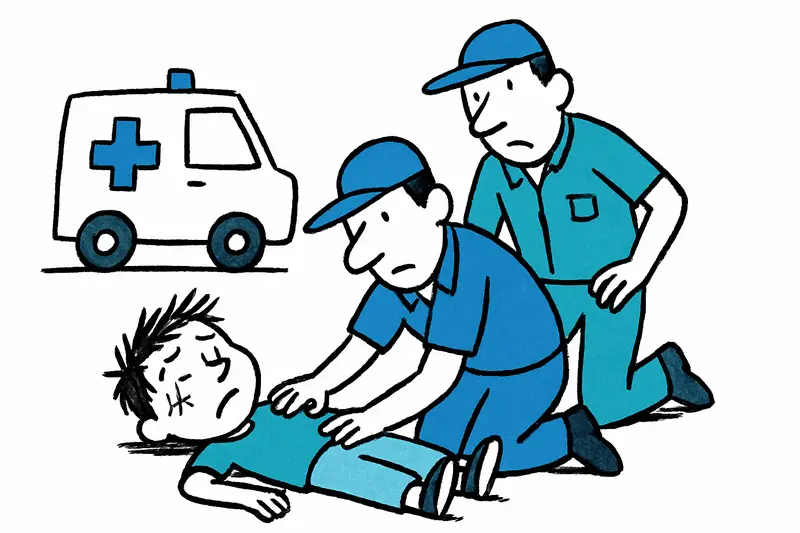
First-floor accident in Inca: toddler with severe head trauma after fall
First-floor accident in Inca: toddler with severe head trauma after fall
In Inca, a two-year-old boy fell from the first floor and suffered a severe traumatic brain injury. Rescue teams took him to Son Espases. What is missing in the debate on child safety?
First-floor accident in Inca: toddler with severe head trauma after fall
Yesterday afternoon in Inca, a two-year-old boy fell from the first floor of a residential building and sustained a severe traumatic brain injury. Rescue teams stabilized the child on site and transported him to Son Espases hospital. Traumatic brain injuries also appear in other local incidents such as Serious accident on Calle Aragón: A loud bang, many questions.
Key question
How can we prevent the very place of safety — our own home — from becoming a danger to children?
Critical analysis
The bare facts are brief: a fall from the first floor, a two-year-old child, emergency responders on site, and a transfer to Son Espases. What we do not know here, because official details are missing, is whether it was an open balcony railing, a window without a lock, or a moment of inadequate supervision. Such gaps are typical in reports of this kind and make it hard to draw systemic conclusions from a single incident; other similar cases include Fall in Can Pastilla: More Than an Accident?.
Housing stock on Mallorca is heterogeneous: older buildings with low parapets stand next to modern apartment blocks. In urban centres like Inca there are many older buildings whose balconies and windows do not meet today's safety standards. On top of that, families, holidaymakers and temporary tenants have different experiences dealing with hazards, as seen in Careless Moment in Llucmajor: Family Rescues Two-Year-Old from Pool. The combination of old railings, playing toddlers and a brief lack of attention is unfortunately often enough for a serious accident.
What is missing from the public discourse
Reports of such accidents often contain the same elements: rescue, hospital, investigations. Rarely are preventive questions addressed: When were the railings last checked? Are there mandatory safety requirements for landlords? Are young parents informed about hazards when they take over a flat? Responsibility is frequently shifted between families, landlords and authorities without practical solutions being discussed.
A everyday scene from Inca
Picture the plaça on a hot afternoon: delivery vans honk, the bakery smells of freshly baked pa amb oli, a neighbour waters her plants. In a narrow side street an ambulance is parked, its doors open, paramedics speak quietly, a bicycle lies at the curb — the small town's routine is abruptly interrupted. Moments like these show how quickly everyday life can tilt.
Concrete solutions
- Review building and rental law measures: municipalities could promote or require mandatory safety checks for balconies and windows in older buildings. It doesn't have to be a huge loan: simple railing reinforcements, window stoppers or child locks are relatively inexpensive and can often be retrofitted.
- Strengthen information duties: on new rentals and handovers, landlords should provide standardized, practice-oriented child safety guidance — a short leaflet with points like window and balcony checks.
- Local prevention campaigns: health centres, parent centres and schools can jointly offer simple, low-threshold advice. On-site actions, for example integrated into weekly markets, reach parents where they already are.
- Promote technical aids: window and balcony guards, socket covers, furniture anchors. Municipalities could provide subsidies or affordable material kits for families with young children where needed.
- Strengthen neighbourhoods: often it is a neighbour who looks away for a moment or holds a pram. Neighbourhood networks and informal support systems reduce risk.
Concise conclusion
The incident in Inca is a bitter reminder of a simple truth: dangers lurk where we feel safest. It is not enough to wait for fate or for investigations. Small technical changes, clearer information at rental handovers and a few practical neighbourhood rules could prevent many of these accidents. Inca now needs a calm examination of the incident — and thereafter a debate about how to make our homes truly safe for children.
Our thoughts are with the boy's family; concrete improvements must not remain mere words.
Frequently asked questions
Is Mallorca warm enough for swimming in spring?
What is the weather like in Mallorca in spring?
What should I pack for Mallorca in spring?
Is spring a good time to visit Mallorca?
What is Palma like in spring?
What is Soller like in spring?
Is it comfortable to go hiking in Mallorca in spring?
Can you still enjoy the beach in Mallorca in spring?
Similar News

Micaela Schäfer: Between Playa de Palma and a Berlin Law Firm — New Calm, an Old Tomcat and Solid Finances
The party artist from the Ballermann scene appears surprisingly down-to-earth: a new relationship with a Berlin lawyer, ...
At Playa de Palma: Fire in Residential Building – six people rescued on the roof, what is missing in prevention?
In the evening a fire broke out on the first floor of a five‑storey building on Calle Trasimé. Six residents fled to the...
New License Requirement for Mini-Boats in Mallorca: Protection Measure or Tourism Brake?
From October 1 renters of small recreational boats in the Balearics must present a boating license. Critical questions r...
After the Storm: Mallorca Breathes Easy — Warm Weekend with Short Showers
The thunderstorm left its mark, but calm returns for the weekend: sun, summer temperatures around 32 °C, isolated shower...
No More 'Just Hop on a Boat': Mallorca, Mandatory Boating License and the Open Questions
From October 1, the Balearic Islands will require a boating license for small rental boats under five meters/15 hp. A tr...
More to explore
Discover more interesting content

Boat Tour with BBQ along Es Trenc Beach

Private transfer from Mallorca Airport (PMI) to Pollensa
