
Can Picafort: The Forgotten Pool, the Stench and the Question of Responsibility
Can Picafort: The Forgotten Pool, the Stench and the Question of Responsibility
A decaying apartment complex in Can Picafort is causing rats, mosquito infestations and foul odors. Residents demand quick action — but legal hurdles are slowing the municipality.
Can Picafort: The Forgotten Pool, the Stench and the Question of Responsibility
Key question: Who cleans up when buildings decay without permits and people are left to suffer?
In the morning on Carrer Romaní the air is still damp, but no one likes to open the windows. A salty breeze mixes here with another, hard-to-ignore smell coming from the direction of the old apartment complex s’Espigol Beach: stale water, rotting waste, sometimes a fermenting, almost metallic undertone. Residents say it smells so strong that mosquitoes slip through the doors almost immediately when airing out — and, worse, that rats have been spotted in the alleys.
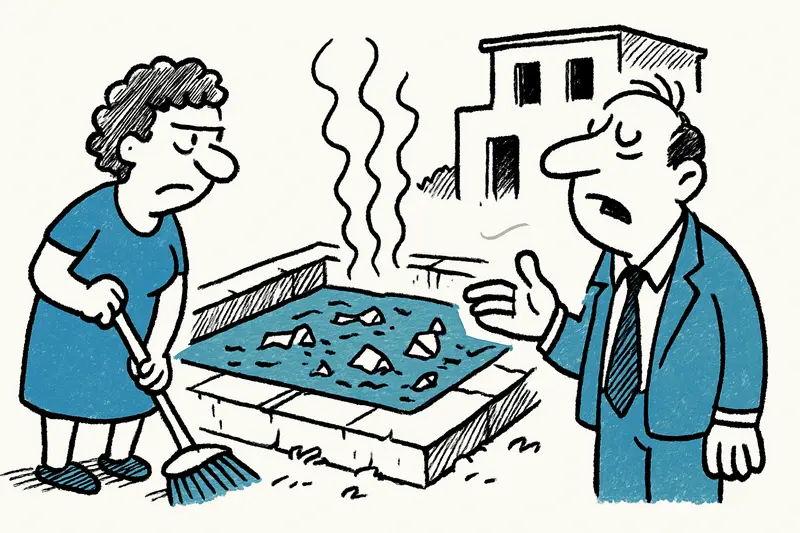
The facts are known: the holiday complex has been neglected for years Decay on the Promenade: The Espigol Apartments in Can Picafort and the Question of Responsibility; parts are inhabited by squatters Enough is enough: Can Picafort's neglected squatted Espigol Beach complex and the failure of those responsible, and other units are legally disputed. According to authorities, some buildings do not have valid occupancy permits; nevertheless, offers appear that advertise the property as habitable. In this mix a swimming pool has fallen into disrepair: filled with water and rubbish, a standing body of water, an ideal breeding ground for insects and a potential hotspot for hygiene problems.
In short: it stinks, it swarms, and it is slowly getting out of hand for the neighbours. Those affected on Carrer Romaní have repeatedly asked the municipality of Santa Margalida to intervene: clear out, drain the pool, trim the pines, secure the wall. Officially, the presence of residents on the site and legal constraints have made quick measures difficult. That is plausible, but it is not enough as a permanent answer.
Critical analysis: the situation is a case study in coordination gaps between urban planning, the public health office and enforcement. If a property is perceived publicly as a risk — because of vermin, standing water, or collapse danger — it needs a graduated response; similar accountability questions were raised after the rooftop terrace collapse at Medusa Beach in Medusa Beach: Who Bears Responsibility After the Collapse?. Both short-term hazard mitigation and a long-term solution to the legal status are missing here.
What is missing from public discourse: firstly concrete numbers on infection or infestation cases — health inspections are rarely communicated publicly. Secondly transparency about ownership: who is currently responsible? Thirdly a clear municipal plan for interim solutions, such as temporary disposal or securing measures that do not have to wait weeks or months in court. And fourthly: an honest discussion about the costs — both financial and social — when property decays.
Everyday scene from Mallorca: in the late afternoon older residents sit on the steps of a nearby house, a lone cat slips over the curb, children play further away on the beach because they are meant to stay out. A woman sweeps up leaves and cigarette butts while motorboats glide expertly in the background. This calm is deceptive; the problem behind the walls affects people’s daily lives, not just the view from the window.
Concrete solutions that could be implemented immediately:
1) Emergency measures by the municipal crew: The municipality can quickly inspect the site and provisionally secure hazardous areas; this includes covering or pumping out the pool, centralised waste removal and the posting of warning notices. Such measures serve public health and protect the neighbourhood.
2) Vector and pest control: The public health office and pest control services must work together: larvicide treatments in standing water, baiting campaigns against rats, inspections in adjacent buildings. This work is time-critical — it cannot wait for legal clarifications.
3) Use legal instruments, but speed them up: If courts have jurisdiction, administrative procedures should be prioritised, such as emergency orders for hazard prevention. At the same time it must be examined whether fines or orders against owners can be issued to cover the costs.
4) Owner identification and liability: The municipality should make clear who is registered as the owner and what means exist to reclaim cleanup costs. An accessible register of contact information would curb speculation about sales or fraud.
5) Social approach: Occupations often involve people in vulnerable situations. Parallel offers of social services, mediation for accommodation and legal advice reduce tensions and make technical measures easier to carry out.
6) Citizen involvement: A neighbourhood layer that organises small cleanup actions, plans bulk-waste collections and inspections together with the municipality can provide short-term relief and increase pressure on decision-makers.
What the municipality and owners actually lose in practice is not just a few square metres of tended lawn: it is about health, property values and the trust of the people on Carrer Romaní, who ultimately have to live with the stench. Small steps help, but without a binding roadmap the site remains a long-term problem.
Punchy conclusion: Waiting makes the problem worse. A standing pool in a neglected complex is more than an aesthetic flaw — it is a microbiological, ecological and social risk. The solution requires speed, clear responsibilities and the courage to take pragmatic interim measures. Otherwise the windows stay shut, the doors remain closed and the residents are left alone with the stench.
Frequently asked questions
What is the weather usually like in Mallorca in summer?
Can you still swim comfortably in Mallorca outside the peak summer months?
What should I pack for a trip to Mallorca in warm weather?
Is Mallorca a good destination in spring?
Is autumn a good time to visit Mallorca?
What is Port de Pollença like for a holiday in Mallorca?
What makes Sa Calobra one of Mallorca’s most famous spots?
Is it worth visiting Mallorca if I want a mix of beaches and inland scenery?
Similar News

Deadly Tractor Accident in Bunyola: What Needs to Be Done Now
In a work accident on an estate near Bunyola, a roughly 40-year-old man lost his life. His wife and a small child were o...
Head-first dive into the shallow part of Cala Fonoll: An accident and the unresolved question of responsibility
A young tourist dove into Cala Fonoll and was seriously injured. Key question: Why are clear warning signs missing at da...

Mistaken identity with fatal consequences: Brutal assault in S'Aranjassa — what's missing in the follow-up?
At S'Aranjassa a visitor to a finca was tied up, beaten and thrown out of a van. Three men have been arrested, including...

High heel slips, car accelerates: accident on Camí de Son Hugo
A woman lost a high-heeled shoe on the forecourt of the sports facility at Camí de Son Hugo. The car accelerated, mounte...

Phone Scam: How Two Hotel Employees at Playa de Palma Lost Thousands of Euros
One morning in September, two reception employees at Playa de Palma were pressured by alleged alarm-company staff — in t...
More to explore
Discover more interesting content

Can Cap de Bou

Townhouse Lleo 72
