
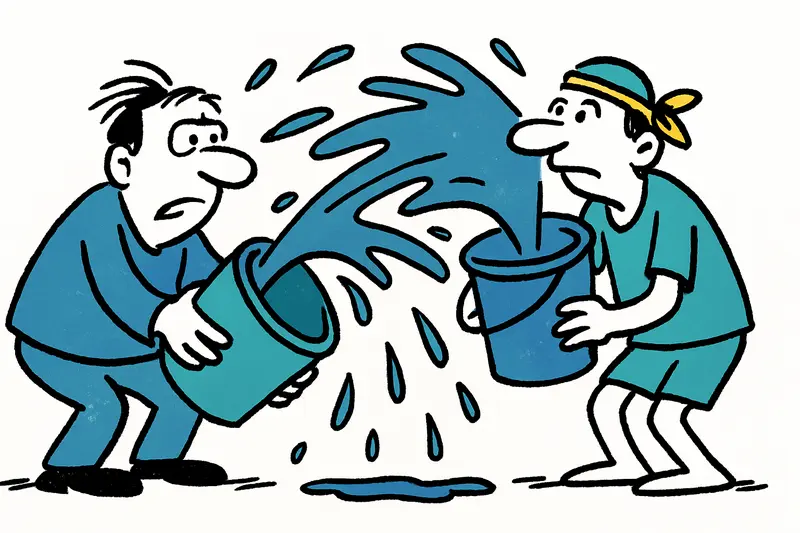
Water Fight in Front of La Seu: Colorful Splashing at Parc de la Mar
When the bells ring at Parc de la Mar, the promenade becomes Palma's happiest water fight: neighbors, children and even seniors share buckets, laughter and a few drops of history.
When the promenade turns into a water fight
As the evening approaches the Parc de la Mar changes. The bells of La Seu toll, the wind brings salt from the sea, and from the crowd come the sounds of children laughing, the clatter of buckets and the distant hum of a motorcycle along the Passeig. It's not an official spectacle, more an invitation: whoever is there joins in. Those who don't usually stop and watch – often with wet shoes.
Red versus Yellow: Neighborhoods with hoses
The scene is both absurd and warmhearted. On one side the Reds with homemade scarves, on the other the Yellows with headbands, between them groups with water pistols and plastic bottles with improvised nozzles. There are no uniforms, only improvised strategies: a grandpa hands out buckets, teenagers dash up the steps, and a woman with a shopping bag seems to appear exactly when the next salvo is launched. Now and then you can smell fried trompetas from the cart on the corner – a scent as Mallorcan as the wet flip-flops slapping down the stone steps.
A small theatre with a big heart
If you think of historical pageantry, you're not entirely wrong. The origins – an alleged 17th-century dispute between the families Canamunt and Canavall – are part of the local legend. Detailed coverage appears in Water fight in front of La Seu: Red vs Yellow at Parc de la Mar. But it's told with a wink, not as a dusty chronicle. Tradition is passed on playfully here: children hear stories, seniors recall their own water fights from the sixties, and visitors see Mallorca's festival culture in an especially unfiltered form.
Safety and pragmatism
As spontaneous as it seems, there are rules. Rescue services and police (see Spain's emergency number 112) are in sight, access routes for residents are briefly regulated, and occasionally the promenade is closed for a few minutes until the “fronts” are sorted out. Organizers – more like neighbors with a knack for making announcements – politely remind people to be considerate: no glass, no rough pranks, watch out for older participants. That keeps the activity safer and the fun alive.
Why people come
Because the event is honest. No tickets, no stage, just a part of the city that breathes differently for a few hours. You meet people from the neighborhood, hear old stories in a new package, and end up soaked together in front of the impressive silhouette of the cathedral. For tourists it is a genuine discovery: Mallorca life happens here without filters, with sun spots, spray and the smell of sea and oil on the breeze.
A little guide for the undecided
If you want to stay dry, find a dry spot in one of the bars on the Passeig with a view of the action. If you want to be in the middle of it: spare clothes, a plastic bag for your phone and a towel are essential. Arrive early, the best spots are scarce – and don't hold your camera too close to the action, water finds its way. And if the bell rings just as the first salvo goes off, everyone smiles: it's one of those moments you don't plan but experience.
A look ahead
Such neighborhood rituals show what urban life can create: small, recurring events that build community without much staging. In summer the water fights will likely return, accompanied by the clatter of buckets and the shouts of children. Maybe not the same every year, but with the same warm disorder that makes Palma so lovable.
Frequently asked questions
What is the water fight in front of La Seu in Mallorca?
When does the water fight at Parc de la Mar usually happen?
Is the water fight in Palma safe for visitors to watch?
What should I bring if I want to join the water fight in Mallorca?
Can you just watch the water fight from a dry spot in Palma?
What is the Canamunt and Canavall story behind the Mallorca water fight?
Where does the water fight take place in Palma de Mallorca?
Why do people go to the water fight in Mallorca?
Similar News
First Day, First Consequences: What Palma's Rent Freeze Really Means
A new decree stops a planned eviction in Palma — but what really changes for tenants and landlords? A reality check with...
When Housing Becomes a Matter of Survival: Mallorca Between Rental Frenzy and Everyday Life
The case of 87-year-old Maricarmen showed that on Mallorca many people's lives are poised between affordable and uninhab...
Autumn in Mallorca: When Melancholy Gets a Window
Why autumn quietly tightens here — and how to make use of the mood: walks, culture, candles and the light from Palma to ...
Near-miss on Lanzarote: Landing Ryanair Jet and Iberia Takeoff — what really went wrong
On Lanzarote there was a dangerous incident: A Ryanair flight (FR5910) from Dublin landed on runway 03 while an Iberia E...

Eurowings introduces new Premium Business seats on Mallorca routes
From December 1, selected Eurowings flights to Palma and other destinations will feature eight particularly generous sea...
More to explore
Discover more interesting content

Can Cap de Bou

Townhouse Lleo 72
