
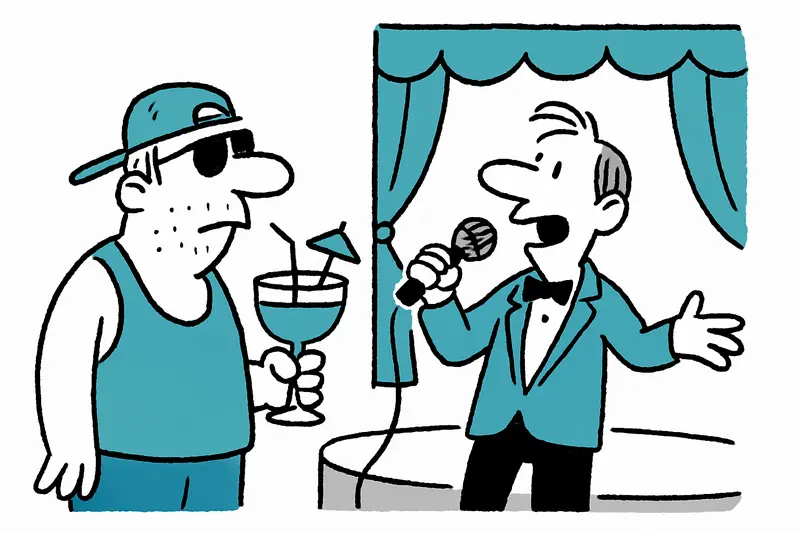
When Ballermann Moves to the Musical Stage: A Reality Check
When Ballermann Moves to the Musical Stage: A Reality Check
A new musical takes the Ballermann scene as its model. Delightfully entertaining — or a relapse into clichés? A critical look with concrete suggestions from Mallorca.
When Ballermann Moves to the Musical Stage: A Reality Check
Guiding question: Does a popular musical help show the island's diversity — or does it cement an old image?
On this January morning at the Passeig del Born the wind is sharp, the cafés are slowly filling up, delivery bikes are ringing, and the tourist information is still taking down the Christmas decorations. It is in these small, quiet everyday scenes that Mallorca exists, the Mallorca many do not mean when they say “Ballermann Between Ecstasy and Reality: More Than Beer and Schlager Music?.” And that is precisely the point when an entertainment team now stages a big Ballermann musical in Germany: Which Mallorca story is being told — and who benefits from it?
The new production, which premieres in Duisburg in early January, uses well-known party songs and recognizable acts as ingredients. That has charm: you can laugh, sing along and remember. At the same time there is the danger that an entertainment production quickly becomes a cementer of clichés if counterweights are not consciously built in. Theatre is a powerful medium; it can reinforce images — or break them apart.
Critical analysis: What works and what doesn't. Positively, the producers use large stage sets and real musicians instead of relying on cheap gags. That creates a form of respect for the genre. It becomes problematic if this portrayal depicts the island as a one-dimensional party landscape without addressing social, economic or ecological consequences. In conversations with hoteliers and taxi drivers in Palma's old town one often hears: there are visitors who take a serious interest in the island — but public perception is dominated by Between Swaying and Wonder: The Strangest Bierkönig Premiere of the Year.
What is missing from the public debate. There is little discussion about how local jobs, housing situations and residents' everyday lives change due to seasonal traffic and image perception. Nor is there much debate about whether and how cultural productions actually take place on Mallorca and involve local artists. The debate often sticks to the level of fun versus excess — while it is also about responsibility in handling images and tourist expectations.
Everyday scene: On the way to the Plaza de las Columnas I stop at a bakery. An old woman at the plaza laughs at a street child, two tradesmen argue about construction noise — this is the Mallorca that does not fit on the musical poster. Such scenes should have space if one wants to do justice to the island: the coexistence of different realities of life, the mix of work, tradition and the tourism business.
Concrete solutions so that entertainment does not become a pigeonhole: 1) Producers should involve local advisors — cultural associations, musicians from Palma, restaurateurs and hospitality professionals — and grant them editorial influence. 2) Tourist productions that address Mallorca could allocate a share of ticket revenue to local causes (for example for cultural projects or educational programs on the island). 3) For guest performances in Germany accompanying formats should be offered: panels with Mallorcan voices, photo or music installations that show other facets. 4) Organizers should clarify in the program booklet when the performance is satirical or fictional to avoid misunderstandings. 5) No Farewell in Sight: Heino, the Bierkönig and the Ballermann Legacy, they should not only serve as attractions but be integrated into scenes that allow for reflection.
A practical proposal for Mallorca: Local theatres could offer cooperative formats in the low season — guest performances of the musical with supplementary local casting, workshops for young people, and lecture series about the consequences of mass tourism. This way culture would not only be exported but also reflected back and further developed.
Conclusion: Entertainment has its place. A musical that is danceable and rearranges familiar melodies does not automatically have to prevent discourse. What matters is how consciously the creators handle the portrayal and whether they are willing to take responsibility. If one only reproduces the postcard image, Mallorca remains flat. If, on the other hand, the stage is used to break familiar clichés and make local voices heard, such a project can also be helpful.
The premiere in Duisburg will bring visitors and provoke discussion. Let us hope that the conversation does not end at the cloakroom but reaches back to us on the seafront promenade.
Frequently asked questions
Does a Ballermann musical really show the real Mallorca?
Why does Mallorca still get reduced to party tourism so often?
What is everyday life like in Mallorca away from Ballermann?
Should cultural productions about Mallorca involve local voices?
What problems does Mallorca’s party image create for residents?
Is January a quiet time to visit Mallorca?
What should I pack for Mallorca in winter?
Can Mallorca tourism and local culture work well together?
Similar News

Haute Nuit in Puerto Portals: Fashion, Art and Indulgence by the Water
On October 2 the Lobster Club in Puerto Portals will be transformed into a stage for curated fashion, art and culinary e...

Magaluf: Watchtower Alarm – Lifeguards Pull Unconscious Beachgoer from the Water
After a drama in the late afternoon, two lifeguards at Magaluf beach rescued an unconscious 44-year-old man. He was stab...

Turquoise in the City: How dangerous is the color play of the Sa Riera?
The Sa Riera in Palma suddenly turned turquoise — a pretty motif, but behind the effect lies a discharge of saline waste...

Jeckliner at Sunnesching: Cologne spirit sets sail from Palma
In September 2027 the Mein Schiff 2 briefly becomes a floating carnival stage: four days with Cologne bands, comedy and ...
Finally Home: Mike and Leyla Heiter Buy Villa with Sea View in Mallorca
The reality TV couple Mike and Leyla Heiter have bought a house in Mallorca with a roof terrace and sea view. An Instagr...
More to explore
Discover more interesting content

Can Cap de Bou

Townhouse Lleo 72
