
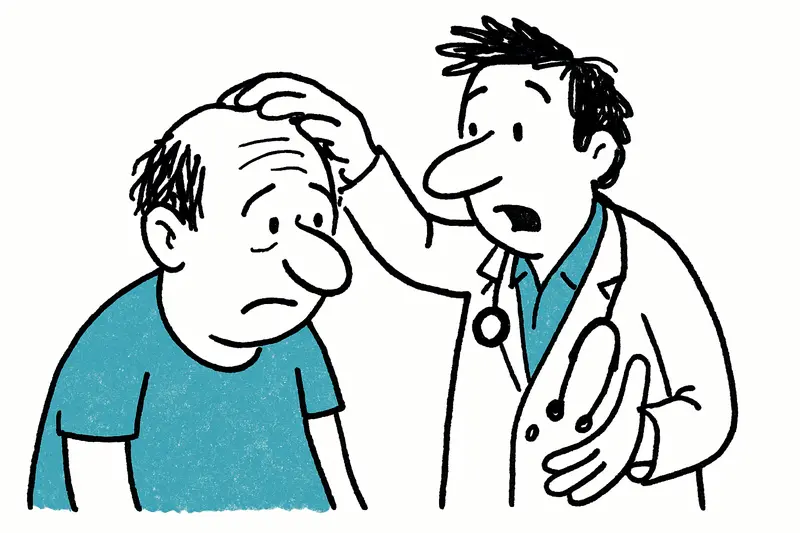
When Hair Thins: When Mallorca's Doctor Is the Right Contact
When Hair Thins: When Mallorca's Doctor Is the Right Contact
Hair loss can take many forms. One clear question helps: is it everyday life and aging — or is there a treatable cause behind it? A reality check for residents of Mallorca.
When Is Thinning Hair a Case for the Doctor?
Key question: At what point should you not postpone a visit to the doctor in Palma, Pollença or Cala Ratjada, but have the causes of thinning hair professionally examined? Against the backdrop of numerous products, advertising and personal testimonials, a closer look is worthwhile.
A brief note: Everyday reality
You know the situation: After showering there is more hair in the drain, strands on the towel, or the hairdresser on Passeig del Born gives a skeptical look in the mirror. At Plaça Major neighbors exchange tips about new shampoos at the market. Elsewhere, features like When Men Visit the Cosmetic Doctor in Mallorca — Between Self-Confidence and Risk show another side of local cosmetic care. Scenes like these show that this topic is directly relevant to many people here — not abstract, but noticeable in everyday life.
Critical analysis: Why simple solutions often are not enough
Many people reflexively reach for products, pills or so-called miracle cures from the internet. The urge to try is understandable: who wants to watch density decline for months? It becomes problematic when observations and treatments miss each other. Hair loss is not a single disease, but a symptom with diverse causes: genetic forms, hormonal influences, nutrient deficiencies, phases of stress, side effects of medications or immune disorders can underlie it. Without basic clarification, the use of expensive remedies often remains a guess rather than targeted treatment.
What is missing in the public discourse
There is a lot of talk about products in public, but little about systematic diagnostics: which blood tests make sense, when a hair diagnostic (trichoscopy) is indicated, or how acute, temporary loss differs from chronic courses. Even rarer is information about local care pathways on Mallorca: who should see the general practitioner first, who goes directly to the dermatologist, and which laboratory tests are common here? This information would help many to save time and money; recent local reporting such as Hotline Out of Service: When Doctor Phones on Mallorca Go Silent illustrates why clarity is needed.
Concrete advice — what you can do
1) Observe and document: Photos taken at intervals of six to twelve weeks are surprisingly revealing. Keep a tuft of hair once when showering, note hairstyle details. 2) First contact via the general practitioner: A short conversation and basic blood values (e.g., blood count, thyroid, ferritin) already rule out many causes. 3) Dermatologist/trichologist: If the pattern remains unclear, a specialized examination (e.g., trichoscopy) helps. 4) Be cautious with impulse purchases: Products can be supportive, but they do not replace a diagnosis. 5) Second opinion: Clinics with international offerings advertise free initial checks — this can be an option if local evaluations yield no answers, but not without prior basic diagnostics; for Mallorcans considering options abroad see Hair Matters in Turkey: What Mallorcans Should Know Before a Hair Transplant in Istanbul.
A concrete everyday tip from Mallorca
If you have an appointment in Palma: after the appointment, sit down in the small café on Calle Sant Miquel, let the conversation sink in and note which diagnoses were suggested and what next steps were recommended. This helps to avoid collecting recommendations aimlessly and instead create a clear sequence.
Conclusion — short and to the point
Thinning hair is not a cosmetic problem to be solved solely by hoping for a product. The central question remains: is it a temporary phenomenon or a course that requires clarification? Anyone who loses more hair over months, notices bald patches or clear changes at the hairline should not postpone seeing a doctor. A simple local examination and a few blood tests often provide more clarity than months of searching for the one perfect cream.
On Mallorca this means: go, have it checked, document — and then think ahead purposefully. That saves nerves and makes it clearer whether it's everyday life, aging, or something else.
Frequently asked questions
What is the weather usually like in Mallorca in spring?
Can you swim in Mallorca outside the peak summer months?
What should I pack for a trip to Mallorca in shoulder season?
Is Mallorca a good destination for walking and outdoor activities in autumn?
What is the weather like in Palma de Mallorca in winter?
Is Sóller worth visiting if you want a quieter part of Mallorca?
What makes Alcúdia a good base for a Mallorca holiday?
Is the Serra de Tramuntana in Mallorca suitable for day trips?
Similar News
When the Wallet Becomes a Danger: Attack in Peguera and Lessons for Mallorca
In Peguera, two women are said to have stolen the wallet from a 75-year-old German couple. When the victim intervened, t...
Plata stays Plata: Young people take over, Llonguets remain
A small bar on Carrer de l'Argenteria will continue: Tolo Serra hands the place over to young Mallorcans at the end of t...
Unnoticed in the Luggage Compartment: How a Boy Traveled More Than 100 Kilometers in a Team Bus
A minor traveled in the undercarriage of a team bus for more than 100 kilometers until his cries for help were heard. A ...

Cap Vermell Grand: Second Michelin Key – a Gift for the East
The Cap Vermell Grand in Capdepera has been awarded its second Michelin key. For the region this elevates the luxury off...

Eurowings lets four aircraft carry names – a friendly idea that also reaches Mallorca
Eurowings is launching a campaign: four Airbus A320s are to carry the first names of people who help others in everyday ...
More to explore
Discover more interesting content

Can Cap de Bou

Townhouse Lleo 72
