
Health report against the shop counter: How Mallorca's pharmacies defend homeopathy
Health report against the shop counter: How Mallorca's pharmacies defend homeopathy
A report from the Ministry of Health questions homeopathy. On Mallorca, pharmacies and health-food shops respond with everyday experiences — what is missing from the debate?
Health report against the shop counter: How Mallorca's pharmacies defend homeopathy
Leading question: What happens when an official report calls the effectiveness of a therapy into question, but people on the ground have different experiences?
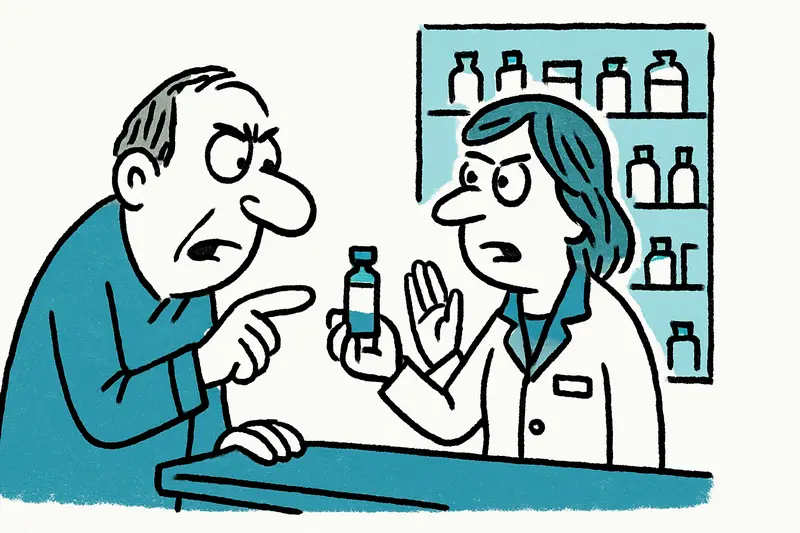
Early in the morning in Palma: delivery traffic is already piling up on Avenida Argentina, a nearby bakery smells of freshly baked ensaimada, and in a small pharmacy the pharmacist hurriedly straightens bottles on the shelf. The scene is familiar — this is often where decisions are made about which recommendations patients take home. And it is precisely there that the health-policy debate collides with everyday practice.
The central claim of the national health report is clear: homeopathic preparations show no therapeutic effect beyond the placebo effect in controlled studies. This is a statement about the state of research, methodology and statistical significance. On Mallorca, however, owners of pharmacies and herbal shops say customers repeatedly report improvements; loyal buyers, by their accounts, keep returning.
These two worlds — studies versus store shelves — often lie far apart. Criticism of the report's interpretation is not automatically "anti-scientific." Rather, it is about three points: How representative are the existing studies for real-world use? What role does the counselling process in the pharmacy play? And how are subjective improvements recorded and weighed?
What has been missing in the public debate so far: first, transparency about the risks when homeopathic remedies are used instead of effective therapies (Shower Gel Recall in Mallorca: Why Burkholderia cepacia Raises Alarm and What Should Happen Now); second, concrete everyday data: how often do pharmacists recommend such remedies only as supplements, and how often as substitutes? And third, the problem of research funding — there is little publicly funded research into complementary methods, which leaves the evidence base thin.
An everyday example: a customer comes to a pharmacy at Plaça Major with sleep problems, the streetlights outside flicker, and she describes how certain globules allegedly helped her. The pharmacist notes symptoms, discusses several options and ultimately provides complementary remedies, not as a substitute for prescribed sleeping pills. Such counselling situations influence whether people continue or stop a therapy.
Concrete solutions for Mallorca are obvious and practical: 1) Clear labeling requirements in pharmacies and health-food stores: consumers should know whether a product is evidence-based or not. 2) Mandatory continuing education for pharmacy staff on risk communication and interactions so that supplementary recommendations remain safe. 3) Regional observational studies: health authorities could collect medium- and long-term data from pharmacies to systematically capture anecdotal reports.
Moreover, the discussion should become more factual: if the issue is discussed only as "effective" or "not effective," nuances are lost. Some remedies are perceived by users as helpful; other times they replace demonstrably necessary treatments. Policymakers must consider both sides: protection against harmful delays and patients' right to informed decisions.
On the island, the role of local health actors is also important (see Masks Back in Clinics? A Reality Check for Mallorca). Municipalities, pharmacy associations and health centres could develop joint guidelines — for example a model information leaflet handed to customers at the point of purchase that clearly states which effects are scientifically proven and which are not (for local context see VitaMed Mallorca opens practice in Palmanova — holistic care across 300 m²). Such practice rules would strengthen trust and encourage patient responsibility.
What is often missing in the public debate is a locally anchored voice: data and counselling from everyday practice. A registry that records anonymized information on counselling occasions, recommended remedies and effects would be a small but valuable step. It would open a middle way between ideological rejection and uncritical endorsement.
Pointed conclusion: The health authority's report is an important reference on the state of research. But it must not replace conversations at the counter. In Mallorca, responsible action means transparent information, better training for advisors and concrete regional data collection. Only then can individual experiences be combined with scientific scrutiny — without scaremongering and without naivety.
Frequently asked questions
What is the weather usually like in Mallorca in spring?
Can you swim in Mallorca in spring?
What should I pack for a trip to Mallorca in spring?
Is spring a good time to visit Mallorca?
What is the weather usually like in Pollença in spring?
How is the weather in Alcúdia during spring?
Is Palma de Mallorca warm enough for outdoor sightseeing in spring?
What is the sea temperature like in Mallorca in spring?
Similar News
When the Wallet Becomes a Danger: Attack in Peguera and Lessons for Mallorca
In Peguera, two women are said to have stolen the wallet from a 75-year-old German couple. When the victim intervened, t...
Plata stays Plata: Young people take over, Llonguets remain
A small bar on Carrer de l'Argenteria will continue: Tolo Serra hands the place over to young Mallorcans at the end of t...
Unnoticed in the Luggage Compartment: How a Boy Traveled More Than 100 Kilometers in a Team Bus
A minor traveled in the undercarriage of a team bus for more than 100 kilometers until his cries for help were heard. A ...

Cap Vermell Grand: Second Michelin Key – a Gift for the East
The Cap Vermell Grand in Capdepera has been awarded its second Michelin key. For the region this elevates the luxury off...
Eurowings lets four aircraft carry names – a friendly idea that also reaches Mallorca
Eurowings is launching a campaign: four Airbus A320s are to carry the first names of people who help others in everyday ...
More to explore
Discover more interesting content

Can Cap de Bou

Townhouse Lleo 72
