
When He Didn't Wave: A Mallorca Experience and the Question of Responsibility
When He Didn't Wave: A Mallorca Experience and the Question of Responsibility
In 1993 a ship with a prominent passenger docked in Palma. He hardly made an appearance, played golf in Santa Ponsa — and disappeared. Today, after an arrest connected to Jeffrey Epstein, that brief visit raises questions about how power and the public are handled.
When He Didn't Wave: A Mallorca Experience and the Question of Responsibility
Key question
Why do we who live and work here feel such an expectation that prominent guests should show politeness or at least give some sign — and why do elites so often deliver only a fleeting appearance? The incident in Mallorca in 1993, combined with recent events surrounding the same man, invites a reality check.
Summary of the incident
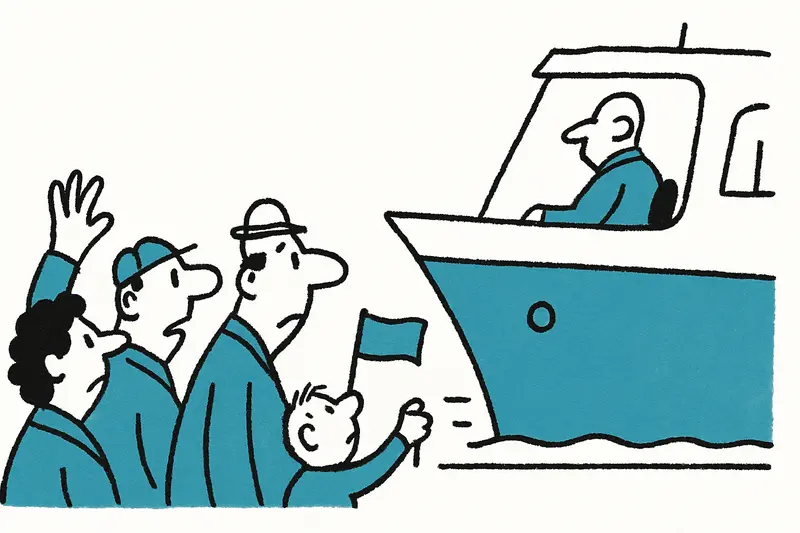
On a cool April morning a Royal Navy ship docked at the Dique del Oeste. A small group of onlookers, some wearing muted jackets, others waving little flags, waited in the harbor mist. The prominent passenger stayed away from the crowd's urging: he did not remain visible for long, later got into a car and drove to the Santa Ponsa golf course, where he played and spent time in the clubhouse. The next day he was gone again. There was no polite greeting for those waiting.
Critical analysis
At first glance this is just an anecdote: a short visit, an unacknowledged greeting. Look more closely, and it's about the intersections of privilege, public expectation and responsibility. Fame always brings with it a public tension: people expect accessibility, respect for local attention and sometimes simply courtesy. This is not about sensationalism, as in When Sant Blai Becomes a Stage: Thrillers, Images of the Past and the Responsibility to Tell the Island's Story, but about the claim that power and status also carry obligations toward the public — especially when serious allegations emerge years later.
What is often missing in the public discourse
There is a lot of talk about individual acts, arrests or the biographies of prominent people. Structural questions receive less attention: How are visits planned and accompanied? Who decides whether and how local actors — from harbor staff to club hosts — are informed? What protocols protect residents, employees and potential victims when high-ranking guests arrive? And: how is the memory of such encounters documented without sliding into gossip? Consider, for example, how operations like the late Roman shipwreck off the Playa de Palma illustrate the logistical and informational challenges involved.
An everyday scene in Mallorca
Imagine this: early in the morning at the Dique del Oeste. A nearby bakery sends out the first scent of freshly baked ensaimadas. An old fisherman polishes his net, seagulls screech, a ferry horns. A few curious people stand at the edge, some taxi drivers sip their coffee. This scene is typical — and precisely for that reason it shows how public appearances briefly touch local life and leave traces. An unreturned wave in such a setting feels like a small breach of trust.
Concrete solutions
1. Standardised visit protocols: Authorities and hosts should define clear procedures that ensure both safety and transparency for residents and workers. 2. Public contacts: For larger public appearances there must be local contact persons who can provide information and receive complaints. 3. Documentation instead of rumours: Short official notes about schedules and presence prevent speculation and protect employees from uncomfortable inquiries. 4. Education and awareness: Hosts in hospitality and event management should be trained in how to deal with prominent guests politely and in compliance with the law. 5. Support for those affected: If serious allegations surface later, potential victims need low-threshold access to advice and reporting channels.
What this means for Mallorca
Our island lives from the contact between visitors and locals. When encounters degrade into short, one-sided remarks, it damages the social climate and trust, and raises practical safety and support questions, as after the rescue attempt at Son Bauló. Mallorca is not a stage set for fleeting celebrity appearances; people live here, harbour workers, waitresses, caddies, taxi drivers work here. Respectful behaviour from visitors strengthens this fabric and prevents questions from remaining unanswered later.
Punchy conclusion
A missing wave is not a crime. But it is a signal: how do the privileged handle attention, and how does a society react? When serious accusations surface years after a brief visit, we should not only debate the individual but also the rules that accompany such visits. Courtesy is small, responsibility is large — and on an island like this both should not be exceptions.
Frequently asked questions
Why did the lack of a wave in Mallorca become such a talking point?
What should Mallorca expect from famous visitors in public?
Is a short celebrity visit to Mallorca usually announced or managed locally?
What happened at Dique del Oeste in Mallorca in 1993?
Why is Santa Ponsa mentioned in connection with this Mallorca visit?
What can Mallorca learn from brief public appearances by high-profile guests?
How should Mallorca venues handle prominent guests and possible controversy later on?
Why does courtesy matter so much in Mallorca’s public spaces?
Similar News
Bendinat as a meeting place: Padel Cup brings together nearly 120 players
Three days of padel at the Bendinat Urban Country Club: organized by El Económico and Borbalán, with around 120 particip...
Large-scale Anti-Tourism Graffiti at Cala Mendia: Protest or Vandalism?
On the morning walkers discovered an approximately 50-meter-long slogan against tourism on the wall above Cala Mendia. W...
Bomb threat before Jet2 flight in Tenerife: A reality check for security protocols
A passenger reported a bomb in luggage shortly before departure in Tenerife. Evacuation, baggage checks, delays — and ma...
Who is stripping Mallorca's coast bare? Why entire slopes are being removed for villas
On Mallorca steep slopes are again being removed to make way for luxury construction sites. Who bears the responsibility...
Robber Falls While Fleeing in Sant Agustí: Who Takes Responsibility?
During a purse-snatching in Sant Agustí, a non-commissioned officer chased the suspect; the man jumped from a bridge and...
More to explore
Discover more interesting content

Can Cap de Bou

Townhouse Lleo 72
