
Why Ibiza Now Has a Parador — and Mallorca Still Doesn't
Why Ibiza Now Has a Parador — and Mallorca Still Doesn't
The new Parador in Dalt Vila has opened. But anyone who thinks Mallorca has missed the boat should take a closer look: it's not just about prestige, but about space, money and housing.
Why Ibiza Now Has a Parador — and Mallorca Still Doesn't
Key question: Does Mallorca really want a Parador — or does the island need something else?
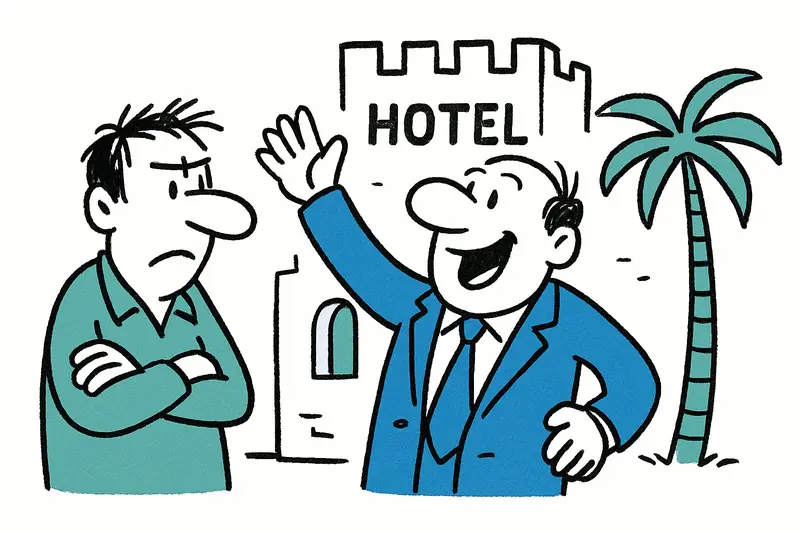
On Monday a host of politicians and tourism officials gathered in Dalt Vila as the new state-owned hotel opened its doors. The property is considered the first Parador in the Balearics: the network now counts 99 hotels nationwide. The numbers are clear: around €47 million investment, a total of 66 rooms (41 for guests, 25 for staff), a spa, outdoor pool, 40 parking spaces and a museum-like concept within the historic fortress complex. Public days for islanders are scheduled for early March, regular operations start mid-March, and Balearic residents receive a 20 percent discount.
But looking beyond the headlines reveals contradictory motives. The Parador approach has two faces: it secures monument preservation and creates opportunities to stay in places with little economic activity. At the same time it is a state brand, not always financially robust; the company behind the Paradores has posted losses in the past and was already put into difficulty in 2012.
On Mallorca the situation differs from its smaller sister island: Palma and the coastal towns are densely populated by tourism, building space is scarce, and the debate about overtourism is present, as discussed in Balearic Islands quieter — Mallorca stays crowded: Why the island bucks the trend. Parador sites have been considered — the Raixa estate was taken over by the state in 2001 and later prepared for the public; plans to repurpose a monastery in Lloret in 2022 remained without a Parador commitment. Such examples show: spaces exist, but political priorities and economic calculations have so far prevented projects.
What is often missing in the public debate is a sober accounting: how many new beds does the island actually need, and how many would be purely symbolic? What effects does subsidizing a state hotel have on the local housing market, if 25 staff rooms are mentioned but in the long run are hardly converted into affordable housing for families, as shown in When Living Rooms Become Bedrooms: How Mallorca Suffers from a Housing Shortage?
A look at everyday life helps to locate the issue. Imagine the Plaça Major on a morning: delivery vans navigate between café chairs, a construction site on the Passeig des Born sends dust into the air, an elderly woman discusses rising prices with the baker. The sound of a construction crane is as Mallorcan today as the rattle of buses heading to Platja de Palma. In this mixture of everyday collisions decisions about new beds and monument protection are made — far from the opening banquet in Ibiza.
Concrete solutions for Mallorca should therefore be aimed at two goals: preserving cultural heritage and relieving the housing market. Proposals that could really help the island are practical and immediately implementable: mandatory impact studies before project permits, binding requirements that a share of newly created staff rooms be converted into social housing when public funds flow, and transparent business plans with stress tests for the profitability of a Parador operation, as outlined in More social housing from 2026: What the Balearic Islands are really planning — and what's missing.
Furthermore alternative Parador models could be examined: smaller houses in less crowded inland communities with seasonal opening, cooperations with the UIB and local cultural associations for museum use instead of pure hotel beds, or a model in which part of the revenues flows into a fund for affordable housing in the Balearics, a perspective explored in Balearic Islands in the Price Squeeze: Who Can Still Afford Mallorca?. Such instruments would prevent monument preservation from serving merely as a door opener for additional tourism capacity.
One last often overlooked point: decision-making processes. Who decides on such large state projects? More citizen participation, local advisory boards with representatives from tourism, culture and the social sector as well as publicly accessible financial and benefit calculations would reduce distrust. If in Palma the street cafés in the morning ask for sun and peace, planners should hear that before they earmark new beds.
Conclusion: The opening of the Parador in Ibiza is a historic moment for the Balearics, but not a straightforward benchmark for Mallorca. The island has other construction sites: housing shortages, traffic burden and already high bed capacity. Instead of reflexively calling for prestige projects, what is needed first are clever rules for monument protection projects, binding social compensation measures and real transparency. Only then can it be prevented that a state hotel ends up above all as another piece of infrastructure for visitors — while the people who live here continue to search for affordable housing.
Frequently asked questions
Does Mallorca need a Parador like Ibiza now has?
Why is Mallorca not building a Parador in places like Raixa or Lloret?
Would a Parador help Mallorca’s housing shortage?
What kind of rules would Mallorca need for a new Parador project?
Is a Parador a good way to protect heritage buildings in Mallorca?
What makes Ibiza’s new Parador different from a possible Mallorca project?
How much tourism capacity does Mallorca already have?
Who should have a say in big public projects like a Parador in Mallorca?
Similar News

When the Wallet Becomes a Danger: Attack in Peguera and Lessons for Mallorca
In Peguera, two women are said to have stolen the wallet from a 75-year-old German couple. When the victim intervened, t...
Plata stays Plata: Young people take over, Llonguets remain
A small bar on Carrer de l'Argenteria will continue: Tolo Serra hands the place over to young Mallorcans at the end of t...

Unnoticed in the Luggage Compartment: How a Boy Traveled More Than 100 Kilometers in a Team Bus
A minor traveled in the undercarriage of a team bus for more than 100 kilometers until his cries for help were heard. A ...

Cap Vermell Grand: Second Michelin Key – a Gift for the East
The Cap Vermell Grand in Capdepera has been awarded its second Michelin key. For the region this elevates the luxury off...

Eurowings lets four aircraft carry names – a friendly idea that also reaches Mallorca
Eurowings is launching a campaign: four Airbus A320s are to carry the first names of people who help others in everyday ...
More to explore
Discover more interesting content

Can Cap de Bou

Townhouse Lleo 72
