
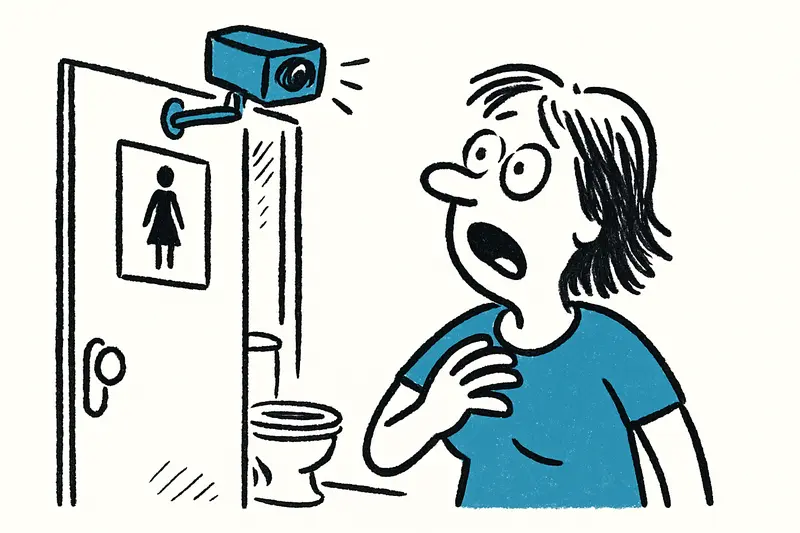
'You simply don't expect it': Hidden cameras in a bar toilet — What needs to be done now
'You simply don't expect it': Hidden cameras in a bar toilet — What needs to be done now
At least 400 women are reported to have been secretly filmed. A convicted bar owner received four years in prison. One affected woman describes how the crime destroyed everyday life.
'You simply don't expect it': Hidden cameras in a bar toilet — What needs to be done now
The Passeig Mallorca is full of chatter in the early afternoon, taxis honk, and the scent of coffee drifts over from the Mercado. At the same time, a trial in Palma over hidden surveillance has turned a familiar local spot into a place of mistrust for many women: the owner of a bar apparently installed hidden cameras in the women's restroom for years.
Key question
How can operators, authorities and society ensure that such intrusions into privacy do not go undetected again — and that victims are better protected and supported?
The facts, as far as they are known: according to the investigation, at least 400 women are believed to be affected; the justice system has so far officially identified 26 of them. A man, the owner of a bar in Mallorca, was convicted, as reported in Secret Recordings in Palma: Verdict, Questions and What Matters Now for Those Affected; his original sentence of two years and eight months was recently increased to four years. Some victims have already received compensation, others are still waiting. A woman we call "Paula" says that her then seven-year-old daughter was in the establishment that day. Photos and videos showed not only intimate areas but in some cases also the faces of those affected. The digital recordings have been secured by the authorities — yet the question remains whether copies have already been circulated.
Cases like this cut deep: those affected report shame, fear of being recognized and a lasting breach of trust in public spaces. The court process can further increase the burden, because victims are exposed when films or images must be shown as evidence.
Critical analysis
From the perspective of a critical review there are several problem areas. First: prevention in hospitality venues is lightly regulated. Restrooms are often considered "private areas" that authorities rarely check routinely. Second: digital evidence carries the risk that it may have been copied or shared before seizure — once traces are online they are hard to reverse. Third: victim experiences are too often treated as isolated issues legally and socially; the strain caused by assessments, reports and long trial durations remains insufficiently addressed.
Public debate currently lacks a systematic view on three levels: legal prevention (inspections, requirements), technical immediate measures (digital deletion procedures, cooperation with platforms) and psychosocial aftercare (low-threshold victim support, financial assistance during proceedings). In addition, little is said about the role of hospitality staff and inspectors — they could recognize early warning signs but are rarely trained.
Everyday scene from Palma
In the evening, when the Born quiets down and the street lamps come on, regulars sit at the bar with a drink and talk. You don't think that cameras could be installed behind the counter. That very normality deceives. The case shows how familiar places can suddenly become sites of violation — and why people afterward either return with mistrust or avoid them.
Concrete approaches
1) Mandatory visual checks and checklist: venues with customer restrooms should be required to perform a simple visual check (e.g. at shift change) and keep a checklist that can be presented during inspections. 2) Conditions for operating licenses: authorities could demand proof of security standards when issuing or renewing licenses — especially regarding restroom areas. 3) Staff training: short trainings to recognize hidden cameras and respond appropriately on suspicion. 4) Coordinated action against online dissemination: prosecutors, Guardia Civil and major platform operators need binding procedures to quickly block and remove copied recordings; clear communication channels for victims should be named. 5) Improved victim support: legal accompaniment, immediate psychological help and financial aid during proceedings must be easily accessible. 6) Forensic standards: digital evidence preservation must be designed so that evidence is secured without causing additional strain to victims.
What is missing from the debate
It's not only about punishing individuals. The debate must ask how public spaces can be made safer without falling into a surveillance paradox, as discussed in Cameras on the Ma-10: More Safety or Silent Surveillance? There is also a lack of broad information for victims about what steps are possible if images appear online — and who can concretely help. Finally, it must be asked whether existing penalties and procedures provide the necessary deterrent while offering adequate victim protection.
A note on transparency: authorities should publish which measures they take after such cases — anonymized and without jeopardizing investigations. That builds trust and helps other victims quickly find out where to get support.
Concise conclusion
This case is not just the story of a crime, but a stress test for our safety net: for laws, digital mechanisms and local support services. Those who operate a venue in Mallorca bear responsibility; those in charge must act — preventively, technically and humanely. Otherwise many women will continue to feel uneasy when entering a bar that used to be part of their everyday life. And that must not remain the case.
Frequently asked questions
What should I do if I think I found a hidden camera in a bar toilet in Mallorca?
How are victims of secret recordings in Mallorca protected during a criminal case?
Can hidden camera footage in Mallorca still spread online after the police seize it?
What can Mallorca bar owners do to prevent hidden cameras in customer restrooms?
How common are hidden cameras in bars and restaurants in Mallorca?
What support is available in Mallorca if intimate images from a secret recording appear online?
What role does the Guardia Civil play in hidden camera cases in Mallorca?
Why do hidden camera cases in Palma affect trust in public places so strongly?
Similar News

Fewer Airlines, Fewer Destinations: What Palma's Winter Flight Schedule Means for Mallorca
Analysis shows: Winter at Son Sant Joan Airport will be quieter, with significantly fewer airlines and destinations. Who...
German tourist dies in Sa Calobra – a reality check for emergencies on Mallorca's beaches
A 40-year-old tourist died at the Torrent de Pareis. The emergency call, a doctor who happened to be present, a defibril...

Deadly Tractor Accident in Bunyola: What Needs to Be Done Now
In a work accident on an estate near Bunyola, a roughly 40-year-old man lost his life. His wife and a small child were o...
Head-first dive into the shallow part of Cala Fonoll: An accident and the unresolved question of responsibility
A young tourist dove into Cala Fonoll and was seriously injured. Key question: Why are clear warning signs missing at da...
Mistaken identity with fatal consequences: Brutal assault in S'Aranjassa — what's missing in the follow-up?
At S'Aranjassa a visitor to a finca was tied up, beaten and thrown out of a van. Three men have been arrested, including...
More to explore
Discover more interesting content

Can Cap de Bou

Townhouse Lleo 72
