
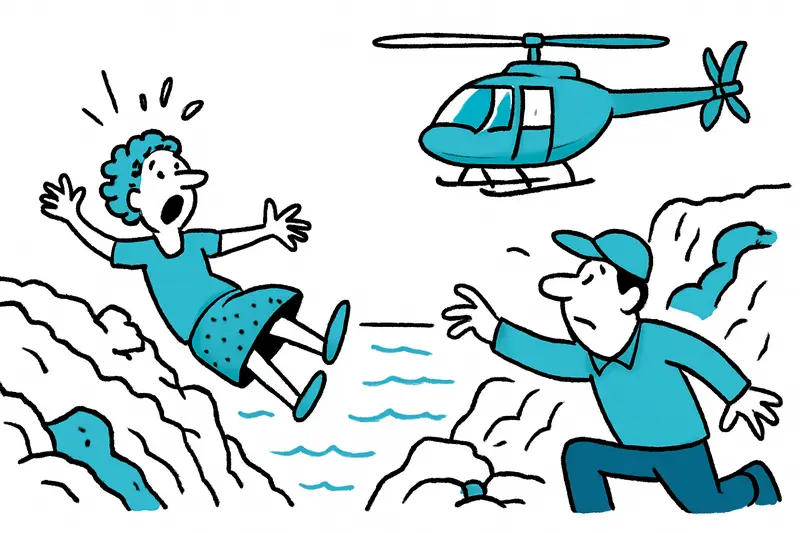
Fall on the coast of Betlem: Who protects hikers from the cliffs?
A 69-year-old tourist fell about five metres down the coast of Betlem in the morning. Rescuers brought her to hospital by off-road vehicle and helicopter. What is missing to make such accidents less frequent?
Fall on the coast of Betlem: Who protects hikers from the cliffs?
On Thursday morning, shortly after 9 a.m., the silence on the coast of Betlem was broken by a cry for help. A 69-year-old tourist from the Netherlands, walking with her husband and daughter on the path d'Es Caló near the Refugi des Pescador, fell from a height of about five metres onto the rocks and suffered several fractures. The injured woman was treated on site; a paramedic had to be driven to the hard-to-reach spot in an off-road vehicle from the Artà local police, as an ambulance could not reach the location. Later a helicopter flew the woman to Son Espases hospital, as in the helicopter rescue from the Torrent de Pareis.
Key question
Could better access routes, clearer warning signs or more consistent prevention measures have prevented this fall?
Critical analysis
The rescue chain worked: first responders within the family, the local police, fire units and the Guardia Civil organised access to the injured person, and air transport to the hospital sped up care. But the scene also reveals structural weaknesses. Many coastal paths in Mallorca are narrow, unsecured and in parts difficult to reach with standard rescue vehicles, and similar coastal-cliff hazards are described in When Dares Turn Deadly: Examining Cliff Jumps on Mallorca's East Coast. The fact that a paramedic had to be transported by off-road vehicle shows that there is a widespread lack of suitable, fast access routes for emergency services. At the same time, signage in some tourist-used sections is patchy – which can be especially risky for older visitors.
What is often missing from public debate
At conversations on site one often hears the same questions: Who pays for maintenance and safety measures, should multilingual warning information be mandatory for municipalities, and how are hikers informed about changing danger spots? These issues are usually discussed more emotionally than factually. Reliable figures on accidents on coastal paths are lacking, as well as a systematic comparison of which sections are particularly problematic and clear responsibilities between the municipality, island administration and landowners.
Everyday scene from Betlem
At the car park before Betlem the morning air is still cool, seagull cries mingle with the soft roar of the surf. Walkers tie their shoes, locals water flowers at the churchyard wall, and the narrowest coastal path runs immediately past crumbly rock steps. Such paths have charm, but accidents happen right there: one wrong step, a slippery stone, a moment of inattention – and the next hope is the bright rotor of a medevac helicopter over the bay.
Concrete solutions
1. Hazard mapping: island-wide recording of particularly risky coastal sections; prioritisation according to accident frequency and user numbers. 2. Targeted signage: multilingual warning notices at access points, not only at the official trailhead, with clear information for older people and families. 3. Improved rescue access: where possible, create short passing areas or reinforced tracks for rescue vehicles; alternatively plan water/servicing points near sections. 4. On-site and digital information: integrate warnings into local map apps, post notices in holiday accommodations and provide information sheets to rental hosts. 5. Training and equipment: municipalities should plan for off-road-capable rescue vehicles; regular exercises between police, fire service and emergency medical services improve procedures. 6. Clarify responsibility: contracts between municipalities and landowners who use the paths to regulate maintenance and liability issues.
Why active measures pay off
Prevention costs money, but the alternatives are more rescue operations, longer treatment times and in the worst case fatal consequences – as another incident reported the same morning on the island shows in From Mountain to Hospital: What the Rescues at Puig de Galatzó and Torrent de Pareis Reveal. Measures that improve access for rescue teams and provide clear information for visitors help not only tourists but also locals who use the coast daily.
Conclusion
The fall in Betlem is a wake-up call. We need fewer vague appeals for caution and more concrete infrastructure and information. It is not enough to rely on presumed “lucky circumstances” – better paths, clear signs and coordinated rescue plans could protect lives and health in the future.
Frequently asked questions
Are the coastal hiking paths in Mallorca safe for older walkers?
What should I pack for a coastal hike in Mallorca?
When is the best time to walk coastal paths in Mallorca?
How can hikers avoid accidents on Mallorca’s cliff paths?
What happened on the coast of Betlem in Mallorca?
Is Betlem in Mallorca difficult for rescue teams to access?
What warning signs should hikers look for on Mallorca coastal paths?
Why are multilingual warning signs important on Mallorca hiking routes?
Similar News

Fewer Airlines, Fewer Destinations: What Palma's Winter Flight Schedule Means for Mallorca
Analysis shows: Winter at Son Sant Joan Airport will be quieter, with significantly fewer airlines and destinations. Who...
German tourist dies in Sa Calobra – a reality check for emergencies on Mallorca's beaches
A 40-year-old tourist died at the Torrent de Pareis. The emergency call, a doctor who happened to be present, a defibril...
Deadly Tractor Accident in Bunyola: What Needs to Be Done Now
In a work accident on an estate near Bunyola, a roughly 40-year-old man lost his life. His wife and a small child were o...
Head-first dive into the shallow part of Cala Fonoll: An accident and the unresolved question of responsibility
A young tourist dove into Cala Fonoll and was seriously injured. Key question: Why are clear warning signs missing at da...
Mistaken identity with fatal consequences: Brutal assault in S'Aranjassa — what's missing in the follow-up?
At S'Aranjassa a visitor to a finca was tied up, beaten and thrown out of a van. Three men have been arrested, including...
More to explore
Discover more interesting content

Can Cap de Bou

Townhouse Lleo 72
