
Moving to Mallorca — when a fresh start leaves children behind in the old home
Moving to Mallorca — when a fresh start leaves children behind in the old home
A well-known German influencer has built a new life on Mallorca — but two of her children continue to live in Germany. Our reality check asks: What does this mean for the family, the child and the island?
Moving to Mallorca — when a fresh start leaves children behind in the old home
A well-known German has moved to the island and took only one child with her, a phenomenon also discussed in Emigrants on the Island: Two Couples Start Anew. The two younger children remain in Germany: the son with his father, the daughter with the other parent. The decision apparently did not come without legal disputes and strong emotions. Is this a fresh start for the mother — or a break in family life that no one can really win?
Key question
How can a move abroad succeed without trampling the needs of the children involved?
Critical analysis
When you step out of a taxi in Palma in the evening, you hear the honking on the Paseo Marítimo and the laughter from the bars; here life seems a bit more carefree. But a carefree life for adults does not automatically mean a good upbringing for children who have to live in two places. In this case a court has decided that the younger daughter will in future live with her father; the mother has spoken publicly about her pain and about repeated, difficult conversations. Such fates reveal several problem areas at once: the practical burden of frequent commuting, the emotional strain on parents and children, questions about financial obligations, and the role of public self-presentation on social media.
The mother has stated publicly that she will regularly commute between Germany and Mallorca. Logistically this is possible — but expensive, time-consuming and often confusing for children. If visitation rights have to be organised every two weeks, that means many missed school hours, tight time windows for shared days and constant adjustments. Then there is the money issue: in debates about maintenance and income emotions quickly come to the surface. Whether in Germany or in Mallorca — perceptions of fairness and the public presentation of earnings affect the relationship between ex-partners and therefore also the children.
What is missing in the public discourse
Most conversations revolve around celebrity facts: moving, villa, flight schedules, and local housing pressures highlighted in When Living Rooms Become Bedrooms: How Mallorca Suffers from a Housing Shortage. Rarely discussed are the children's perspectives, reliable school care during cross-border stays, psychological support and binding visitation arrangements that actually work in everyday life. It is also not visible how often courts make decisions that create practical problems for parents and children — for example during holidays, doctor appointments, or in spontaneous situations.
Everyday scene from the island
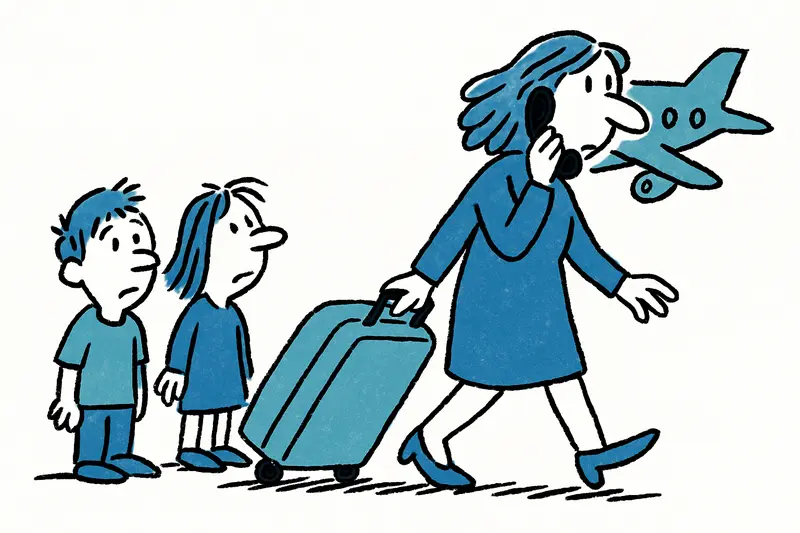
In the early evening, when the lights on Passeig Mallorca glow warmly, residents see mothers with prams, neighbours chatting in German, and occasional pieces of luggage from newcomers. One scene: a woman sits with a suitcase in front of a café in Portixol, on the phone and repeatedly checking her mobile to look up the next flight. Children shout on the playground, a cat wanders by — life goes on, but not without compromises.
Concrete solutions
The situation demands pragmatic, family-oriented solutions — not just headlines. A few suggestions:
Mediation instead of escalation: A neutral mediator can help design visitation times, holiday allocation and travel plans so that they work in everyday life.
Flexible visitation models: Longer, continuous stays during holidays instead of short, frequent flights can be more stable for children.
School and childcare concepts: Coordination between schools and parents about missed hours, digital learning plans and local tutoring options in Palma ease transitions.
Psychological support: Children often need guidance to cope with separations and new living conditions. Mobile services or counselling centres on Mallorca should be better known and accessible.
Transparency in legal matters: In cross-border custody cases families need clearer information about rights and obligations — both from Germany and from Spain.
Conclusion
Moving to Mallorca can be a fresh start. But without solid agreements, practical solutions and consideration for the children, it risks becoming a permanent commute between two lives — with emotional costs. Those who dream of the island should think not only of sun and evening moods, but also of the small routines: a guaranteed school place, a reliable daily routine for the children, and people on site who can catch them when life becomes complicated, as described in How Mallorca Really Becomes Your Home: A Practical Guide from Island Experience. Otherwise the new start will remain only a backdrop.
Frequently asked questions
Can moving to Mallorca work if children stay in another country?
What should families consider before splitting time between Mallorca and Germany?
How do custody and visitation arrangements usually affect children in Mallorca-based moves?
Is commuting regularly between Mallorca and Germany realistic for parents?
What makes cross-border family life on Mallorca difficult for children?
How important is school planning when a child lives part-time in Mallorca?
What support is available in Mallorca for children coping with separation or relocation?
Why do public posts and social media matter in custody disputes tied to Mallorca?
Similar News
Fewer Airlines, Fewer Destinations: What Palma's Winter Flight Schedule Means for Mallorca
Analysis shows: Winter at Son Sant Joan Airport will be quieter, with significantly fewer airlines and destinations. Who...
German tourist dies in Sa Calobra – a reality check for emergencies on Mallorca's beaches
A 40-year-old tourist died at the Torrent de Pareis. The emergency call, a doctor who happened to be present, a defibril...
Deadly Tractor Accident in Bunyola: What Needs to Be Done Now
In a work accident on an estate near Bunyola, a roughly 40-year-old man lost his life. His wife and a small child were o...
Head-first dive into the shallow part of Cala Fonoll: An accident and the unresolved question of responsibility
A young tourist dove into Cala Fonoll and was seriously injured. Key question: Why are clear warning signs missing at da...
Mistaken identity with fatal consequences: Brutal assault in S'Aranjassa — what's missing in the follow-up?
At S'Aranjassa a visitor to a finca was tied up, beaten and thrown out of a van. Three men have been arrested, including...
More to explore
Discover more interesting content

Can Cap de Bou

Townhouse Lleo 72
