
Wild chase in Illetes: Police arrest motorcyclist after crash
Wild chase in Illetes: Police arrest motorcyclist after crash
On the Paseo de Illetes a motorcyclist rode the wrong way, was involved in a crash, fled and was arrested after a pursuit. A van driver suffered minor injuries. A reality check: What went wrong — and what needs to change?
Wild chase in Illetes: Police arrest motorcyclist after crash
An accident on the Paseo de Illetes, a pursuit through the narrow streets of Calvià and two injured — time for a reality check
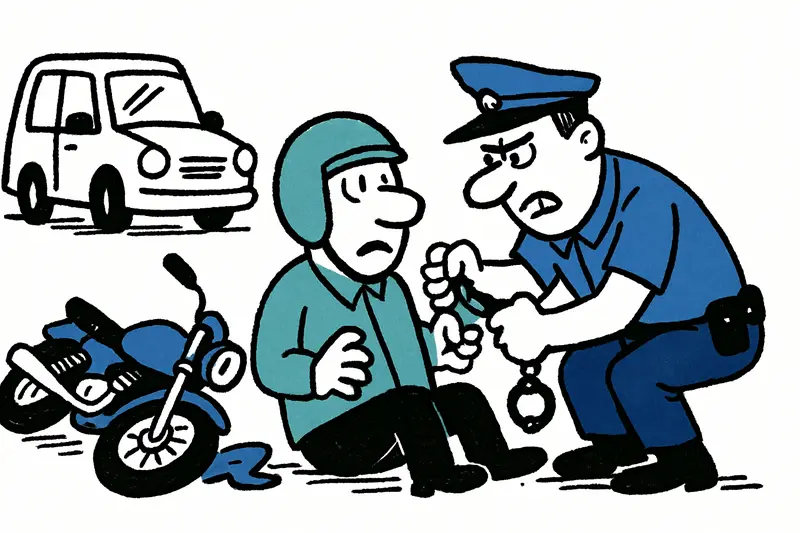
Late in the afternoon a motorcyclist drew attention in the tourist-favourite bay of Ses Illetes by apparently riding against the prescribed direction. At around 4:45 p.m. there was a collision with a small van; the driver was forced off the road and was subsequently treated by paramedics for minor complaints to the cervical spine. The motorcyclist continued driving but a few minutes later lost control in a bend near house number 75 on the Paseo de Illetes, struck the curb and fell. Officers from the Calvià local police arrested the man at the scene. Both parties involved received medical attention on site.
Key question: How can Calvià prevent such risky maneuvers from becoming commonplace in a heavily used tourist area with pedestrians and buses?
This is not the first time that unrest has occurred on the short but busy Paseo Illetes; similar incidents have happened elsewhere, such as Wrong-way crash near Llucmajor: motorcyclist severely injured — what's going wrong on the road to Cap Blanc?
In the summer months bus line 4 brings guests to the bay among others; the promenade is lined with rental cars, bikes and pedestrians. Even in late winter, when sunbeds are missing and cafés are emptier, the road is one of the few connections constantly used by residents, workers and tourists. When someone drives at high speed and against the flow, risky spots quickly become dangerous intersections.
Critical analysis: The police reacted correctly by initiating the pursuit and arresting the rider after the fall. Nevertheless, questions remain: Was the pursuit proportionate given the danger to uninvolved people? Were there alternative methods to stop the fleeing rider without increasing speed through the town? Incidents like Police pursuit in Llucmajor: Repeat-offender car thief stopped — but what remains unresolved? raise similar questions. And how were operational rules applied — for example maintaining distance, weighing risks and communicating with emergency services? Such operations happen fast; they are dangerous for officers, for the fleeing person and especially for third parties like the van driver — this is illustrated by Escape in Mallorca: Breakout from Police Vehicle Raises Questions in Llucmajor and Algaida.
What is often missing in public debate are concrete data and prevention. Individual cases are reported, but causes are usually less examined. How many wrong-way trips are recorded annually in Calvià? At what times of day do risky maneuvers increase? And: what role do alcohol consumption, foreign rental drivers or technical defects play? Without these figures the discussion stays at the level of moral judgement instead of solution-oriented planning.
A commonplace scene many Mallorcans know: a Wednesday afternoon, the sun still low, the wind carries the distant rumble of a motorboat, restaurant owners on the promenade discuss the first weekend reservations. A line 4 bus brakes, a cyclist swerves, and right there a two-wheeler cuts the corner going the wrong way. These are the everyday rhythms of island life that such incidents disturb.
Concrete solutions that would be local and practicable:
- Short term: More presence through targeted control times at critical points like the Paseo de Illetes, particularly in the afternoon and evening hours. Temporary mobile speed cameras and intensified traffic checks can immediately curb dangerous behavior.
- Medium term: Rethink traffic routing. Narrower curve areas, additional physical lane barriers or bollards can make wrong-way driving harder. Clear markings and more public signage for one-way streets help tourists who must orient themselves quickly.
- Strengthen cooperation: Police, municipality, transport companies and local businesses should bundle information about incidents. A simple reporting system for residents can reveal patterns (time, vehicle type, repetitions).
- Education: Multilingual campaigns distributed at rental stations, bus stops and holiday accommodations that point out local traffic rules and dangers. Rental companies for motorcycles and scooters should be held more accountable — short safety briefings could become mandatory.
- Review operational rules: Police departments should regularly evaluate their pursuit guidelines in built-up areas and conduct simulated training to minimize risks to third parties.
Punchy conclusion: Illetes is a place where proximity and speed meet. A single reckless driver can disturb the peace of an entire neighborhood and injure people. Those who live or work here need not only visible authorities but also sustainable measures that reduce the risk technically and organizationally. The arrest ends one incident; it does not solve the structural issues that make such scenes possible in the first place.
Frequently asked questions
What happened in Illetes when the motorcyclist crashed and was arrested?
Is the Paseo de Illetes in Mallorca a busy road for drivers and pedestrians?
How safe is it to drive in Ses Illetes during the tourist season?
Why are wrong-way scooter and motorbike incidents a problem in Mallorca?
What can Mallorca do to reduce dangerous driving in Illetes and similar areas?
What should tourists know before riding a scooter or motorbike in Mallorca?
Why does Calvià need more traffic control on the Paseo de Illetes?
Are there places in Mallorca where police chases can be especially risky?
Similar News

Bendinat as a meeting place: Padel Cup brings together nearly 120 players
Three days of padel at the Bendinat Urban Country Club: organized by El Económico and Borbalán, with around 120 particip...
Large-scale Anti-Tourism Graffiti at Cala Mendia: Protest or Vandalism?
On the morning walkers discovered an approximately 50-meter-long slogan against tourism on the wall above Cala Mendia. W...
Bomb threat before Jet2 flight in Tenerife: A reality check for security protocols
A passenger reported a bomb in luggage shortly before departure in Tenerife. Evacuation, baggage checks, delays — and ma...
Who is stripping Mallorca's coast bare? Why entire slopes are being removed for villas
On Mallorca steep slopes are again being removed to make way for luxury construction sites. Who bears the responsibility...

Robber Falls While Fleeing in Sant Agustí: Who Takes Responsibility?
During a purse-snatching in Sant Agustí, a non-commissioned officer chased the suspect; the man jumped from a bridge and...
More to explore
Discover more interesting content

Can Cap de Bou

Townhouse Lleo 72
