
Will Mallorca Run Out of Gas Soon? A Reality Check on US Dependence
Will Mallorca Run Out of Gas Soon? A Reality Check on US Dependence
Spain imports almost half of its gas from the US. What does that mean for Mallorca if political tensions between Madrid and Washington escalate? A sober look, local observations and concrete proposals.
Will Mallorca run out of gas soon? A reality check on US dependence
Key question: How does the strong increase in US LNG threaten the Balearics' supply, and what can realistically be done locally?
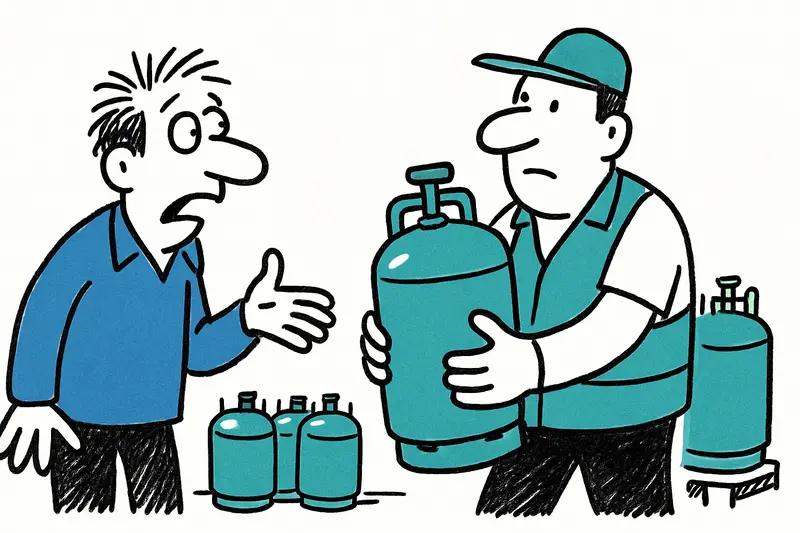
Early in the morning in front of Mercat de l'Olivar the cash register is already clicking, delivery vans are manoeuvring, and propane cylinders are stacked in front of a hardware store: the ordinary picture of a Palma morning. It is precisely here that the island's vulnerability becomes visible: many households and businesses still rely on cylinders, hotels on gas turbines, hospitals on a stable energy supply.
The facts as they stand: in January LNG imports from the USA rose by 46 percent to 15,259 GWh – according to Enagás this corresponds to around 44.4 percent of all imported gas. Algeria, formerly the main supplier via the Medgaz pipeline, currently supplies about 29.4 percent. This is a rapid shift in a few years, and it creates dependency.
Critical analysis: political tensions can become economic. If Madrid and Washington clash over the use of military bases or the deployment of forces, the result may not only be diplomatic quarrels. Trade sanctions, delays in contract negotiations or simply a reprioritisation of supply chains can directly affect tanker schedules and contracted deliveries; past supply disruptions also show technical problems can ripple far beyond a single product, as with Jet fuel shortage in Hamburg causes uncertainty for Mallorca travelers.
What is often missing from the public debate is a clear view of the local linkages. Media report percentage shares and diplomatic disputes, but little about how gas actually reaches kitchens, radiators and backup generators; some local reporting, such as Cheaper Gas Bottles in Mallorca: Short-term Relief — But Is It Enough?, addresses household impacts. Nobody speaks adequately about LNG storage capacity, the resilience of ports, or the number of households that still use cylinders. And reliable statements on reserves in the islands' supply centres are lacking.
Another deficit is infrastructure. Spain has only a limited gas connection to France. That means: in a crisis you cannot simply bring in large volumes overland. For an island group like the Balearics this is a structural weakness.
A daily-life scene to illustrate the situation: a weekend in Portixol, the ferry arrives, the harbour pier smells of engine oil, and in front of a bar tradespeople swap empty butane cylinders for full ones. A hotel owner in Cala Mayor says between two coffees that cylinder prices have already risen this year and that they are considering backup generators. No alarm bells, but a nervous tension building up over months.
Concrete solutions – short and practical:
1. Diversify suppliers: conclude long‑term contracts with several countries, not only with the USA. Intensify talks with Algeria, Norway and other suppliers and negotiate binding minimum delivery volumes.
2. Reserves and local storage: expand LNG storage on the mainland with a reserved quota for the Balearics; coordinate ship transport plans to ensure rapid resupply routes.
3. More interconnectivity: examine and where possible expand the capacity of the connection to France. Also consider temporary solutions such as Ro‑Ro transport of containerised LNG.
4. Energy transition in practice: accelerate the switch from cylinder gas to electrification in households and hotels. Subsidy programmes for heat pumps, electric stoves and better building envelopes will help reduce consumption.
5. Emergency plans for islands: agree guaranteed supply contracts with priority for clinics, water treatment and critical services during shortages; as local coverage like When the Tap Runs Scarcer: Mallorca Between a Tourism Boom and a Dwindling Water Source shows, water is also a critical concern. Establish local crisis stocks for propane cylinders and fuel.
6. Transparency and communication: authorities should regularly publish figures on stock levels, contract durations and expected delivery windows; this allows businesses and citizens to plan better.
What can be implemented quickly and what takes time: storage capacity can be planned relatively quickly; new pipelines or larger interconnectivity require years and much money. The quickest levers are therefore a mix of contract management, strategic reserves and local efficiency measures.
A bit of realism to finish: Mallorca cannot cushion every geopolitical decision of the great powers. But the islands can react less passively. Anyone sitting in Plaça Major waiting for the bus should be able to expect that those responsible at least run through scenarios and secure reserves instead of hoping.
Conclusion: the figures (44.4 percent US share in January) are not merely statistics, they are a wake‑up call. Policymakers and the energy sector must act now: diversify quickly, build up reserves, promote local energy savings. Otherwise the outcome will not only be diplomatic discussion – but cold showers in hotels and longer queues at cylinder suppliers.
Frequently asked questions
Could Mallorca face gas shortages if US LNG supplies are disrupted?
Why is Mallorca so dependent on imported gas?
What should Mallorca households do if gas prices rise or supply becomes tighter?
Are hotels in Mallorca at risk if gas deliveries are delayed?
Is Palma more exposed to gas supply problems than other parts of Mallorca?
Can Mallorca switch away from gas quickly?
What gas supply measures would help Mallorca most in a crisis?
Should people in Mallorca worry about running out of propane cylinders?
Similar News

High heel slips, car accelerates: accident on Camí de Son Hugo
A woman lost a high-heeled shoe on the forecourt of the sports facility at Camí de Son Hugo. The car accelerated, mounte...

Phone Scam: How Two Hotel Employees at Playa de Palma Lost Thousands of Euros
One morning in September, two reception employees at Playa de Palma were pressured by alleged alarm-company staff — in t...

When the Wallet Becomes a Danger: Attack in Peguera and Lessons for Mallorca
In Peguera, two women are said to have stolen the wallet from a 75-year-old German couple. When the victim intervened, t...
Plata stays Plata: Young people take over, Llonguets remain
A small bar on Carrer de l'Argenteria will continue: Tolo Serra hands the place over to young Mallorcans at the end of t...

Unnoticed in the Luggage Compartment: How a Boy Traveled More Than 100 Kilometers in a Team Bus
A minor traveled in the undercarriage of a team bus for more than 100 kilometers until his cries for help were heard. A ...
More to explore
Discover more interesting content

Can Cap de Bou

Townhouse Lleo 72
