
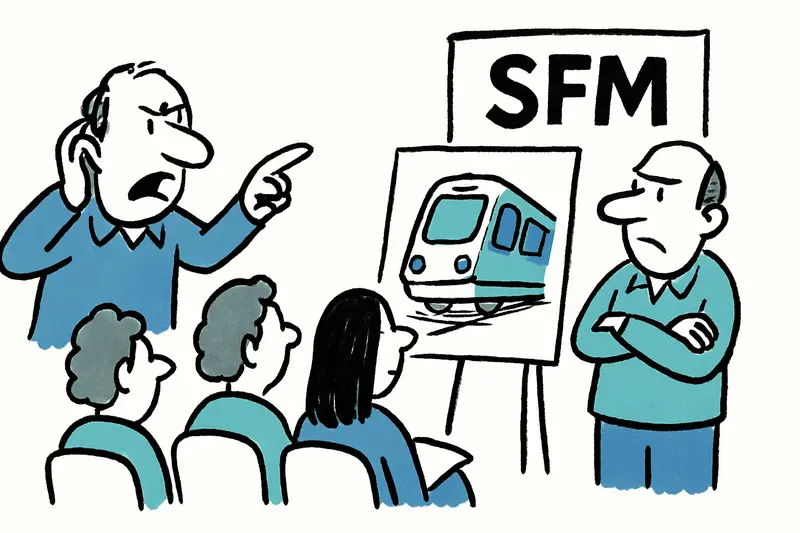
Works council considers strikes at SFM: Is that enough to ensure train safety in Mallorca?
Works council considers strikes at SFM: Is that enough to ensure train safety in Mallorca?
The works council of the Mallorcan rail company SFM has called a general meeting and is considering strikes. Employees complain about safety and maintenance problems; the government points to new hires. A reality check.
Works council considers strikes at SFM: Is that enough to ensure train safety in Mallorca?
Key question: Are words and two new engineers sufficient, or does the railway in Mallorca need a genuine, independent safety turnaround?
At Palma Estación Intermodal station there is the smell of fresh coffee, the displays are blinking, and commuters hurry past with bags and wheeled suitcases. Amid the usual everyday noise there is a different mood today: colleagues from SFM are discussing quietly, posters are being wiped, and the works council has called a general meeting to decide on possible work stoppages similar to Bus strike in Mallorca: Why talks keep failing — and what might come next. The trigger is not purely a local annoyance: the serious train accidents on the mainland have increased distrust, and employees in Mallorca see safety and maintenance problems that, in their view, have not been adequately addressed so far.
The factual basis is sparse: the works council has been demanding since April 2022 an independent safety committee that systematically evaluates incidents. The Balearic government emphasizes that rail traffic is absolutely safe and points out that two engineers were hired in November to strengthen safety, a development discussed in More Staff for Mallorca's Trains: Is That Really Enough?. These are two sides of the same coin—but they do not answer all questions.
Critical analysis: Hiring two engineers is a step, but not a structural overhaul. Without transparent analysis of past incidents, without regular publicly accessible inspection reports and without an independent body, the situation remains vulnerable. Measures that rely solely on increasing technical staff can help in the short term, but they do not automatically eliminate organizational weaknesses such as incomplete maintenance schedules, insufficient spare part stocks or overly long shifts that promote fatigue.
What is missing from the public debate: first, a clear overview of the frequency and types of disruptions and near-misses in Mallorca. Second, transparency about how maintenance cycles are funded and planned. Third, concrete statements on training, staffing ratios and reporting channels for hazards. And fourth, an open debate about the role of external companies in maintenance and whether their procurement practices affect safety.
Everyday scene: On the line to Marratxí a woman sits with her grandson; she quietly recounts delayed trains last year, and workshop noises are clearly audible near the depot. A mechanic shakes his head about spare parts that sometimes take a long time to arrive. Such small, recurring annoyances are annoying for commuters—for employees they can be a signal if they point to systemic deficiencies.
Concrete, immediately implementable solutions: 1) Establish an independent safety committee with representation from employees, government and external experts that publishes binding incident analyses. 2) Conduct an immediate safety inspection of all trains and track sections within 30 days and publish the results. 3) Introduce a transparent maintenance schedule with clear deadlines and responsible parties; a publicly accessible dashboard would build trust. 4) Protect whistleblowers and set up anonymous reporting systems for technical defects. 5) Long term: mandatory minimum staffing levels in workshops and train operations and a dedicated fund for spare parts and urgent repairs.
How to avoid a strike: social dialogue is the method of choice. No one wins if trains stand still. The works council should present a clear list of priorities and deadlines, and the government or operator SFM must respond with a timetable and resource commitments. A neutral arbitration body could quickly secure an agreement for emergency services so that basic provision remains in place while slow structural reforms begin.
Punchy conclusion: Trust is not built by declarations alone but by transparent processes, verifiable data and tangible improvements. Two engineers are better than nothing—but the people who get on and off here every day have a right to more: clear answers, reliable maintenance and an independent review to determine whether the safety culture really works. If that does not happen, the risk of industrial action remains and the feeling persists that in Mallorca safety is asserted but not sufficiently verified.
Frequently asked questions
Is train travel in Mallorca considered safe right now?
Why are SFM workers in Mallorca talking about a strike?
Are two new engineers enough to improve Mallorca’s train safety?
What safety improvements do Mallorca train workers want?
What is the role of Palma Intermodal station in the Mallorca train debate?
What problems do Mallorca train staff say affect daily operations?
Could Mallorca train strikes affect commuters and tourists?
What would help restore trust in Mallorca’s railway system?
Similar News

More water than last year: Mallorca's reservoirs breathe easier
September rain refilled the Tramuntana's reserves: overall fill around 35 percent, Cúber at 40.42 percent, Gorg Blau at ...
Three Luxury Hotels in Banyalbufar: Lots of Money, Many Questions
A Danish investor plans three exclusive accommodations in Banyalbufar — including the historic Son Valentí. The announce...
2.1 tonnes of cocaine on sailing yacht off Spain's coast – a reality check for the coastguard
A 14-metre yacht was seized with 2.1 tonnes of cocaine. Who monitors the ports, how does the international hunt succeed ...

Heat Bonus in Mallorca: 100 Euros Extra for Outdoor Staff at MarSenses
MarSenses pays employees who worked outdoors in August an extra €100 as recognition. Lighter uniforms, reduced hours for...
Renovating in Mallorca: What You Really Can Do Without Neighbour Consent
Many think they can do whatever they want in their apartment. That's partly true — but only as long as structural elemen...
More to explore
Discover more interesting content

Can Cap de Bou

Townhouse Lleo 72
