
From July 1 we pay more again: What the end of tax reliefs means for Mallorca
From July 1 we pay more again: What the end of tax reliefs means for Mallorca
The temporary tax cuts on fuels expire. What this specifically means for drivers in Mallorca, why there were queues at petrol stations yesterday and which measures are missing to relieve households and commuters.
From July 1 we pay more again: What the end of tax reliefs means for Mallorca
On Wednesday, July 1, a noticeable price brake disappeared: the temporary reduction of VAT on fuels returns to the normal rate. For drivers in Mallorca this means concretely: petrol will be about €0.10 per liter more expensive, diesel around €0.028 per liter. This magnitude sounds small on the receipt, but it quickly adds up for rental cars, commuters and tradespeople.
Key question
Who bears the burden when temporary tax support ends — and why was targeted relief for low-income people not planned at the same time?
Critical analysis
The calculation is simple: in mid-March the central government reduced VAT on fuels from 21% to 10%; this was communicated as a short-term reaction to geopolitical disruptions. Now the regulation expires, tax revenues rise back to their original level and pump prices follow. The result is immediately visible price jumps at the pump. For private households this is a setback, because mobility on Mallorca is everyday reality for many — shopping in the suburbs, commuting to workplaces on the other side of the island, or the daily drive to the port are hardly feasible without a car.
Another point: the recovery on energy markets already led on June 1 to the end of the reduced VAT on electricity and natural gas and the special rule for the electricity tax returned from 0.5% to 5%. Consumers therefore feel two rounds of tax increases within a few weeks: first for electricity/gas, now for fuel. The timing hits regular customers at petrol stations as well as tourists, who often underestimate rental car costs. See local analysis in Inflation Falls, Costs Remain: Who Pays the Price in Mallorca.
What is missing in the public discourse
There is a lot of reporting about percentages and cents, but little about distributional effects. For related reporting see Rising Cost of Living in Mallorca: Who Pays the Price?. An increase of ten cents per liter hits people on low incomes harder than commuters with higher earnings. Also rarely discussed is whether there should be exemptions for professions with mandatory mobility. A second blind spot: what role do intermediaries and local logistics costs play on Mallorca? The island structure and the supply of petrol stations make transportation more expensive; this makes small price changes at the source proportionally more painful for island residents.
Everyday Mallorca: Scene at the petrol station
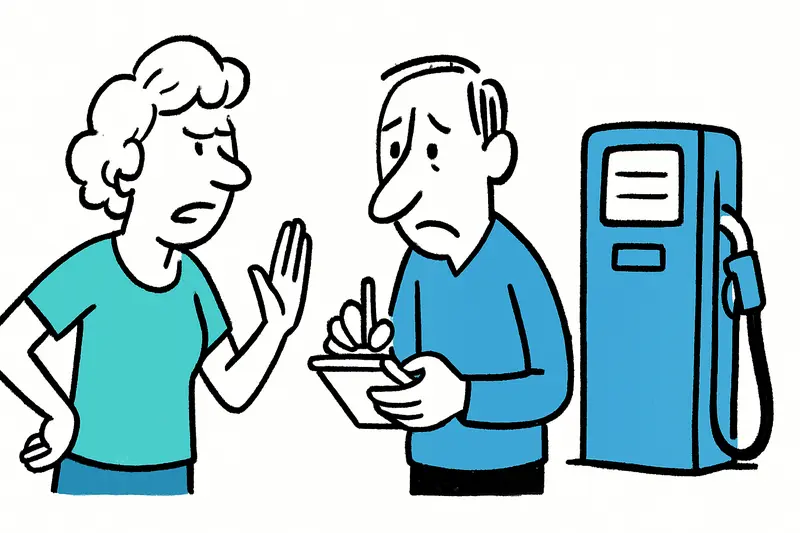
Yesterday morning, in front of a large petrol station on Avinguda Gabriel Roca in Palma, a queue formed, the radio played pop schlager, and the open car doors smelled of sunscreen and cold coffee. Two pensioners loudly debated the increase, a taxi driver scratched numbers into his notebook. Such scenes repeat in Cala Ratjada, Inca or at the motorway access: for many the few cents per liter are not an abstract issue but a direct change to the weekly budget.
Concrete solutions
1. Targeted relief: instead of blanket, temporary tax cuts, transfer payments to low-income households or fuel vouchers for professions with mandatory mobility would be more effective and socially fair. For related coverage, see Gas cylinders in Mallorca are getting cheaper: five-percent cut brings relief.
2. Regional compensation: the Balearic government could offer temporary subsidies for taxi and delivery service operators or reduced port fees for fuel importers so that higher costs are not passed on fully at the pump.
3. Price-formation transparency: consumers have a right to know how much taxes, crude oil price, transport and margin contribute to the final price. Clear breakdowns at petrol stations or via an official online map would increase understanding and make price jumps more explainable.
4. Long term: expanding alternatives to solo car use — stronger bus services between towns, targeted promotion of carsharing in rural municipalities and more safe bicycle and e-scooter infrastructure — would reduce vulnerability to oil price fluctuations.
Why this provokes anger in some
It is not just the amount. It is the expectations: many residents had become used to lower prices, service providers had briefly adjusted their calculations. Suddenly reversing course means planning difficulties for small businesses and uncertainty for households. Added to this is the impression that political measures are reactive and little tailored to local conditions.
There is also an international factor: similar temporary discounts have ended in Germany as well. That makes the situation a European phenomenon, not just an island problem. Nevertheless, the island situation on Mallorca exacerbates the consequences.
Pointed conclusion
The end of the tax reliefs is not a local political event but a national decision with tangible local consequences. For Mallorca it would be wise to steer the debate away from general percentage figures toward concrete, targeted measures. One simple proposal: more transparent price transfers and short-term, targeted support for particularly affected professions would at least soften the pain at the pump. Without such steps, a few cents can become a long-lasting political headache — the kind of topic that lingers at the harbor bar longer than expected.
Frequently asked questions
When is the best time to visit Mallorca for pleasant weather and beaches?
What should I pack for a Mallorca trip?
Are there family-friendly activities in Mallorca?
How should I stay safe when swimming in Mallorca’s sea?
What is the best way to get around Mallorca?
What are some must-see places in Mallorca?
Is Mallorca a good option for a relaxed beach holiday nearby?
How does Mallorca's weather change with the seasons, and how should I prepare?
Similar News
Palma Chases Wealthy US Tourists — The Key Question: Who Should the City Actually Serve?
The city is investing more than €200,000 to attract high-paying visitors in several US cities. A good idea — but what is...

Enough swimming: Why Port de Pollenca is louder than the sea
More than 200 people formed a human chain in Port de Pollenca — not only as a protest but as a wake-up call. Guiding que...
Mysterious disappearance in Alcúdia: Where is 24-year-old Lisa B.?
Since August 3 there has been no trace of 24-year-old German Lisa B. The family has traveled to Mallorca and urgently re...

From the Ruhr Area to the Tramuntana: Thorsten Legat and the FC Germania Mallorca Adventure
The former pro has not only taken the coaching role on Mallorca but also moved into a small island shared house, set amb...

Silent Conquest: What Mallorca's Wildlife Can Do Against Introduced Snakes
For years non-native snakes have been appearing on Mallorca. Who monitors the import routes, how effectively do authorit...
More to explore
Discover more interesting content

Boat Tour with BBQ along Es Trenc Beach
Private transfer from Mallorca Airport (PMI) to Pollensa
