
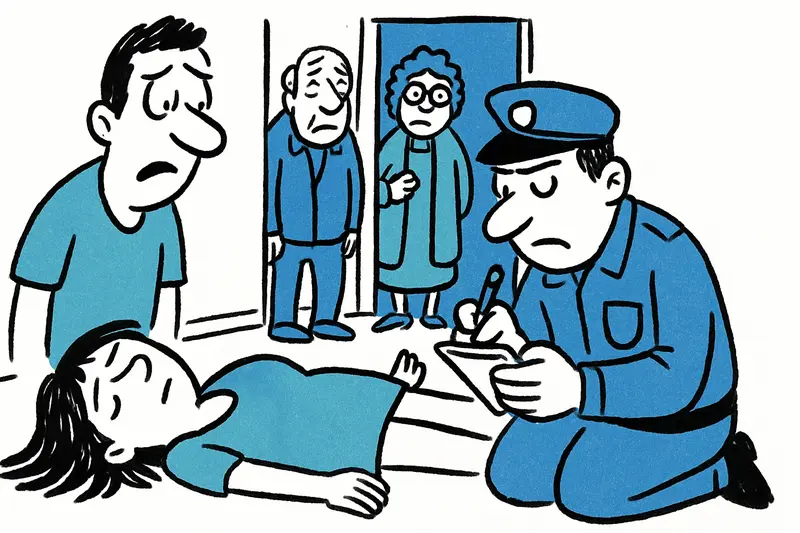
15-year-old found dead in Son Oliva: How could this happen?
A 15-year-old was found dead in an apartment on Calle Eusebio Estada in Son Oliva early this morning. The Policía Nacional is investigating. Beyond the immediate events, an urgent question arises: what is missing in Palma so that young people do not end up so lonely and forgotten?
Sad discovery in Son Oliva: Teenager found dead in apartment
Early in the morning, around 3:10 a.m., a 15-year-old girl was found dead in an apartment on Calle Eusebio Estada in Son Oliva. A resident of the apartment building alerted the emergency number, 112 emergency number information. Ambulances and patrols of the Policía Nacional official website arrived shortly afterwards — help came too late for the girl. The door to the stairwell was already cordoned off with tape, the streetlights were flickering, and there was the smell of wet asphalt. A few neighbors stood together in jackets, whispering, while traffic outside slowly started moving again. Initial local reporting covered the scene in detail in Encuentran muerta a una joven de 15 años en Son Oliva: ¿Cómo pudo ocurrir?.
On-site investigations, forensic teams in action
Detectives and forensic teams secured the apartment and worked for several hours. A young man who is said to have been in the apartment at the same time was questioned by the police. Official information is sparse: the Policía Nacional has taken over the investigation and an autopsy has been ordered. When the results will be available is unclear — this usually takes a few days. Other reporting has examined social media groups and possible substances in relation to the case, see Encuentran muerta en Palma a una chica de 15 años: grupos de WhatsApp, pastillas y preguntas abiertas.
What must not be missing here is the authorities' request to refrain from speculation. In a neighborhood like Son Oliva, where people live close together, rumors spread quickly. That unsettles residents and further burdens relatives. The investigators' job is to gather facts — premature conclusions help neither the investigation nor the bereaved.
Open questions and a central issue
The immediate question for the police is: how did the girl die? Beyond that remains an urgent, overarching question for the whole city: How could the life of a 15-year-old in our neighborhood end in such a way that no one could help beforehand? It is a question asked amid the familiar sounds of Mallorca — the whirr of a moped, distant church bells, the garbage collection that will return soon.
The analysis must go further: young people have become lonelier in recent years, digitally connected but socially isolated. A simple remark from a neighbor — “always with headphones, quiet” — aptly describes this isolation: physically present but emotionally shut off. This theme and its social context are discussed in depth in Cabeza entre rejas de ventana: adolescente de 15 años muere en Palma — un análisis de la realidad.
Aspects that are often overlooked
While causes of death and possible criminal questions are at the center, other aspects often fall through the cracks. These include:
1. Prevention and accessibility of support services: Many young people do not know local services or are reluctant to use them. Social services that are inactive at night and the lack of low-threshold offers outside school hours leave gaps.
2. Neighborhood vigilance: In densely built areas like Son Oliva, people often refrain from getting involved in others' affairs out of consideration — understandable, but sometimes dangerous when signs of distress are overlooked.
3. Communication by authorities: Quick, transparent information can prevent rumors. Of course, investigative work must not be jeopardized, but clear, calm communication reduces speculation and protects the privacy of those affected.
Concrete opportunities and solutions for Palma
The following list is deliberately practical: small steps that can have a big impact.
Faster psychosocial first response: Mobile crisis teams reachable at night could provide direct contacts for relatives and neighbors.
Awareness and prevention programs in schools: Greater visibility for mental health, awareness training for teachers and peer programs strengthen the support network around young people.
Better networking of services: Police, health departments, schools and youth services must build digital interfaces and fast reporting channels to link up clues efficiently — of course while respecting data protection.
Promote neighborhood initiatives: Small neighborhood meetings, property management workshops on recognizing dangers and information evenings can lower inhibitions so people are more likely to intervene or seek help.
These proposals do not replace police investigations but offer approaches to help prevent similar tragedies in the future or at least to respond more quickly to emergencies.
Supporting those affected and the public
It is now important to support the family and friends of the girl. Psychological care, contact points for the bereaved and clear information from the authorities are needed. The public should respect the investigation and refrain from drawing premature conclusions — especially at a time when information can be spread in seconds.
It is a quiet, sad morning in Son Oliva. The questions remain large and the answers will take time. For the family, each day that brings more clarity matters. And for Palma, prevention and an open, connected support system could save lives in the future.
Frequently asked questions
What happened in Son Oliva, Mallorca?
Why is the cause of death in the Son Oliva case still unclear?
What should people in Mallorca do when they hear about a case like this?
How quickly do emergency services usually arrive in Palma?
What is Son Oliva in Palma like as a neighbourhood?
What support is available in Mallorca for families and young people in crisis?
Why do police ask for privacy during investigations in Palma?
What can Mallorca neighbourhoods do to help prevent tragedies like this?
Similar News
More water than last year: Mallorca's reservoirs breathe easier
September rain refilled the Tramuntana's reserves: overall fill around 35 percent, Cúber at 40.42 percent, Gorg Blau at ...
Three Luxury Hotels in Banyalbufar: Lots of Money, Many Questions
A Danish investor plans three exclusive accommodations in Banyalbufar — including the historic Son Valentí. The announce...
2.1 tonnes of cocaine on sailing yacht off Spain's coast – a reality check for the coastguard
A 14-metre yacht was seized with 2.1 tonnes of cocaine. Who monitors the ports, how does the international hunt succeed ...

Heat Bonus in Mallorca: 100 Euros Extra for Outdoor Staff at MarSenses
MarSenses pays employees who worked outdoors in August an extra €100 as recognition. Lighter uniforms, reduced hours for...
Renovating in Mallorca: What You Really Can Do Without Neighbour Consent
Many think they can do whatever they want in their apartment. That's partly true — but only as long as structural elemen...
More to explore
Discover more interesting content

Can Cap de Bou

Townhouse Lleo 72
