
150 Violations Daily: How Palma's New Environmental Zone Is Changing Everyday Life
Since July, Palma has been rigorously enforcing an environmental zone inside the city ring. Around 150 violations per day, confused rental-car drivers, concerns among businesses and residents — and concrete questions about signs, communication and fair enforcement.
Enforcement is new, and so is the frustration
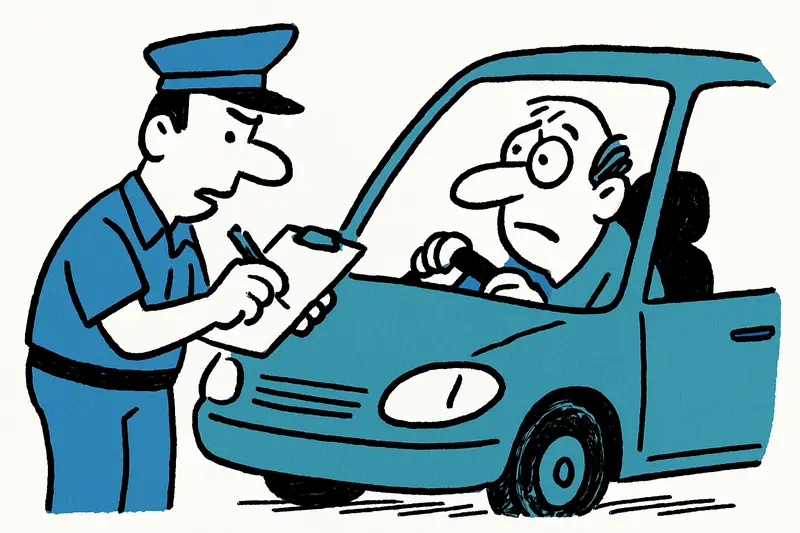
The bells of La Seu ring in the morning, street sweepers brush dust off the Plaça Major — and cars gather in front of the entrances to the inner ring road. Since July 1, Palma has had an environmental zone within the ring. What at first looked like a technical change has quickly become an everyday issue: the city records about 150 violations per day, data add up to broader counts, as reported in Palma takes stock: 7,700 fines — success or just performative toughness?. For many, that means a fine of €200, sometimes on the way to work, sometimes arriving later by mail.
Who is affected most?
Mostly affected are vehicles with sticker A or without a sticker — this often includes rental cars that arrive briefly from the port or the airport, and commuters who rely on their satnav. A saleswoman on Carrer Sant Miquel tells of bewildered tourists who missed the signs in the morning and only stop at the barrier. The postman then delivers the unpleasant news: no loud police operation, but a quiet letter with consequences.
Controls: cameras plus teams
The city relies on a mix of fixed license-plate cameras and mobile control teams, an approach that has left tourists uncertain as documented in Why Palma's Environmental Cameras Unsettle Tourists and Part-Time Residents. That sounds efficient — and often is. But the technology raises questions: How well does recognition work for foreign plates? And what about data protection? In side streets you can hear the clatter of bicycle couriers changing routes to avoid entering the zone — pragmatic, but not a sign that everyone is playing by the same rules.
The central question: Does it work — and is it fair?
The key question is not only: Is the air improving? But also: Who bears the burden of the transition? Residents of Santa Catalina praise the quieter mornings: less honking, less noise. Businesses, however, fear for delivery windows and spontaneous customers. The picture is mixed: better air on one hand, noticeable extra effort for trade and logistics on the other.
Aspects that are rarely discussed
Less publicly discussed is the role of the rental-car industry. Many companies do not provide enough information or issue vehicles without the appropriate stickers, a problem explored in Palma locks out holidaymakers: Low-emission zone with side effects. The same goes for digital navigation: navigation systems still lead into the city centre without warning about the environmental zone. Add to that older people or multi-day visitors who do not know the fine distinctions between stickers. And: the burden of fines often hits those who are less able to fight back — language barriers included.
Concrete problems in everyday life
Delivery services react by delivering earlier or taking detours. Some small shops organise early deliveries so that trucks do not have to enter the zone during the day. That works, but it is not a structural concept. There is also uncertainty about permitted service vehicles and taxi services: which exceptions really apply? The answers are not always easy to find, especially not in multiple languages.
How Palma could communicate better
More and clearer signage is a start. Even more effective would be digital warnings before entry: rental companies could be alerted via geofencing, navigation apps should explicitly mark the entrances. A mandatory information duty for rental providers — with confirmation at the time of booking — would prevent many wrong entries. One first lesson from the street: visibility alone is not enough when information arrives in fragments.
Fair transitions instead of blanket fines
The city is relying on deterrence. But an approach that initially focuses on notices and warnings for tourists would avoid many conflicts. A graduated solution — first a warning, then a fine — would be more pragmatic. At the same time, delivery windows and temporary permits for small businesses should be considered. Otherwise the impression arises: strict rules for the people who keep the city centre alive.
Looking ahead to 2027 and 2030
The rules will be tightened step by step: from 2027, yellow-labelled vehicles will be further restricted, and from 2030 the inner ring will largely be reserved for ECO- and zero-emission vehicles. That is a clear goal, and such stepwise restrictions are common in Low-emission zone (Wikipedia). But the transition must be socially fair and practically organised, otherwise displacement threatens: smaller businesses and lower-income people could be left behind.
Concrete proposals
Some ideas that could deliberately move Palma forward: mandatory information requirements for rental-car companies; digital warning systems when entering the zone; time-limited exemptions or delivery windows for small businesses; financial incentives to convert to electric delivery vehicles; multilingual, easily accessible information points at ports and the airport. Small steps that would make everyday life easier and strengthen the goals of air-quality improvement.
Conclusion: Opportunities, but also pitfalls
The environmental zone is an ambitious project with clear benefits for air and noise in the centre. But its success depends on how fair and practical the implementation is. 150 violations a day show: there is a lack of clear communication, digital networking and fair transition rules. If the city administration, businesses, rental companies and visitors do not pull together, annoyance and injustice threaten — and while the air may become cleaner, the social climate could cool down.
My advice to everyone coming to Palma: check your vehicle's registration, ask the rental company for a permit for the ring road or leave the car behind. And to the city: a bit more pragmatism in implementation will not weaken the measure — on the contrary: it will make it more sustainably accepted.
Frequently asked questions
What is Palma’s environmental zone and who needs to pay attention to it?
How much is the fine for driving into Palma’s environmental zone without permission?
How is Palma enforcing the environmental zone?
Why are rental cars in Mallorca often at risk of entering Palma’s restricted zone?
Is Palma’s environmental zone making the city centre quieter?
What should visitors to Palma check before driving into the city centre?
What happens to deliveries and small businesses in Palma’s environmental zone?
What changes are planned for Palma’s environmental zone in 2027 and 2030?
Similar News
After Being Admitted to Hospital Again: Heinz Hoenig and the Questions We Should Ask in Mallorca
Long-time Mallorca resident Heinz Hoenig was admitted to hospital again. A clear “what next?” is missing from the covera...
Yellow Alert: Is Mallorca Prepared for the Next Rain Band?
Aemet has issued a yellow alert for the south, southwest and the island's interior. Thunderstorms and heavy rain are for...
Kegel brothers trial postponed: Why Mallorca must wait for a verdict
The trial of 13 German holidaymakers will not begin until May 2028. The long wait raises questions — for victims, defend...

Chaos on Palma's Runway: Why the Summer at the Airport Was So Disrupted
This summer laid bare where Palma airport is faltering: only just over half of departures were on time and seven percent...

Cocaine Offer on Ham Street: Why the Open Trade Should Ring Alarm Bells
In the middle of Pare Bartomeu Salvà a tourist was offered a packet of cocaine as part of a sunglasses deal. A short int...
More to explore
Discover more interesting content

Can Cap de Bou

Townhouse Lleo 72
