
In 24 Hours: 147 People in Seven Boats at the Balearic Islands — A Reality Check
In 24 Hours: 147 People in Seven Boats at the Balearic Islands — A Reality Check
Within one day 147 people reached the Balearic Islands in seven boats. What the figures show, what is missing and how Palma, Formentera and Cabrera could handle the situation.
In 24 Hours: 147 People in Seven Boats at the Balearic Islands — A Reality Check
Between Formentera and the Cabrera National Park the pattern repeats that has become everyday this season
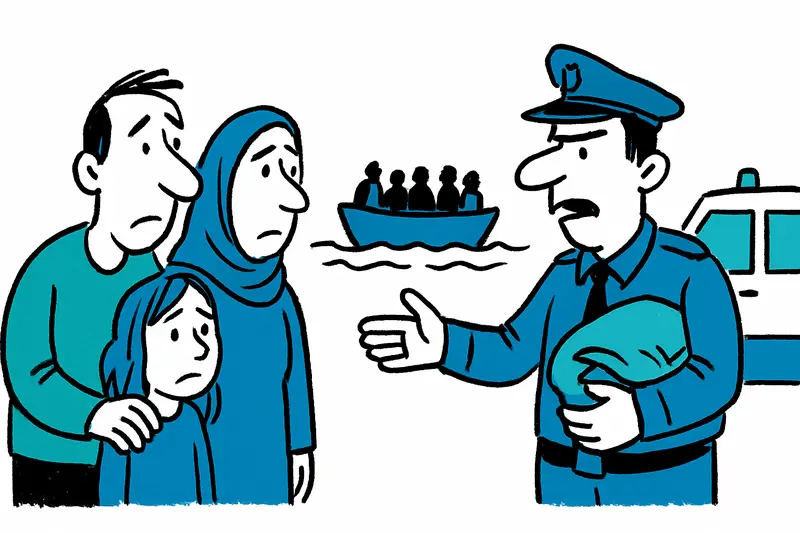
On Monday afternoon into the night, according to official figures, 147 people in seven boats were recorded in waters around the Balearic Islands. Several operations brought response units together off Formentera, around Cabrera and in the area of the Bledes Islands. In a night operation at 4:23 a.m., another 24 people were picked up on board a boat inside the Cabrera National Park protected area. Units involved were Salvamento Marítimo, the Guardia Civil's maritime unit on Cabrera, the Usecic as well as officers from the police stations of Felanitx and Santanyí, and similar short-term surges were documented in New surge of boat migrants: 122 people rescued in one day off the Balearic Islands.
The raw data: initially, 105 people from five boats were rescued in one afternoon. One boat was discovered about 2.5 nautical miles south of Formentera, carrying 22 people of North African origin. Further groups followed in the evening — 29 people 13 nautical miles south of Cabrera, 29 people near the lighthouse of n’Ensiola and a boat with 25 people about 15 nautical miles southeast of Cabrera. Other nights have seen similar concentrated arrivals, for example Six boats, 75 people: When the nights on the coasts grow denser. Added to earlier arrivals, the total in the last 24 hours comes to 147 people.
The year-to-date tally, according to authorities: so far this year around 4,744 people in 251 boats have been registered in the Balearic Islands. For comparison: in 2025 it was 7,321 people in 401 boats. A broader analysis appears in More Boats, More Questions: Mallorca Under Pressure from Rising Boat Arrivals. The figures show that arrivals remain significant and overlay seasonal fluctuations.
Key question
How long can maritime emergency rescue together with local authorities and communities sustainably manage this rhythm without putting supply, control and shelter systems under excessive strain?
Critical analysis
The operations take place at night, in variable sea conditions, often in ecologically sensitive areas such as the Cabrera National Park. Rescue capacity and coordination work in acute moments, as these latest operations demonstrate. What is less visible is the follow-up logistics: where are people placed in the short term, how are protection and health needs met, and how quickly can registration procedures or applications for international protection be processed? When boats appear in protected areas, additional tensions arise between conservation obligations and the humanitarian duties of the responders.
Authorities act episodically and not always proactively. Beach locations, small ports and island villages — from Santanyí to Portopetro — are not primarily intended as reception centers. Local police stations, volunteer helpers and a few NGO structures fill the gaps, often improvising. The result: queues, tents or makeshift reception points at the harbor, delays in health checks and legal counseling.
What is missing in the public discourse
The conversation usually focuses on daily numbers and images from the operations. Rarely does it address the everyday reality afterwards: initial medical care, psychosocial support, clear onward distribution routes within Spain or to the EU, and preventive measures along the routes. Also scarcely debated is how island infrastructure can be expanded on a lasting, solidaristic and dignified basis without local services for residents suffering as a result.
A daily scene from Mallorca
It is early morning in Portocolom. Fishermen repair nets, a radio crackles with news about the night rescue. Outside the café the police pull away, a small van delivers blankets. The Passeig Mallorca is already warm; tourists are unaware, while island residents talk among themselves: "Another boat during the night." Such conversations have become part of the summer soundscape.
Concrete solutions
1) Short term: Planable port reception points with minimal infrastructure at defined harbors on Mallorca and neighboring islands — weather-protected zones, medical triage, interpreters and basic legal information.
2) Medium term: A regional coordination office for the Balearics that brings together rescue services, health care, environmental authorities and municipalities. Better data networking between Salvamento Marítimo and land authorities would reduce duplicated work.
3) Prevention: Strengthen cooperation with transit countries, expand ambitious search-and-rescue and information campaigns along the routes, and examine safe legal channels to reduce irregular crossings.
4) Local: Expand volunteer structures and training for port staff and municipal employees; ensure a fair distribution of care responsibilities between the central state, the autonomous community and municipalities, accompanied by transparent funding allocations.
Conclusion
The numbers of the last 24 hours are not an isolated event; they reflect an ongoing pattern, as documented in 337 People in One Day: Between Rescue, Improvisation and Strategy. Mallorca and the neighboring islands face a challenge at small, often noisy harbor edges that combines humanitarian, legal and ecological components. Sea rescue works — now politics must systematically organize the aftermath before improvised solutions become the permanent state of affairs.
Frequently asked questions
What is the current pattern of arrivals around Mallorca and the Balearic Islands this season?
How are rescues coordinated when boats are found near Cabrera National Park?
What happens after a maritime rescue around Mallorca in terms of care and processing?
Which reception challenges do island harbors like Santanyí and Portopetro encounter?
How does this year’s rescue data look for the Balearic Islands?
What concrete steps are proposed to improve regional coordination for rescues around Mallorca?
What preventive measures are suggested to reduce irregular crossings?
What is daily life like in Mallorca during rescue seasons?
Similar News

Serious canyoning accident in Sóller: What the fall in the Torrent de ses Llemes reveals about safety on the island
A 51-year-old man fell about seven meters in the Torrent de ses Llemes. Helicopter rescue, handover to an advanced emerg...

When the tradesman crosses the line: An assault in Palma and what's missing now
A woman reports a sexual assault by a plumber in Palma. The National Police arrested a suspect who was later released. W...
Two new cafés with terraces at the departure area of Palma Airport
Just before the gate: Two new cafés called "Costa Coffee" and "Deliquo" have opened on the departures level of Palma Air...
How a Ten-Year-Old Was Left Alone for 140 Kilometers: A Wake-Up Call After the Gas Station Mishap
A child got out at a highway service station and was only found again 140 kilometers later. How can this happen, what's ...
When Gold Becomes a Temptation: How Secure Are Mallorca's Museums?
The theft of major gold finds on the Spanish mainland has alarmed museums in Mallorca. How vulnerable are smaller instit...
More to explore
Discover more interesting content

Boat Tour with BBQ along Es Trenc Beach

Private transfer from Mallorca Airport (PMI) to Pollensa
